- Last Update26-Mar-2026


- Tweet
-
Iran media casts doubt on US peace plan
AFP
TEHRAN — State media in Iran said Wednesday that Tehran had rejected a US plan to end fighting, as the head of the United Nations warned that the Middle East war was spiralling out of control.
In a first public acknowledgement of US efforts to discuss peace, state television cited an unidentified official as saying the war would end on Tehran's terms, shortly after Iran said it had fired a volley of cruise missiles at a US aircraft carrier.
"Iran has responded negatively" to the American proposal, the official said, dismissing the reported overture from US President Donald Trump, according to the English-language broadcaster Press TV, in a report picked up by Iran's main news agencies.
"The end of the war will occur when Iran decides it should end, not when Trump envisions its conclusion," the Iranian official said.
Tehran had five conditions for ending the war, he added, including guarantees against future attacks and reparations for war damages.
The rebuttal came after two senior officials in Islamabad told AFP that Pakistan had conveyed to Tehran a 15-point plan proposed by the US to stop the fighting that began on February 28 with a US-Israeli bombing campaign on Iran and sparked retaliatory strikes across the region.
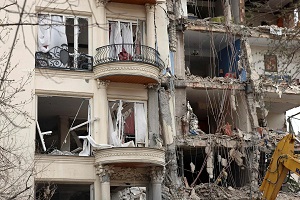
On the ground, there was no let-up in the hostilities, with targets in Iran, Israel, Lebanon and elsewhere across the region all coming under fire.
Iran's military said its cruise missiles fired at the USS Abraham Lincoln carrier group had "forced it to change its position", warning of "powerful strikes" when the "hostile fleet" comes into range.
US ally Israel, meanwhile, said it had struck targets in Tehran as well as a submarine development facility in the central city of Isfahan.
From the Iranian capital, 40-year-old Shayan told AFP: "There is gasoline, water and electricity. But there is a sense of helplessness in all of us. We don't know what to do and there's really nothing we can do."
Iran sets five conditions
Trump has in recent days repeatedly claimed progress in talks with Iran, even as Tehran denied any formal negotiations were taking place.
But there have been increased signs of tentative diplomatic efforts, with mediators in the region saying work was ongoing behind the scenes to relay messages.
"There is hope but it's too early to be optimistic," said a diplomatic source in the region, who requested anonymity to discuss sensitive issues.
Both sides need to be able to climb down without losing face, the source noted.
According to the New York Times, citing anonymous officials, the American 15-point plan touches on Iran's contested nuclear and missile programmes, as well as "maritime routes".
Tehran has largely blocked the vital Strait of Hormuz oil route in retaliation for the US-Israeli attacks, pushing up global energy prices.
The Iranian official quoted by Press TV said Tehran has put forward its own five conditions for hostilities to end.
These include ending "aggression and assassinations" against the country and its leaders, setting up a robust mechanism guaranteeing that neither Israel nor the US will resume the war, as well as compensation for the destruction caused.
Iran's conditions also include a cessation of hostilities on all regional fronts and against all "resistance groups" -- an implicit reference to the Tehran-backed Lebanese group Hizbollah.
Tehran also wants international recognition and guarantees of Iran's rights to exercise its sovereignty over the Strait of Hormuz.
Trump told reporters in the Oval Office on Tuesday that Iran had given him "a very big present worth a tremendous amount of money", which he said demonstrated that "we're dealing with the right people".
The US president did not elaborate further but said it was related to the Strait of Hormuz.
Tehran, in a message circulated by the International Maritime Organisation (IMO), assured safe passage through the strait to "non-hostile vessels".
However, the IMO also cited a statement from Iran's foreign ministry as saying no passage would be granted to vessels belonging to "the aggressor parties -- namely the United States and the Israeli regime".
Latest News
-
 Safadi calls counterparts, discusses efforts to de-escalate regional tension
-
 Iran media says energy infrastructure attacked
-
 Trump calls off Iran strikes and announces 'very good' talks
-
 Lebanon PM says Iran Guards commanding Hizbollah operations in Lebanon
-
 'Point of no return' looming in Middle East war — Red Cross