- Last Update29-Mar-2026


- Tweet
-
Ground options raise fears of wider war in Iran conflict
The Jordan Times
AMMAN — The war involving Iran, Israel and the United States is entering a more dangerous phase, as attention shifts from air strikes to potential ground operations. The shift reflects growing pressure for a decisive outcome as military and political options narrow.
According to American news website Axios, citing US officials and informed sources, the Pentagon is preparing military scenarios that could involve deploying specialised ground forces to secure strategic targets inside Iran.
The United States remains the central actor shaping the direction and scale of the conflict.
The planning signals a move away from a campaign dominated by aerial strikes towards limited but high-risk operations on the ground. US officials have said that “all options remain on the table” as Washington weighs its next steps.
Military preparations are also accelerating.
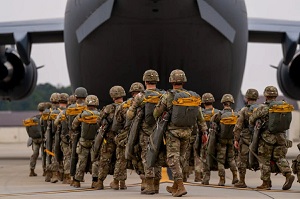
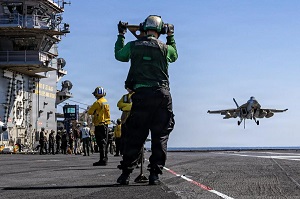
Additional forces, including elite units, are being readied for deployment. US media reported on Friday that Washington is considering sending up to 10,000 additional troops to the Middle East, amid growing speculation over a potential ground operation in Iran. The move points to a shift beyond deterrence towards more direct intervention.
US Central Command said it carried out strikes using multiple 5,000-pound bunker-buster munitions targeting Iranian missile sites near the Strait of Hormuz, a critical chokepoint for global oil supplies. The developments are raising concerns over regional stability, as well as global energy security and supply chains.
The regional impact of the conflict is becoming more obvious. Data released by the Jordan News Agency, Petra, indicates that nearly 83 per cent of Iranian missile and drone attacks since February 28 have targeted Jordan and Gulf Cooperation Council (GCC) states, while only 17 per cent were directed at Israel.
US military planners are now considering a variety of scenarios, including securing strategic islands, targeting missile infrastructure and potentially accessing sensitive nuclear-related sites. Such operations would mark a significant escalation in both scope and risk.
Concerns are also increasing within US military circles over the potential human cost of any ground involvement.
Iran, for its part, has warned against further escalation and signalled readiness to respond.
Officials in Tehran have expressed deep doubt towards US diplomatic efforts, viewing them as part of a broader pressure campaign.
Despite rising tensions, diplomatic efforts have not completely collapsed. Pakistan said on Saturday that the foreign ministers of Pakistan, Saudi Arabia, Turkey and Egypt will meet in Islamabad for talks on the war in the Middle East.
Political analyst Amer Sabaileh said the current military trajectory suggests a shift towards targeted operations rather than a full-scale ground invasion.
“What we are seeing suggests the deployment of specialised elite forces for specific missions,” he said.
“These operations could involve securing strategic locations, carrying out limited strikes, or targeting sensitive sites, including efforts to access enriched uranium.”
He added that the transition to such operations indicates a more controlled but potentially more dangerous phase of escalation.
The evolving dynamics suggest that the conflict is becoming more complex and politically driven, with multiple actors shaping its direction. The coming period will test whether diplomacy can contain a conflict increasingly driven by military calculations
Latest News
-
 Iran fires three missiles towards Jordan, two shot down — JAF
-
 US weighs sending up to 10,000 troops to Middle East — reports
-
 Kuwait says main port damaged in drone attack
-
 Global spike in oil prices won’t ‘immediately’ hit domestic fuel costs — Momani
-
 Trump says taking control of Iran's oil an 'option'