- Last Update13-Apr-2026


- Tweet
-
US-Iran talks fail, raising fears of renewed escalation
AFP
AMMAN — Talks between the United States and Iran failed on Sunday to reach a deal to end the war, raising fears that the conflict could return to escalation despite efforts to preserve a fragile ceasefire.
The negotiations were held in Islamabad and mediated by Pakistan. They marked the highest-level contact between the two sides since the 1979 Islamic Revolution.
US Vice President JD Vance said Washington had presented what he described as its “final and best offer”, but acknowledged that no breakthrough had been achieved.
“We leave here with a very simple proposal,” he said. “We’ll see if the Iranians accept it.”Iranian officials said their delegation had put forward constructive proposals, but that the United States failed to build the trust needed to reach an agreement.
Jordan also welcomed the ceasefire, describing it as a positive step towards ending escalation in the region. The Foreign Ministry expressed support for Pakistan’s mediation efforts and stressed the need for a comprehensive and lasting agreement that addresses the root causes of instability. It also emphasised the importance of reopening the Strait of Hormuz and ensuring freedom of navigation in accordance with international law.
The outcome reflects deep divisions between the two sides. Disagreements centred on Iran’s right to enrich uranium and arrangements linked to the Strait of Hormuz. The waterway remains a critical route for global energy supplies.
The breakdown came days after a temporary two-week ceasefire raised hopes of a political settlement. The war, which began on February 28, has already reshaped regional security and disrupted global markets.
Around one-fifth of the world’s oil passes through the Strait of Hormuz, making any disruption a major risk to energy markets.
Iran has used control over the waterway as leverage during the conflict. The United States, in turn, has moved to secure commercial shipping. US military officials said naval assets were deployed to ensure safe passage. Iran warned it would respond to any unauthorised presence.
Pakistan urged both sides to respect the ceasefire and said it would continue its mediation role. “It is imperative that the parties uphold their commitment to the ceasefire,” Pakistan’s foreign minister said. International pressure also increased, UK Prime Minister Keir Starmer stressed the need to continue diplomacy. European officials echoed the call. Russian President Vladimir Putin offered to support further mediation efforts.
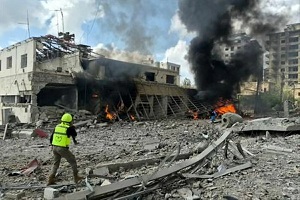
Civilians across the region continue to bear the cost of weeks of conflict and uncertainty. In Lebanon, Israeli strikes have continued, as the conflict extends beyond Iran. Authorities reported rising casualties in the country’s south. Israel has said the ceasefire does not apply to Lebanon.
Political analyst Amer Sabaileh said it is premature to describe the talks as a definitive failure, noting that the negotiating framework remains open.
“It is still an open process, with time for a possible return to talks,” he said. He added that the current phase reflects continued US pressure aimed at shaping the outcome of any agreement.
“Washington is using military pressure to push Iran towards accepting its terms,” he said, pointing to ongoing efforts to tighten pressure and influence the negotiating environment.
The ceasefire still holds, but without a political agreement, its durability remains in question. The coming period will test whether diplomacy can recover, or whether the war will return to a path shaped by military escalation.