- Last Update13-Apr-2026


- Tweet
-
Jordan, Syria deepen strategic ties at high-level council meeting in Amman
The Jordan Times
AMMAN — Jordan and Syria reaffirmed their commitment to expanding bilateral cooperation and advancing towards a comprehensive strategic partnership following a high-level meeting in Amman.
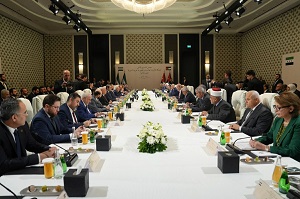
The second session of the Higher Coordination Council between the two countries was held in Amman on Sunday, co-chaired by Deputy Prime Minister and Foreign Minister Ayman Safadi and Syria’s Foreign Minister Asaad Al Shibani.
The meeting brought together 30 ministers from both nations.
During the visit, council members met with His Majesty King Abdullah in the presence of HRH Crown Prince Hussein. The Syrian delegation conveyed greetings from President Ahmad Al Sharaa, which the King reciprocated.
Expanding strategic cooperation
In a joint statement, both sides emphasised their commitment to strengthening coordination across sectors and deepening cooperation in line with the leaderships’ directives, according to a Foreign Ministry statement.
Ministers from the two countries reviewed progress since the council’s inaugural session in Damascus in May 2025, citing increased bilateral visits and expanding collaboration in key sectors.
Talks during the session covered a broad range of areas, including energy, water, transport, trade, agriculture, health, education, tourism, and technology. The council welcomed agreements reached during preparatory meetings and highlighted their role in reinforcing long-term cooperation.
A key outcome was the decision to establish a joint working group to identify strategic projects, including regional telecommunications connectivity, food and water security, railway links, energy cooperation, and infrastructure development at the Jaber–Nassib border crossing.
Economic integration and trade measures
Both countries agreed to enhance trade and investment ties with the aim of achieving deeper economic integration. A new reciprocal trade mechanism, including equal customs duties, is set to take effect on May 1, 2026.
The council also announced the resumption of transit trade and discussed mechanisms for shared use of seaports to boost regional trade flows.
Cooperation in energy, water, and transport
In energy, officials welcomed a natural gas supply agreement signed earlier this year and agreed to resume gas deliveries to Syria within days. Progress was also noted on restoring electricity interconnection, with plans to supply power from Jordan based on Syrian needs.
Water cooperation featured prominently, with both sides stressing fair resource sharing and the importance of ongoing coordination in the Yarmouk Basin. Plans include continued joint committee meetings, data sharing, and development projects.
In transport, the two countries committed to improving land, air, and rail connectivity. They also endorsed outcomes of a recent trilateral meeting with Turkey, including a memorandum of understanding aimed at strengthening regional transport links.
The council addressed regional developments, condemning repeated Israeli strikes on Syrian territory as violations of international law and Syrian sovereignty. It called for Israel’s withdrawal to the 1974 disengagement lines and warned of the broader risks to regional stability.
Both sides also stressed the need to implement a roadmap to stabilise southern Syria, particularly the Sweida region, while rejecting any partition or separatist initiatives.
On the Palestinian issue, the council warned against escalating tensions in the occupied West Bank and reaffirmed support for a two-state solution. It also underscored Jordan’s custodianship over Islamic and Christian holy sites in Jerusalem, emphasising the status quo at Al Aqsa Mosque/Al Haram Al Sharif.
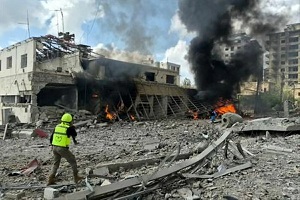
The council also condemned Israeli attacks on Lebanon and expressed support for Lebanese sovereignty and state authority.
The two countries welcomed a ceasefire agreement between the United States and Iran, calling for sustained de-escalation efforts that respect sovereignty and international law.
Both sides reaffirmed solidarity in addressing shared challenges and emphasised the importance of strengthening joint Arab action to promote regional stability and development.
The next session of the Higher Coordination Council is scheduled to take place in Damascus at a later date.