- Last Update12-Mar-2026


- Tweet
-
Jordan monitors shipping disruptions as regional tensions test supply chains
AFP
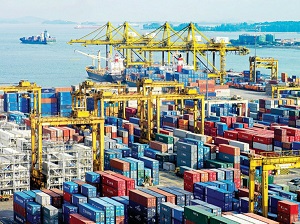
AMMAN — Rising Mideast tension is beginning to affect shipping and transport activity in the region, with freight costs increasing and some shipping lines imposing additional fees to cover operational risks.
Government officials and logistics sector representatives held meetings earlier this week to examine possible scenarios stemming from regional developments and their potential impact on trade and supply chains.
Prime Minister Jafar Hassan highlighted the vital role of shipping, freight and logistics companies in maintaining the smooth flow of goods and strengthening Jordan’s ability to respond to potential disruptions in global supply chains.
He reaffirmed the government’s commitment to working closely with the private sector and taking the necessary measures to maintain adequate and sustainable strategic reserves of essential goods and energy.
The premier also referred to a series of recent government decisions aimed at addressing regional challenges and ensuring the continued availability of goods and energy supplies, the Jordan News Agency, Petra, reported.
An ad hoc committee has been formed tasked with monitoring the potential impact of regional developments on supply chains, shipping and trade activity in the local market.
At the same time, experts say persistent instability in the Strait of Hormuz could lead to a significant reconfiguration of global shipping routes, particularly for energy shipments and container trade, potentially creating new strategic opportunities for Jordan.
President of the Jordan Logistics Association Nabil Khatib said the Strait of Hormuz remains one of the world’s most critical maritime chokepoints for oil and commercial cargo.
He said that if disruptions become prolonged, shipping companies may gradually reduce calls to major Gulf ports as operators seek safer and more predictable routes, including ports such as Jebel Ali Port and King Abdulaziz Port.
In such a scenario, cargo flows could increasingly shift toward ports along the Red Sea, strengthening an alternative maritime corridor connecting directly to the Suez Canal and onward to global markets, he said.
“Several ports could emerge as key hubs along this route, including Jeddah Islamic Port, Port of Jizan, Port of Aqaba and Port Said. The growing importance of these ports would reinforce the strategic role of the Red Sea corridor linking Asia, the Middle East and Europe.”
He also explained that a longer-term shift away from Gulf shipping routes could also strengthen a Red Sea–Mediterranean logistics network connecting major maritime hubs such as Port of Aqaba, Jeddah Islamic Port, Port of Piraeus and Port of Rotterdam.
“This corridor could become an increasingly vital route for containerised trade between Asia and Europe.”
For Jordan, he said, such a shift could significantly enhance the role of the Port of Aqaba as a logistics gateway serving Levant markets.
“Expanding the Aqaba logistics zone and improving connectivity could position the port as a key distribution centre for regional cargo. A major element of this potential lies in the land corridor linking Jordan and Iraq. The route from Aqaba through Amman to the Al Karama Border Crossing connects directly to major Iraqi markets including Baghdad and Basra.”
“If Gulf ports become less reliable due to regional tensions, Iraq could increasingly rely on Aqaba as an alternative maritime gateway,” he said.
Iran's Revolutionary Guards claim they have "complete control" of the Strait of Hormuz and warned that any vessels seeking to use it risk damage from missiles or stray drones.
The US military said it had destroyed 16 mine-laying Iranian boats near the Strait of Hormuz, after President Donald Trump warned of a drastic escalation if Iran moved to mine the pivotal waterway.
Iran vowed that no Gulf oil would pass through the key waterway, with oil prices remaining highly volatile over the virtual halt of shipping in the strait.
Latest News
-
 Safadi, Iraqi counterpart discuss regional escalation
-
 Lebanon registers nearly 760,000 displaced by Israel war
-
 Trump says Iran war 'very complete' — CBS
-
 King, world leaders participate in international meeting on Middle East developments
-
 Iran’s Choice of Mojtaba Khamenei Appears to Close Path to Swift End to War