- Last Update26-Oct-2026


- Tweet
-
Us vs. them: A simple phrase against the architects of ignorance - By Zaid K. Maaytah, The Jordan Times
The events in Karak have left us with profound sadness and anger, sadness for the lives lost and the suffering inflicted, and anger at an act that strikes at something far greater than the people directly affected, what happened should not be viewed merely as an isolated terrorist attack, but as a confrontation between two fundamentally opposing ideologies, two understandings of what it means to belong to a country and to recognize the humanity of those who share it.
The first is an ideology rooted in the right to live, as old as the waters of this land where Christ was baptized nearly two thousand years ago, as deeply rooted as its olive trees, whose wood was fashioned into crosses by generations of believers, and as collective as the history of a land that has offered sanctuary to those born upon it and those who sought refuge within it, an ideology that accompanied the formation of the Jordanian state more than a century ago, bringing people of different faiths and backgrounds together under one unifying identity, loyalty to the homeland.
The opposing ideology recognizes neither the meaning of a homeland nor the responsibilities of citizenship, it replaces belonging with exclusion, loyalty with betrayal, and the recognition of fellow citizens with suspicion and hatred, its danger extends beyond the violence committed in its name, because it seeks to persuade people that some of their fellow citizens are somehow less entitled to the country they have collectively inherited and built, this is the idea that must be confronted, not only through security measures, but through the way we raise future generations and shape our understanding of ourselves.
That confrontation begins with education, with a fundamental overhaul of how our children learn the history of their country and the people who built it, they should know the contributions of Jordanians from every community to the establishment of the state, its armed forces, hospitals, schools and public institutions, not as separate histories belonging to different groups, but as one national story, children should grow up seeing the full diversity of Jordan reflected in the story of their homeland, because what becomes familiar through education is less easily portrayed as foreign or threatening.
The same responsibility extends to our national media, public and private, through a comprehensive strategy that confronts hate speech, discriminatory narratives and the everyday language that normalizes exclusion, perhaps it is also time to reconsider expressions such as coexistence and civil peace, coexistence implies separate groups learning to tolerate one another, while civil peace suggests that avoiding conflict is our ultimate ambition, there is no coexistence among citizens of the same country, there is simply existence, equal citizenship is not an arrangement between communities, but a shared identity that must be reflected in how people are represented, addressed and treated.
In behavioural science, who conveys a message can be as important as the message itself, and His Majesty King Abdullah, Supreme Commander of the Jordanian Armed Forces, expressed the nation's resolve in simple words spoken in the Jordanian dialect, “We will show them”, an expression of us versus them, between those who believe in a shared homeland and those who seek to destroy that belief, and while the immediate response must confront those who threaten our security, the greater and more enduring victory will be in preserving and nurturing the one ideology that unites us all, the homeland.
Zaid K.Maaytah is a researcher in economics and behavioural policy
Latest News
-
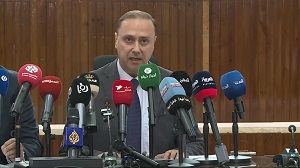 Seven martyred, 40 treated after attack on church in Karak — ministers
-
 Six martyrs, 28 injured in Karak attack — PSD
-
 Interior, health ministers visit Karak following crime, press conference set for 5:30pm
-
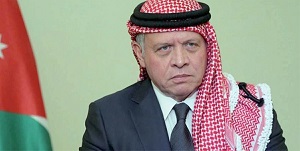 King says terrorist attack against Karak will be met with ‘harshest retaliation’
-
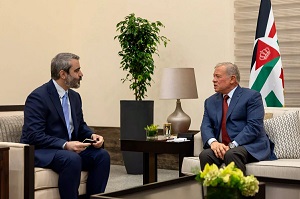 King receives Syria FM