- Last Update26-Oct-2026


- Tweet
-
Daesh is defeated, but has its ideology survived - By Mohammad Abu Rumman, The Jordan Times
The terrorist attack on Hamoud Church in Karak struck at the very heart of Jordanians’ sense of security and their understanding of national solidarity. Targeting civilians attending a funeral inside a place of worship constitutes an atrocity of compounded brutality, violating the sanctity of both life and death, and transforming a space of mourning and consolation into a scene of bloodshed and fear. The King’s presence in Karak, the declaration of national mourning, and the widespread expressions of popular and political solidarity therefore reflected a collective recognition that the attack was directed against Jordan as a whole, and that protecting the church and its congregation is, ultimately, an act of defending the shared national home.
The shock was also closely connected to the timing of the attack. After years in which Daesh had largely receded from public view, many had come to believe that the collapse of its territorial state in Iraq and Syria had effectively closed that chapter, reducing the organization to remnants contained by security measures. This is precisely where a deeper examination becomes necessary, for the decline in terrorist operations does not, in itself, tell us what has become of the broader ideological movement. What appears to be a period of calm may instead reflect the success of security agencies in disrupting its operational capabilities, while its ideas and networks continue to evolve beyond public scrutiny.
The warning signs had not been entirely absent. In November 2025, a security confrontation in Ramtha ended with the deaths of two brothers whom the Public Security Directorate described as adherents of extremist takfiri ideology, while three members of the security force were injured. The incident served as a reminder that beneath the surface of apparent dormancy, certain dynamics had not disappeared, and that a decline in visible activity is insufficient to assess either the magnitude or the trajectory of the threat. At the same time, the official characterization alone does not establish that the two brothers were organizationally affiliated with DAESH.
This distinction between the persistence of an ideological current and formal organizational affiliation is equally essential when examining the Karak attack, pending the findings of the investigation. Yet the broader question of what became of Jordanian DAESH adherents predates this crime by several years. It was the central concern of Jordanian Jihadists and the Collapse of the DAESH State, a book I co-authored with Zaid Eyadat and launched in 2022, drawing on an examination of approximately 330 cases. We sought to understand what happened to the ideas, individuals, and networks associated with Daesh after the organization lost the territory upon which it had built its political project, and how its supporters interpreted defeat and adapted to its consequences.
One of our central findings was that the collapse of the DAESH state did not necessarily entail the disintegration of the social environment that had produced its supporters. Extremism persisted, while significant changes emerged in the social composition of radicalized circles and patterns of recruitment. These included the increasingly visible involvement of minors in cases involving extremist cells, alongside the growing importance of family and kinship ties. Such indicators make apparent dormancy particularly deceptive when interpreted as evidence that the phenomenon has come to an end. Security operations can foil a plot and dismantle a cell, but assessing their longer-term impact on the reproduction of extremism requires understanding what takes place within its social networks, how ideas are transmitted across generations, and who introduces them to new recruits.
The issue, therefore, is not necessarily a hierarchical organization, but rather an ideological current extending beyond any particular cell, in which circles of ideological influence intersect with networks of kinship, friendship, and personal association. Individuals or small groups may act without direct instructions from a centralized leadership. Consequently, searching exclusively for an organization in the conventional sense is no longer sufficient. Nor should everyone influenced by extremist ideas be equated with those who engage in terrorist violence. The analytical challenge lies in understanding the distance between ideological identification and violent action, and identifying the factors that lead certain individuals to cross that threshold, transforming extremist convictions into a willingness to shed innocent blood.
This approach also requires reconsidering the conventional explanations that routinely invoke poverty, unemployment, and low educational attainment as the principal drivers of extremism. Our earlier study, The Sociology of Extremism and Terrorism in Jordan, co-authored with Musa Shteiwi, revealed a considerably more complex picture, encompassing employed individuals, university students, graduates, and members of diverse social backgrounds. Indeed, the quantitative findings challenged some of these conventional assumptions, showing that a substantial proportion of those involved in extremist ideological and militant activities were university students or graduates, many of whom held jobs in the public or private sectors.
Ultimately, this terrorist crime demands serious domestic reassessment, one that moves beyond the necessary emotional response and expressions of national solidarity toward the development of evidence-based policies informed by rigorous research and analytical studies. Only through a more precise understanding of the social and ideological dynamics underlying such phenomena can Jordan strengthen its capacity to confront them and reduce the risk of being caught off guard by similar acts of violence in the future.
Latest News
-
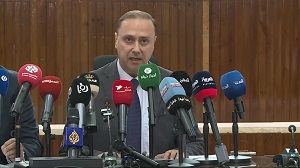 Seven martyred, 40 treated after attack on church in Karak — ministers
-
 Six martyrs, 28 injured in Karak attack — PSD
-
 Interior, health ministers visit Karak following crime, press conference set for 5:30pm
-
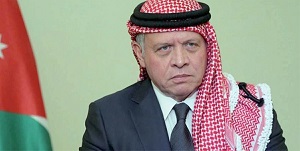 King says terrorist attack against Karak will be met with ‘harshest retaliation’
-
 King receives Syria FM