- Last Update09-Aug-2026


- Tweet
-
MENA leadership council brings regional decision-makers to Amman over discussions on Jordan-Gulf partnerships
The Jordan Times
AMMAN — Senior government officials, business leaders, investors and technology executives from Jordan and across the Middle East and North Africa (MENA) have convened in Amman recently to discuss strengthening the Kingdom’s regional competitiveness, expanding Gulf partnerships and developing strategies to enhance economic resilience.
The MENA Executive Leadership Intelligence Council, Jordan Chapter, organised by Bell Curve Consultancy, brought together leaders from key sectors to translate executive dialogue into practical partnerships and strategic initiatives.
The council, according to founders, seeks to connect decision-makers from government, finance, investment, diplomacy, technology, education, logistics and tourism to strengthen Jordan’s position as a regional hub and generate economic value through cross-sector collaboration.
The one-day programme featured three executive “decision rooms” focusing on strategic priorities for Jordan and the wider region.
Discussions examined Jordan’s potential to strengthen its regional economic role by developing resilient trade and logistics corridors with Gulf countries, enhancing supply chain resilience and reducing reliance on single transport routes amid geopolitical and economic uncertainty.
Participants also explored ways to strengthen Jordan’s executive capabilities, technological infrastructure and innovation ecosystem to position the Kingdom as a regional hub for knowledge, technology and institutional excellence.
They also examined opportunities to deepen Jordan-Gulf investment ties through stronger governance, institutional partnerships and a shift from individual transactions towards long-term strategic cooperation.
The discussions highlighted the need to enhance the performance of public administration, with focus on hiring, rewarding and accountability.
Participants also warned that Jordan risks falling behind regional peers in artificial intelligence (AI), despite the growing number of Jordanian professionals developing AI solutions for major Gulf companies and international firms. A national strategy for AI adoption was recommended to make better use of these capabilities domestically.
The private sector, particularly SMEs and family businesses, continues to face structural constraints, with participants stressing the importance of stronger corporate governance and succession planning.
Women’s economic empowerment was also highlighted, with participants calling for measures that go beyond representation to improve women’s access to resources, markets and decision-making.
Jordan’s banking sector was cited as a positive example of how effective regulation and incentives can support technological investment.
The council’s next meeting is scheduled to take place in Riyadh in November, with more than 40 members expected to participate.
Latest News
-
 Trump Says He Believes Iran War Will End ‘Very Soon’
-
 Jordan condemns terrorist bombing targeting passenger minibus in Syria
-
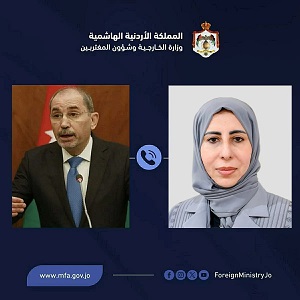 Foreign minister, Yemeni counterpart discuss cooperation
-
 Prince Ali says FIFA releases Jordan's overdue Arab Cup prize money
-
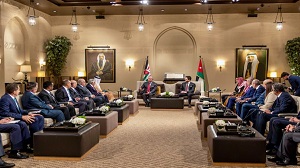 King calls for unified Arab-Muslim stance, joint effort to halt Israel’s unprecedented violations in Jerusalem