- Last Update06-Mar-2026


- Tweet
-
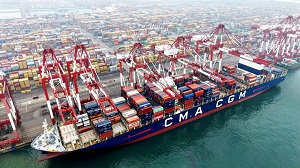
China prioritises energy and diplomacy
AFP
The war in the Middle East has sparked global fears of an energy supply crunch, with traffic in the vital Strait of Hormuz blocked.
Iran's Revolutionary Guards said on Wednesday they had "complete control" of the waterway as it kept up its missile and drone barrages across the Gulf.
China, a net importer of oil, is one of several major Asian economies that depend on the narrow strait for energy.
However, experts say strategic stockpiles will help Beijing endure short-term disruptions, allowing it to pursue other diplomatic priorities.
Looming ahead is a high-stakes summit in China between President Xi Jinping and his US counterpart Donald Trump, which the White House says will begin on March 31.
"The Iran crisis is unlikely to derail the Trump-Xi summit unless the United States launches a sweeping crackdown on Iran-China (oil) flows," Dan Wang, China Director for the Eurasia Group, told AFP.
"Beijing views Iran as a strategic partner rather than a military ally," said Wang.
"China also values its relationship with other Gulf states, making direct military support beyond rhetoric highly unlikely," he added.
Key 'buffer'
Beijing has ramped up its diplomatic presence in the Middle East in recent years, notably brokering a 2023 deal between longtime rivals Iran and Saudi Arabia to restore ties.
Tehran was later added as a full member of the Shanghai Cooperation Organisation, a geopolitical and economic bloc anchored by Beijing and Moscow.
China has also grown heavily reliant on the region for powering its huge economy.
Its own crude production accounts for only about 30 per cent of domestic demand, according to analytics firm Kpler, with the gap covered by vast shipments of foreign oil.
The Middle East was the source of 57 per cent of China's direct seaborne crude imports in 2025 — 5.9 million barrels per day (mbd) — Kpler said.
Of those, 1.4 mbd came from Iran.
Although China depends on imports to meet energy demand, it has also carefully prepared for unexpected disruptions.
"Thanks to years of sustained stockpiling, China now holds roughly (1.2 billion barrels) of onshore crude inventories," Kpler analyst Muyu Xu wrote.
Those reserves are "equivalent to about 115 days of its seaborne crude imports", Xu said.
"The sheer scale of China's overall crude stockpiles provides a meaningful buffer, enabling both the country and its refiners to comfortably weather short-term supply disruptions from the Middle East and the resulting price spikes.
Latest News
-
 Prime minister reaffirms Kingdom will not be battlefield amid regional escalation
-
 Hizbollah says targeted Israel's Haifa naval base after strikes on Lebanon
-
 Army chief visits Hawk Missile Unit, says JAF ready to defend airspace, counter threats
-
 Trump Says Iran War Could Last Weeks
-
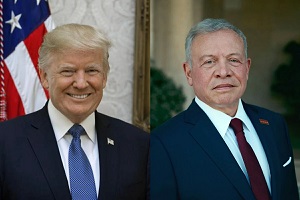 King, in call with US president, world leaders discusses regional developments