- Last Update07-Sep-2026


- Tweet
-
Princess Basma highlights AI’s role in advancing scientific research
The Jordan Times
AMMAN — HRH Princess Basma on Sunday stressed that artificial intelligence has significantly contributed to advancing the research process, particularly among graduate students, and improving education as a whole by accelerating procedures and expanding the scope of data-based analysis in scientific fields.
Attending the second annual conference of the University of Jordan’s School of Graduate Studies, titled “Scientific Research in the Age of Artificial Intelligence,” Princess Basma said that AI can play a positive role when used and directed within clear ethical frameworks across various fields, the Jordan News Agency, Petra, reported.
The princess referred to some challenges that excessive reliance on intelligent systems may pose, particularly regarding scientific ethics, values and originality, as well as their potential impact on critical-thinking skills.
Princess Basma said that despite AI’s ability to analyse data and document events, it may not be capable of reflecting the depth of human suffering experienced by people on the ground, particularly in areas affected by conflicts and wars.
She noted that reducing their suffering to figures and statistics without a deep understanding, human empathy and ethical responsibility fails to capture its full dimensions.
Princess Basma highlighted the importance of graduates acquiring modern technology skills, particularly in AI, and using them to serve local communities and develop solutions to challenges without compromising societal values and ethical principles or their ability to express the human experience in its emotional and psychological dimensions.
The princess expressed appreciation to those organising the conference, which brings together a group of academics and student researchers and provides a platform for serious scientific dialogue and the exchange of expertise.
She also praised the University of Jordan’s role as a beacon of science, knowledge and thought and in developing Jordanian and Arab human capital, contributing to strengthening Jordan’s position as a regional centre of knowledge and supporting the national development process.
For her part, University of Jordan President’s representative Amira Masri said that the conference, through the participants’ papers, sought to address the core of global transformations, noting that the university recognises that its standing is measured not only by its history but also by its continued ability to produce knowledge and lead modernisation.
She said that despite AI’s role in shaping scientific research tools and opening broad horizons for accelerating discoveries and processing data, it must preserve the university’s firmly rooted philosophy that “the human comes first.”
Dean of the School of Graduate Studies Laith Nasrawin said that the conference is being held at a time when the world is witnessing rapid changes in the nature of knowledge and the means of producing and disseminating it.
The conference aims to highlight rapid developments in scientific research amid the digital revolution and AI applications, as well as present and discuss research papers by graduate students based on their university theses, contributing to boosting scientific research and innovation and promoting the exchange of knowledge and expertise among researchers and graduate students.
Latest News
-
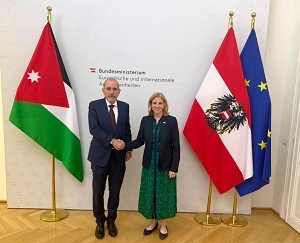 Safadi, Austrian foreign minister discuss bilateral relations, regional developments
-
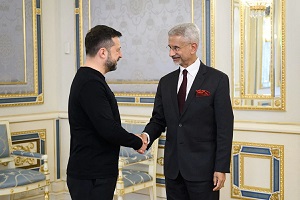 Ukraine, India discuss Black Sea, food security on FM's 'historic' Kyiv visit
-
 Trump Floats Renaming Strait of Hormuz as 'Trump Strait'
-
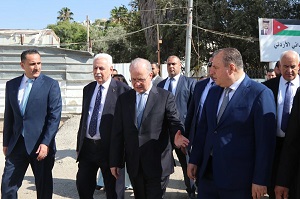 Palestinian prime minister visits Jordan Field Hospital in Nablus
-
 King visits National Press, inaugurates new expansion project