- Last Update20-Sep-2026


- Tweet
-
Aqaba Meetings in Paris: Jordan’s Diplomacy for Stability and Peace - By Hasan Dajah, The Jordan Times
In a region where wars intersect with sovereignty crises and stalled political settlements, the importance of states capable of uniting parties around shared interests—and transforming dialogue into concrete steps that bolster security and stability—becomes evident. From this perspective, the diplomatic efforts led by His Majesty King Abdullah can be viewed as a continuous endeavor to build a regional environment better equipped to contain crises. This is achieved by safeguarding state institutions, expanding international partnerships, and linking security with justice and development. Jordan’s initiatives in Paris exemplify this approach, which combines political initiative, defense cooperation, and a sense of Arab responsibility. It leverages coordination with France to enhance Jordan’s own capabilities, support Lebanon’s stability, defend Palestinian rights, protect Jerusalem, and solidify prospects for sustainable peace.
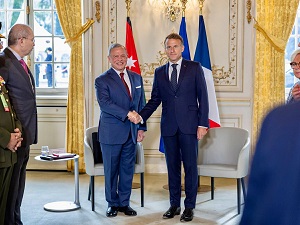
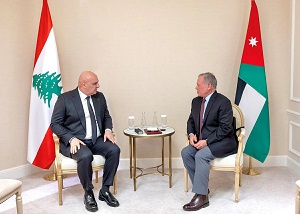
This approach was embodied when His Majesty King Abdullah, alongside French President Emmanuel Macron and Lebanese Army Commander General Joseph Aoun, presided over a new round of the "Aqaba Process" meetings at Les Invalides in Paris on Thursday, September 17, 2026. The session focused on supporting the Lebanese Army and enhancing its capabilities to safeguard Lebanon’s security and sovereignty and ensure that arms remain solely in the hands of the state. It also addressed the operational needs of the armed forces and Internal Security Forces, as well as mechanisms for an international response to these requirements. This move reflects Jordan’s commitment to translating its supportive stance toward its brethren into international coordination that addresses their security and institutional priorities.
This priority carries strategic significance; Lebanon’s stability hinges on the ability of its legitimate institutions to discharge their responsibilities, protect citizens and territory, and bolster confidence in the state as an inclusive umbrella for all its constituent groups. In this light, Jordan’s stance is significant, as it supports Lebanon’s sovereignty and independent national decision-making, as well as the Lebanese people's right to live securely, insulated from power struggles. Furthermore, discussing the army’s actual needs allows political solidarity to translate into practical programs for capacity-building, training, and logistical support—aligned with Lebanese priorities and partner agreements—thereby enhancing the sustainability and effectiveness of such support.
Broad international participation underscores the value of the "Aqaba Meetings" as a platform for coordination and knowledge-sharing—an initiative launched under Royal auspices in 2015. The importance of this format lies in bringing together decision-makers and experts to address specific challenges and aligning political assessments with operational realities on the ground. Identifying needs and delineating responsibilities helps channel resources efficiently, minimize duplication of effort, and establish follow-up mechanisms to measure outcomes. Thus, the initiative reflects Jordanian diplomacy’s capacity to rally partners around shared priorities that serve regional stability.
In a related development, the defense cooperation agreement between Jordan and France provides a comprehensive framework to structure security and military cooperation and to advance Jordan’s defense capabilities. The joint statement emphasized the link between this cooperation and efforts to de-escalate tensions and foster regional stability. The agreement can be viewed as an investment in Jordan’s ability to safeguard its sovereignty and counter threats, while simultaneously strengthening its partnership with a key European power. Possessing effective defense capabilities supports the independence of national decision-making and grants Jordanian diplomacy greater latitude to act confidently, while continuing efforts to de-escalate tensions and build consensus. Source: The Joint Jordanian-French Statement.
The partnership with France gains added significance due to its permanent membership in the UN Security Council and its prominent European and Mediterranean presence. Expanding coordination with France enables Jordan to better mobilize international support for Arab causes and opens additional channels to influence debates regarding regional security. Furthermore, diversifying partnerships reflects an understanding that foreign policy requires a range of options, while maintaining clear national interests and steadfast positions on core issues.
Foremost among these issues is the Palestinian cause; any vision for regional stability remains incomplete unless it addresses the rights of the Palestinian people and the root causes of the conflict. The Jordanian-French statement emphasized the necessity of taking practical steps to realize a Palestinian state, rejecting annexation and displacement, and protecting the historical and legal status of holy sites in Jerusalem—while affirming the importance of the Hashemite Custodianship. These positions place political settlement and the protection of rights at the heart of the security discourse.
The importance of this linkage stems from the fact that military calm remains fragile as long as the conditions generating violence and despair persist. Protecting civilians, ensuring the delivery of aid, and halting measures that undermine the prospects for a Palestinian state are essential prerequisites for building confidence in any political process. For Jordan, these priorities are directly linked to its national security and its responsibility toward Jerusalem, as well as its recognition that the ongoing conflict has repercussions extending beyond Palestine’s borders to the entire region.
Jordan’s interest in Syria’s unity and stability can be understood within this same logic; a state capable of managing its affairs, protecting its borders, and caring for all its citizens forms the foundation for stable neighborly relations. This path requires settlements that respect societal diversity, safeguard sovereignty, and prevent local crises from turning into arenas for external rivalry. Consequently, preventive diplomacy and support for institutional recovery appear as investments in long-term regional security.
Stability also requires a supporting economic and social foundation. Hence the importance of expanding partnerships to encompass water, investment, technology, and trade. Water security, job opportunities, and efficient services bolster community resilience and give citizens a direct stake in enduring peace. The more international cooperation is linked to projects that meet people's needs, the greater its capacity to generate stability—the value of which is felt in their daily lives.
The success of these initiatives hinges on executive follow-through that transforms agreements into clear commitments, resources, and programs capable of being evaluated. Supporting the Lebanese Armed Forces requires sustainability; the Palestinian settlement requires international will; and economic partnerships require tangible results. Herein lies the value of Jordan’s role in bringing partners together, bridging positions, and driving implementation. It is a responsibility requiring long-term perseverance, grounded in a royal vision that establishes state protection, human dignity, and development as interconnected pillars of a more solid peace.
Latest News
-
 King, France president discuss ties, witness signing of defence cooperation agreement in Paris
-
 King meets with Lebanon president, underscores Jordan’s support for Lebanon
-
 Egypt's Sisi rejects Palestinian displacement in Abbas meeting
-
 Prime minister expresses appreciation for Crown Prince’s follow-up on projects
-
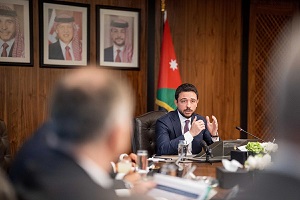 Crown Prince chairs part of Cabinet meeting