- Last Update17-Jun-2026


- Tweet
-
The elephant in IMEC's room - By Mohammad Abu Rumman, The Jordan Times
Two days ago, Amman hosted an important closed-door conference titled “Beyond Hormuz: Jordan as an Anchor for Broader Integration in the Middle East.” The event was organized jointly by the European Union, India, the Swedish Dialogue Institute for the Middle East and North Africa, and the European Union Institute for Security Studies. Alongside foreign officials, international experts, and specialized participants, the conference brought together Jordanian ministers, policymakers, and representatives of local think tanks.
On the sidelines of the conference, several important sessions were also held, including discussions involving former Prime Minister Omar Razzaz and envoys associated with the India–Middle East–Europe Economic Corridor (IMEC), one of the most significant international visions currently being proposed for the future of the Middle East. The project’s founding memorandum of understanding was signed in India in 2023 and brought together eight signatories: India, the United Arab Emirates, Saudi Arabia, the European Union, Italy, France, Germany, and the United States
The conference operated under the Chatham House Rules, which prohibit attribution of remarks to individual participants. Accordingly, it is inappropriate to discuss specific interventions or speakers. Yet it remains important to highlight several of the critical debates and dilemmas that emerged throughout the discussions.
Although IMEC is often presented as a major economic initiative—far more than a simple trade corridor linking India, the Middle East, and Europe—it is in fact envisioned as an integrated network of maritime and land routes, logistics infrastructure, transportation systems, and strategic connectivity. Nevertheless, one major challenge surfaced repeatedly during the conference: Israel’s role as a central transit point within the proposed corridor maps. The strategic partnership between the United States and Israel, combined with the growing strategic relationship between India and Israel, has undoubtedly reinforced this vision from the Indian perspective.
Yet clear Jordanian and broader Arab reservations were equally evident. Participants repeatedly questioned whether it is possible to sidestep the Palestinian issue—politically and strategically—and move directly toward a model of regional economic integration in which Israel is treated as an ordinary partner. Such an approach, according to many of the perspectives articulated during the conference, overlooks fundamental realities on the ground. Israel today remains the proverbial “elephant in the room” that many American and European policymakers seem reluctant to acknowledge.
One of the arguments raised in support of IMEC drew on the European experience, particularly the transformation from the European Coal and Steel Community into what eventually became the European Union. The Jordanian response, however, emphasized the profound differences between the two cases. Europe’s integration project emerged after reconciliation between sovereign states. The Middle East, by contrast, still faces the reality of an ongoing Israeli occupation of Palestinian territories and increasingly confrontational Israeli policies toward the wider region. These are not issues that can simply be bypassed through economic planning.
Even the logic underpinning the Abraham Accords—closely connected to the broader vision of regional integration embodied in IMEC—has appeared increasingly fragile following the events of October 7, 2023, and the subsequent American-Iranian confrontation. Developments since then have demonstrated that regional economic arrangements remain vulnerable so long as the Palestinian question remains unresolved.
Jordanian participants therefore called for consideration of alternative routes and frameworks. The original IMEC plans notably excluded Syria, which at the time remained under extensive international sanctions. Today, however, Syria is increasingly viewed as a potentially significant participant whose inclusion—alongside Jordan—could substantially enhance the project’s regional viability. Questions were also raised regarding the apparent emphasis on Israeli ports while Gaza remains absent from the project’s maps, as well as the continued marginalization of Turkey despite its obvious strategic potential as a regional connector.
In Jordan, two important studies have previously addressed the country’s positioning within emerging regional connectivity projects. The first, published by the Politics and Society Institute and authored by Ali Hijazi under the title “Jordan and the Middle East: A Strategic Vision for the Future,” examined Jordan’s role within these evolving networks and assessed the opportunities and challenges associated with them. The second, issued by the Jordan Economic Forum under the title “Positioning Jordan as a Support Hub for Trade and Services,” similarly explored Jordan’s potential role as a regional logistics and services center.
Both studies seek to identify Jordan’s emerging strategic position within these initiatives, evaluate the country’s available options, and maximize potential national benefits. At the same time, they grapple with the central dilemma that continues to shape all such projects: how to navigate the Israeli factor within broader regional and international planning.
The Jordanian, Saudi, and wider Arab positions expressed during the conference were largely consistent. Israel was not viewed merely as an obstacle to implementation but as a genuine iron wall standing in the way of any sustainable regional project. Yet the deeper concern lies elsewhere. All current discussions assume the continuation of existing conditions. But what becomes of today’s carefully drawn maps and connectivity plans if a major crisis erupts tomorrow in Jerusalem or the West Bank?
That question remains unanswered—and it may ultimately determine the future not only of IMEC, but of every vision currently being proposed for a new Middle East.
Latest News
-
 US-Iran peace deal announced with 'permanent' end to military action
-
 Jordan welcomes US-Iran deal to end military operations, begin talks
-
 Trump Warns Israel and Iran Not to 'Blow It' after New Strikes Threaten Emerging Ceasefire Deal
-
 Preliminary works begin on landmark stadium in Amra City project
-
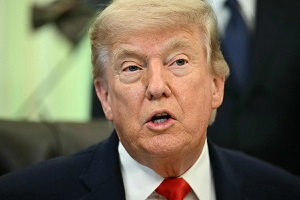 Trump says Iran peace deal to be signed Sunday, opening Hormuz