- Last Update01-Mar-2026


- Tweet
-
Jordan warns of wider conflict as US-Israeli strikes deepen Iran crisis
AFP
AMMAN — Jordan on Saturday condemned the Iranian attacks on its territory and on several Arab states, as the region entered one of its most volatile phases in years following coordinated US-Israeli strikes on Iran.
Deputy Prime Minister and Foreign Minister Ayman Safadi said the Kingdom rejects any violation of its sovereignty and will take all necessary and available steps to protect its citizens, security, stability and airspace.
Safadi made the remarks during a phone call with US Secretary of State Marco Rubio on Saturday evening, as both top diplomats discussed the rapidly escalating confrontation.
Rubio reaffirmed US solidarity with Jordan in confronting Iranian attacks and expressed support for all measures taken by the Kingdom to safeguard its security and sovereignty, according to a Foreign Ministry statement.
Safadi stressed the urgency of intensifying diplomatic efforts, warning that continued military exchanges risk pushing the region into a broader and more destabilising conflict.
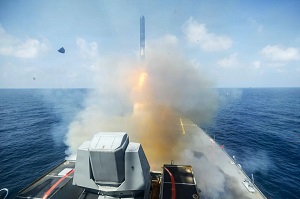
The diplomatic contacts came as the United States and Israel launched a wave of coordinated strikes on Iranian cities on Saturday. The Israeli military said dozens of military targets were hit as part of what it described as a broad, joint operation planned over several months. Explosions and heavy smoke were reported in Tehran.
US President Donald Trump said Saturday that Iranian Supreme Leader Ayatollah Ali Khamenei had been killed in the strikes, though there was no confirmation from Tehran. On Sunday, Trump warned that Washington would respond “with unprecedented force” if Iran carried out what he described as a major retaliatory attack.
According to AFP, Iran’s top security official Ali Shamkhani, whom Israel said was killed, had risen through the ranks of the Revolutionary Guards and later headed the country’s Defence Council.
The Iranian Red Crescent said the death toll from a strike that hit a school in southern Iran had risen to 108, underscoring the human cost of the rapidly intensifying confrontation.
Political analyst Amer Sabaileh said the crisis appears to have entered a decisive stage.
“They have effectively begun striking bases,” he said.
“The starting point was not the missiles but the political rhetoric from President Trump and prime minister Netanyahu. There appears to be alignment that regime change in Iran is seen as inevitable.”
He said that Iran’s targeting of US bases in the region has altered the strategic landscape and made de-escalation increasingly difficult without structural change.
Political science professor Areej Jabr said the conflict is unlikely to be confined to a single day.
“This is a multi-front confrontation,” she said, adding, “Iran and its regional allies will be fully engaged. The objective will be to disperse theatres and stretch American and Israeli capacity.”
She explained that Tehran is unlikely to absorb the strikes passively and may prioritise targeting American interests and bases in the region before expanding operations.
The escalation marks one of the most direct and dangerous military confrontations between Washington and Tehran in recent years. With regional states reassessing their security posture, the coming days may determine whether the crisis remains contained or evolves into a prolonged regional war.
Jordan has reiterated that it will not allow its territory to become a battleground, positioning itself firmly between prevention and diplomacy as tensions continue to grow.
Latest News
-
 Israeli defence ministry announces 'preventive strike' on Iran
-
 Israel aims to bring 'permanent demographic change' to West Bank, Gaza — UN
-
 US-Iran Talks End with No Deal but Potential Signs of Progress
-
 Cold conditions forecast to prevail in Kingdom until Sunday — JMD
-
 Civilian death toll in Sudan war more than doubled in 2025, UN says