- Last Update14-Jul-2026


- Tweet
-
Lebanon and Israel hold talks in Rome amid renewed Mideast fighting
AFP
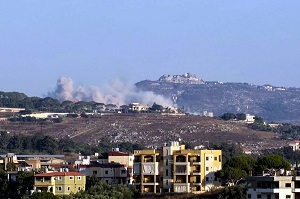
BEIRUT, Lebanon — Lebanon and Israel are holding new negotiations under US auspices in Rome on Tuesday, against the backdrop of a regional escalation between Washington and Tehran.
The two countries, officially at war for decades, reached a framework agreement on June 26, after five rounds of negotiations in Washington, aimed at ending the war between Israel and Iran-backed Hezbollah and paving the way for peace.
But Hizbollah rejects the agreement, which calls for the group's disarmament and whose implementation is set to begin with Israeli withdrawal from two "pilot zones" in southern Lebanon.
The Lebanese presidency announced on Monday that its delegation to Rome had been instructed "to demand the immediate start of Israeli forces' withdrawal from the two pilot zones before any further discussion".
According to a Lebanese diplomatic source familiar with the content of the talks, "the Lebanese army is ready to gradually take control of the localities from which the Israeli army would withdraw".
"Israel is willing to withdraw gradually," analyst Orna Mizrahi of the Institute for National Security Studies (INSS) in Tel Aviv told AFP's Jerusalem bureau, but on the condition "that there will be no presence of Hezbollah in the areas that Israel is withdrawing from".
She added that Israel also seeks to ensure "that the Lebanese army will have the ability... to keep it as a neutralised zone and a neutralised place that Hezbollah cannot come in again."
A US military delegation began discussions with the Lebanese army in Beirut on Saturday on the process for Israeli withdrawal from one of these "pilot zones".
Limited prospects
The framework agreement was concluded after a fragile ceasefire came into effect in the war between Hezbollah and Israel.
The Israeli army has nonetheless continued limited strikes in the south and has been carrying out demolitions in villages it occupies, according to official Lebanese media.
Israel's strikes and ground invasion have killed more than 4,300 people since the war started in early March, according to Lebanese authorities.
Bitar, for his part, said that the risk of major fighting returning to Lebanon as a result of the regional escalation "is, of course, not negligible".
"But I think that Iran today will think twice before asking Hezbollah to launch new strikes against Israel," he said.
Tehran "wants to maintain Hezbollah as a long-term deterrent tool and does not want to use it immediately to open a new front," he said.
Latest News
-
 King condoles Qatar over passing of former emir Sheikh Hamad
-
 Three Iranian missiles land in Jordan, cause minor damage — JAF
-
 US Attacks Iran, IRGC Says Strait of Hormuz to Remain Closed ‘Until Further Notice’
-
 Qatar's Former Ruler Sheikh Hamad bin Khalifa Al Thani Dies
-
 Russian strikes kill six in Ukraine, officials say