- Last Update06-Apr-2026


- Tweet
-
Cabinet approves compensation for citizens’ properties damaged by falling shrapnel, drones
The Jordan Times
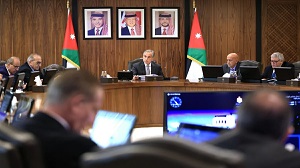
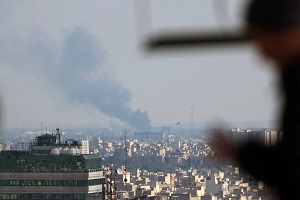
AMMAN — The Cabinet, during a session chaired by Prime Minister Jafar Hassan on Sunday, took a decision to compensate citizens whose homes, businesses, or vehicles were damaged by falling shrapnel and drones, amid ongoing regional war.
According to the decision, compensation will be disbursed based on assessments conducted by technical committees formed by the Minister of Interior across various governorates.
The army said that it has dealt with missiles and drones fired from Iran towards the Kingdom, with air defences downing the majority of them. Incidents of material damage to vehicles and properties have been reported across the Kingdom.
The move aims to enable affected citizens to carry out necessary maintenance and repairs, ensuring the sustainability of their livelihoods, according to a Prime Ministry statement.
The Cabinet also decided to exempt fuel oil imports by the Jordan Petroleum Refinery Company (JPRC) sold to the National Electric Power Company (NEPCO) from all taxes and fees.
The decision is designed to help the company mitigate financial burdens arising from global price fluctuations and strengthen the Kingdom’s strategic stock, the statement said.
The Cabinet exempted the Floating Storage Unit (FSU) chartered by NEPCO, expected to arrive in the fourth quarter of this year, from all taxes, fees, and allowances throughout its docking period at the Sheikh Sabah LNG Terminal in Aqaba, aligning with the Ministry of Energy and Mineral Resources’ strategy to diversify energy sources and ensure the sustainability of the electrical grid.
The Cabinet also tasked the Jordan Maritime Commission, the Aqaba Special Economic Zone Authority (ASEZA), and the Aqaba Development Corporation (ADC) with facilitating all necessary permits for the vessel’s operation.
The Cabinet also approved tax and fee exemptions for Liquefied Natural Gas (LNG) shipments contracted by NEPCO.
The decision follows the transition from a chartered shore-based regasification vessel to an FSU under a 10-year lease-to-own agreement, a more cost-effective model.
Concurrently, work is underway to build a permanent onshore regasification unit in Aqaba to establish a state-owned infrastructure for global LNG imports, the statement said.
The Cabinet also authorised the Ministry of Energy to proceed with the Independent Power Project 7 (IPP7), a combined-cycle power plant, in partnership with Al Ittihad Development Company, a subsidiary of the UAE’s Al Ittihad Water and Electricity.
The 700MW project, which utilises advanced energy technologies, is part of NEPCO’s expansion plan to meet rising future loads. For the first time, such a project involves a partnership requiring the registration of a public shareholding company, in which the government will hold a 49 per cent stake.
The Social Security Investment Fund (SSIF) will also be invited to participate as a partner. The plant is expected to provide the power necessary for the National Conveyor Project.
On the legislative front, the Cabinet approved the 2026 Digital Media Regulation Bylaw and several related amendments, including updates to regulations governing radio and television broadcasting licences, the licensing and monitoring of visual and audible works, and fees for printing houses, publishing firms, and research centres.
The 2026 Digital Media Regulation Bylaw aims to establish a comprehensive legal framework that enhances Jordan’s regional and international standing in the digital media landscape.
Under the new rules, digital tools belonging to media institutions already licensed by the Media Commission are not required to obtain new licences, though they may choose to register them voluntarily.
The bylaw distinguishes between mandatory licensing for professional digital content creators, particularly in advertising and production and individuals posting personal content on social media, who remain exempt.
To ensure the sustainability of municipal services, the Cabinet approved the Greater Amman Municipality’s (GAM) plan to transition to Islamic Sukuk in stages, with a total value of up to JD1 billion. The first tranche, valued at JD400 million, will be issued this year to restructure GAM’s budget and fund capital projects in infrastructure and transport at a lower cost.
Regarding tourism, the Cabinet extended fee exemptions for archaeological sites under the "Urdunna Jannah" programme and continued subsidies for trips until 31 December 2026. The programme aims to stimulate domestic tourism and support local communities.
This year, the programme targets 220,000 beneficiaries, including, for the first time, Arab and foreign university students, Gazan residents, and children of Jordanian women. It will feature over 60 tourist trails and involve more than 400 local projects, the statement said.
The Cabinet also approved the 2026 Economic Empowerment Policy for National Aid Fund (NAF) beneficiaries. The policy provides an institutional framework to transition families from a reliance on cash assistance to sustainable, productive employment.
The 2026 executive plan includes seven main initiatives and 19 projects aimed at integrating low-income groups into the national economy in line with the Economic Modernisation Vision.
Latest News
-
 Iran hunts crew member of crashed US jet after one reported rescued
-
 Israel says striking Hizbollah sites in Beirut after destroying bridge
-
 Jordan managing regional crisis with ‘efficiency, resilience’ – Momani
-
 2 US Aircraft Shot Down as War in Iran Escalates. At Least 1 Crew Member is Missing
-
 No Sign of War Winding Down in Mideast as Friday Dawns with Attacks across Region