- Last Update09-Jul-2026


- Tweet
-
Concessional finance is needed more than ever - By Muhammad Al Jasser, The Jordan Times
JEDDAH — The global development landscape is under severe strain. Aid flows are tightening, financing gaps are widening, debt pressures are mounting, and climate shocks are hitting vulnerable economies with growing intensity.
For many of the Islamic Development Bank’s 57 member countries, these converging forces are limiting investment in resilience, human development, and long-term growth. The challenge is particularly acute for our 27 least-developed members and those affected by conflict and institutional fragility.
With heavy debt burdens eroding fiscal space for spending on health, education and infrastructure, governments are forced to divert scarce public resources away from development priorities. The consequences extend far beyond national borders, threatening the prosperity and stability of our entire community.
At a time of shrinking aid budgets and rising vulnerability, the case for concessional financing has never been stronger. International research has consistently shown that investments in resilience generate significant long-term economic and social returns by reducing the human and financial costs of future shocks, which in turn enables countries to protect hard-won development gains and invest in the future. Yet, concessional finance has not kept pace with rapidly growing needs, particularly in countries grappling with debt distress and climate-related risks.
Meeting this challenge requires more than additional resources; it calls for sustainable, predictable financing mechanisms capable of mobilising collective support. The Islamic Development Bank recently took a vital step in that direction by establishing its IsDB Concessional Fund (ICF). Launched at the second Al Ula Conference on Emerging Market Economies in Saudi Arabia in February, the ICF was created as a means to respond more effectively to the evolving financing needs of our least-developed members.
The ICF provides an institutional framework for South-South solidarity within a member-owned, multilateral development bank. Its distinctiveness lies in its governance—it is Shariah compliant—and burden-sharing model, through which members with greater financial capacity support those facing severe development constraints, thereby promoting stability, opportunity, and regional cooperation.
But such a model is viable only when underpinned by institutional commitment. For that reason, the IsDB pledged to allocate 10 per cent of its annual financing approvals to concessional operations and 20 per cent of its annual net income to the ICF through 2030. By investing its own resources alongside member contributions, the Bank has established a credible, replenishable platform that expands the fiscal space available to our least-developed members while creating a stronger foundation for collective action.
The value of this approach is already becoming evident. For many low-income countries, high debt burdens mean that ordinary lending terms are not suitable for financing urgent development priorities. Concessional finance helps bridge that gap. The IsDB’s inaugural portfolio of more than $137 million illustrates how concessional finance can support investments in climate resilience, social infrastructure, and human development.
But no replenishment mechanism can succeed through institutional commitment alone. It also depends on the willingness of member countries to invest in a shared future. Notably, the ICF’s early progress has been made possible through the support of member countries, including Algeria, Kuwait, Saudi Arabia, and Qatar. Their contributions signal confidence in the ICF as a transparent and accountable platform for channeling concessional resources where they are needed most.
That same spirit of solidarity also shaped the discussions at the Is DB’s annual meetings in Baku, held in June under the theme “Regional Integration for Sustainable Prosperity”. Participants repeatedly highlighted a simple yet critical point: Investing in the resilience of our least-developed member countries is not only a development imperative but also a prerequisite for regional stability, connectivity and shared growth. As the ICF enters its first replenishment cycle, that principle must continue to guide our collective efforts.
The creation of the ICF builds on the IsDB’s longstanding commitment to development cooperation by becoming a platform for concessional support. Against this backdrop, the first replenishment cycle represents an opportunity to turn a shared understanding of member countries’ interconnected challenges into concrete, sustained action.
At a time of rising development pressures and scarcer concessional resources, the need to scale such mechanisms is clear. All IsDB member countries should support the replenishment effort now underway. By doing so, we can expand the ICF’s reach, strengthen climate resilience, and help place vulnerable economies on a firmer path toward stability, sustainable development and lasting prosperity.
Muhammad Al Jasser is chairman of the Islamic Development Bank Group.
Latest News
-
 Oil prices jump 5% after Trump says Iran ceasefire over
-
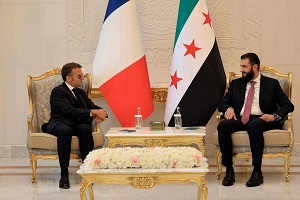 Syria President Says Wants France to Be 'Primary Partner'
-
 Explosions Rock Damascus, Wounding 18, as French President Macron Visits Syria
-
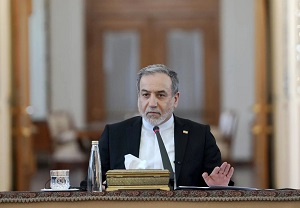 Iran Foreign Minister Says US Threats are an Impediment to Deal-making
-
 Trump to meet Ukraine, Syria leaders at NATO summit — White House