- Last Update28-Oct-2026


- Tweet
-
Montenegro, Jordan see eye to eye on global issues, seek enhanced cooperation across all sectors — Foreign Minister
The Jordan Times
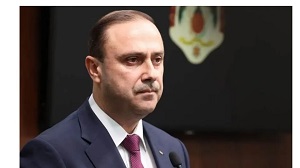
AMMAN — Montenegro’s Deputy Prime Minister and Minister of ForeignAffairs, Ervin Ibrahimović, highlighted the strong and friendly relations between Montenegro and Jordan, expressing a shared commitment to expanding political,diplomatic, and economic cooperation.
During an interview with The Jordan Times, Ibrahimović emphasised the importance of strengthening bilateral ties through regular political consultations, new agreements on diplomatic training and visa exemptions for diplomatic and official passport holders,and closer institutional coordination.
He also identified significant opportunities for cooperation in tourism, investment,healthcare, agriculture, energy, and thedigital economy, including the potential establishment of seasonal direct flights between the two countries.
On security, Ibrahimović praised Jordan’s leadership of the Aqaba Process and reaffirmed Montenegro’s commitment to international cooperation in combating terrorism, violent extremism, and transnational threats.
Following is the full interview:
Interview with Deputy Prime Minister of Montenegro and Minister of Foreign Affairs Ervin Ibrahimović:
How would you assess the level of diplomatic and economic cooperation between Montenegro and Jordan?
Montenegro and the Hashemite Kingdom of Jordan enjoy friendly relations, mutual respect, and a shared commitment to multilateralism, interregional dialogue, tolerance, and mutual understanding. Our ties have deep historical roots, dating back to the time of the former Socialist Federal Republic of Yugoslavia (SFRY), whose experience of cooperation with Jordan provided a valuable foundation for the development of our bilateral relations.
Since the establishment of diplomatic relations in 2010, our two countries have built stable political ties and maintained constructive dialogue, both bilaterally and within multilateral fora. Our cooperation within the United Nations system, including mutual support for candidacies, as well as through the Union for the Mediterranean and other international initiatives, reflects our shared commitment to international cooperation and strengthening trust among nations. Montenegro’s commitment to its relations with Jordan was further demonstrated by the opening of the Consulate of Montenegro in Jordan in 2011, headed by Honorary Consul Ibrahim Nauri.
In recent years, important high-level political contacts have taken place, including meetings on the margins of international gatherings and direct communication between our foreign ministers on current regional and international issues. Our aim is to further strengthen these ties through more regular and institutionalised dialogue between the two ministries, including bilateral political consultations.
As for economic cooperation, I believe there is considerable untapped potential for further development. Business forums held in Jordan in 2013 and in Montenegro in 2016 provided an important platform for exchanging views and identifying opportunities for cooperation. Further momentum was generated in May 2025, when representatives of the Chamber of Economy of Montenegro and the Jordanian Businessmen Association discussed ways to strengthen trade and investment ties, foster closer links between the business communities, and facilitate exchanges of business delegations, with a particular focus on tourism. On that occasion, they also agreed to establish more direct communication between the business associations of the two countries.
We see particular opportunities for cooperation in tourism, agriculture and the food industry, energy, healthcare, and the digital economy. Our priority is to translate existing contacts and identified opportunities into concrete business initiatives, investment projects, and joint ventures.
I am confident that, by further strengthening our institutional ties and fostering closer connections between our business communities, we can develop more dynamic, substantive, and diversified cooperation, building on the solid foundation of friendship and mutual trust between our countries. This is in the shared interest of Montenegro and Jordan and will help further advance our bilateral relations for the benefit of our citizens.
Cooperation between the two countries have seen considerable push over the past period, what is the current standing of the bilateral relations?
Relations between Montenegro and the Hashemite Kingdom of Jordan are characterised by friendship, mutual trust, open dialogue, and a shared commitment to further strengthening our ties. Political dialogue has gained momentum in recent years, reflecting the importance both countries attach to their partnership. I believe we are at an important stage in our relationship, with an opportunity to build on our traditionally good political relations and advance towards more intensive, institutionalised, and substantive cooperation.
In this regard, we particularly value the first official visit of His Majesty King Abdullah II to Montenegro, which provided further impetus to the development of our relations and opened up opportunities for more concrete forms of cooperation. At the same time, discussions are ongoing regarding an official visit by the President of Montenegro, Jakov Milatović, to the Hashemite Kingdom of Jordan, which would provide a further opportunity to strengthen ties at the highest level.
It is a particular honour for me to pay an official visit to your esteemed country. One of our key priorities is to strengthen the legal framework underpinning our bilateral relations. In this context, the signing of a Memorandum of Understanding between the Ministry of Foreign Affairs of Montenegro and the Jordan Institute of Diplomacy, together with an agreement on the waiver of visa requirements for holders of diplomatic and official passports, represents an important step forward. These are the first bilateral agreements to be concluded between our countries since the establishment of diplomatic relations in 2010, creating a stronger foundation for closer cooperation between our diplomatic services and enhanced institutional ties.
Furthermore, we aim to establish a framework for regular political consultations and develop new forms of cooperation in areas of mutual interest. We see particular potential in tourism, air connectivity, investment, healthcare, and security, as well as in fostering closer links between the relevant institutions and business communities of our two countries. Our goal is to identify concrete opportunities through open dialogue and joint efforts and translate them into sustainable projects and measurable results, taking into account the priorities and capacities of both countries.
I am confident that this visit marks a new chapter in relations between Montenegro and Jordan. Our commitment is clear: to further strengthen the bonds of friendship and political understanding between our countries and translate them into tangible results that will deliver visible and lasting benefits for both countries and their citizens.
His Majesty King Abdullah and Montenegro President Jakov Milatović met in May last year and discussed bilateral relations and ways to expand cooperation in the fields of health, technology, energy, trade, tourism, agriculture, transportation, investment, and digital economy. This indicates a strong will on the high political level to enhance cooperation. Has there been any mechanism put in place, meetings, joint committees working towards institutionalizing and bolstering Montenegro-Jordan relations.
We particularly value the meeting between His Majesty King Abdullah II and the President of Montenegro, Jakov Milatović, in May 2025, which gave significant impetus to our bilateral relations and demonstrated the strong political will at the highest level to expand cooperation in areas of mutual interest. The meeting was important not only as an affirmation of the longstanding friendship and mutual respect between our countries, but also as an opportunity to identify concrete areas for cooperation and secure high-level support for their further development.
Our priority now is to translate this political commitment into effective institutional mechanisms that will enable the systematic planning and implementation of agreed priorities. In this regard, we welcome Jordan’s initiative to hold the first round of political consultations between the two ministries of foreign affairs. We are considering holding these consultations in 2027 or early 2028. We also intend to propose a memorandum of cooperation between the two ministries, which would provide an additional framework for regular dialogue, coordination, and follow-up on joint initiatives.
In recent months, the relevant institutions in both countries have established more direct channels of communication and initiated coordination, including the exchange of draft texts for several bilateral agreements. During my visit, two agreements within the remit of Montenegro’s Ministry of Foreign Affairs are scheduled to be signed: one on the waiver of visa requirements for holders of diplomatic and official passports, and another on cooperation in diplomatic training. These agreements represent an important step towards strengthening the legal framework underpinning our relations and creating the conditions for more practical cooperation.
Diplomatic training is a valuable example of sectoral cooperation already in place. Jordanian diplomats have participated on several occasions in Montenegro’s Gavro Vuković Summer School for Young Diplomats, facilitating the exchange of knowledge and experience and fostering closer ties between our diplomatic services.
There is also considerable scope for strengthening economic cooperation. The business forums held in Jordan in 2013 and Montenegro in 2016 laid the groundwork for closer links between our business communities and provided opportunities to explore trade and investment prospects. We believe that reviving this format, with the participation of relevant institutions, chambers of commerce, and business communities, would help identify new business opportunities and develop concrete joint projects.
Tourism is another area with significant potential, offering valuable opportunities to bring our peoples and cultures closer together. In this regard, we should explore the possibility of establishing seasonal air links between Montenegro and Jordan. Improved air connectivity would facilitate two-way tourism and enable citizens of both countries to discover each other’s cultural and historical heritage, natural beauty, and traditions more easily. Jordan, with its ancient city of Petra, the Dead Sea, and the spectacular desert landscapes of Wadi Rum, has much to offer Montenegrin visitors, just as Montenegro is an attractive destination for Jordanian tourists.
Our approach is pragmatic: we want to align existing initiatives with clearly defined priorities, clearly assigned institutional responsibilities, and regular communication. We believe this will enable us to gradually build a stable, long-term framework for cooperation encompassing political dialogue, economic relations, tourism, and other areas of sectoral cooperation, delivering tangible results for the benefit of both countries and their citizens.
Jordan and Montenegro coordinate counterterrorism efforts, within the framework of the Aqaba Process initiative launched by Jordan. How would you evaluate that?
Montenegro attaches great importance to the Aqaba Process, launched by His Majesty King Abdullah II in 2015, and highly values Jordan’s role in international efforts to combat terrorism and violent extremism. The initiative provides an important platform for strengthening international security cooperation, enhancing coordination, and facilitating the exchange of knowledge and expertise among states and relevant international partners. We particularly value its regional and thematic focus, which enables meaningful, practical cooperation in addressing shared security challenges.
Contemporary security threats are becoming increasingly complex and interconnected. Terrorism, violent extremism, transnational organised crime, radicalisation, and the misuse of digital technologies transcend national borders, making the timely exchange of information, stronger institutional capacities, and coordinated international action essential. An effective response must encompass not only security measures, but also the prevention of radicalisation and efforts to strengthen societies’ resilience to extremist ideologies.
In this regard, we particularly value the Aqaba Process’s comprehensive approach, which links security measures with the protection of human rights, the rule of law, education, social inclusion, and the promotion of intercultural and interreligious dialogue. We believe that sustainable security cannot be achieved through security measures alone; it also requires addressing the underlying conditions that create fertile ground for radicalisation and violent extremism.
For Montenegro, as a NATO member and a country that I see as the next EU Member State, participation in this initiative provides an important opportunity to further strengthen cooperation with Jordan and other international partners. We seek to align our efforts with broader regional and international initiatives while ensuring that they complement the activities of NATO and the Global Coalition to Defeat ISIS. This is particularly important in light of the security challenges facing the Western Balkans, including radicalisation, extremism, and cross-border threats.
The importance of this cooperation was reaffirmed at the meeting between His Majesty King Abdullah II and the President of Montenegro, Jakov Milatović, in Tivat in May 2025, when they discussed continued coordination in the fight against terrorism within the framework of the Aqaba Process. Montenegro also participated in the Aqaba Process Leaders’ Meeting dedicated to the Balkans, held in Sofia in April 2025. These engagements demonstrate our commitment to strengthening cooperation and developing practical mechanisms to address shared threats.
We particularly value Jordan’s contribution to regional stability and its longstanding cooperation with NATO. Under the leadership of His Majesty King Abdullah II, Jordan has made a significant contribution to international efforts to promote peace and stability in the Middle East and beyond through the Aqaba Process. We believe that initiatives of this kind strengthen trust among partners and enable a more effective collective response to transnational threats, in full respect of international law and state sovereignty.
Montenegro remains firmly committed to contributing to these joint efforts and further developing its partnership with Jordan. We are convinced that international solidarity, the exchange of experience, and the integration of security measures with preventive approaches are essential to preserving peace and stability.
What is Montenegro’s stance on the region’s issues, including primarily Palestinian- Israeli conflict, the Iran war?
Montenegro is following developments in the Middle East with deep concern, recognising that protracted conflicts and continued military escalation have serious humanitarian, political and security consequences, not only for the populations directly affected but also for the stability of the wider region, the global economy, energy markets and international trade. We do not view the current situation as a distant threat; rather, we recognise its implications for long-term regional and international stability. As a NATO member and an EU candidate country, Montenegro bases its foreign policy on respect for international law, multilateral cooperation and coordination with its allies and partners, while remaining firmly committed to diplomacy as the principal means of resolving conflicts.
Regarding the Israeli–Palestinian conflict, our position is principled and consistent. We support a negotiated two-state solution, under which Israel and an independent, sovereign and viable State of Palestine live side by side in peace and security, in accordance with international law and relevant United Nations resolutions. We believe this remains the only viable path towards a comprehensive, just and lasting peace.
We are particularly concerned about the deteriorating situation in Gaza, the West Bank and East Jerusalem, including the expansion of settlements, increasing settler violence and the growing number of forcibly displaced persons. We are also concerned about the risks posed by the E1 settlement project, which represents a serious threat to the viability of the two-state solution. In this context, we continue to support the implementation of United Nations Security Council Resolution 2803.
The protection of civilians must remain an absolute priority. It is essential to ensure safe, rapid and unhindered humanitarian access, protect humanitarian personnel and infrastructure, and fully respect international humanitarian law. Any sustainable solution must be grounded in political dialogue and diplomacy, while taking into account the legitimate rights and security needs of all parties.
Regarding the conflict involving Iran, Montenegro supports de-escalation, restraint and a return to diplomacy. We strongly condemn Iran’s unprovoked attacks against neighbouring Gulf states, which further undermine regional stability and endanger civilian lives. We are also concerned about Tehran’s destabilising activities in the Strait of Hormuz and the Persian Gulf. We believe that Iran must comply with its nuclear safeguards obligations under the Treaty on the Non-Proliferation of Nuclear Weapons and must not acquire nuclear weapons.
At the same time, diplomatic efforts must be intensified to prevent the conflict from spreading further and to create the conditions for a sustainable political settlement. Montenegro supports calls to safeguard freedom of navigation and ensure the uninterrupted passage of international shipping, without the imposition of transit fees and in full accordance with international law, including through the Strait of Hormuz and the Bab el-Mandeb Strait. We have also condemned the recent unacceptable Houthi attacks on Riyadh International Airport, which further underscore the urgent need to halt escalation and protect civilian infrastructure.
The United Nations, NATO and the European Union provide important platforms for coordination with international partners, the exchange of information and assessments, and support for initiatives aimed at easing tensions. Montenegro will continue to support all credible international efforts that contribute to de-escalation, dialogue and the preservation of peace and stability, in full respect of the United Nations Charter and international law.
I would particularly like to highlight Jordan’s constructive and significant role in mitigating the consequences of the crisis, providing humanitarian assistance and preserving the prospects for a just and lasting peace. We regard Jordan as an important bridge between peoples and a strong advocate of dialogue, mutual understanding and regional cooperation. We highly value its efforts to contribute to a more peaceful and stable Middle East and believe that, in such complex circumstances, cooperation with partners that consistently advocate diplomatic solutions is particularly important.
Montenegro remains committed to supporting all serious and credible diplomatic initiatives that can help ease tensions and create the conditions for a just, comprehensive and lasting peace. Protecting human lives, preserving regional stability and upholding the rules-based international order are in the interests of us all.
Latest News
-
 King meets with Iraq PM, underlines deep Amman-Baghdad relations
-
 Karak attack terrorists acted alone, motivated by extremist ideology – police chief
-
 King hails security agencies for arrest of terrorists in Karak attack
-
 Interior Minister: We Have Arrested the Killers
-
 Government Spokesperson: Jordan Avenges Its Fallen Heroes