- Last Update02-Mar-2026


- Tweet
-
Iran’s Gorbachev moment - By Mohammad Abu Rumman, The Jordan Times
The assassination of Khamenei alongside the senior leadership of the Revolutionary Guards, intelligence, and defense goes beyond the issue of a security breach and military success; it represents a turning point in Iran’s political history and its future. Regardless of the military outcomes of the war or its duration, a fundamental change in the Velayat-e-Faqih system is the primary expected scenario for the upcoming phase.
Although Iran has prepared leadership succession arrangements after the assassinations, and its command-and-control structure still appears functional at the moment, and despite Tehran’s efforts to expand the war and attacks regionally, all of this is short-term. In the medium term, Iran is in a transitional moment, experiencing significant internal and external imbalance, which will lead to internal change.
This change could occur peacefully and rationally within the system itself, through the reformist current taking the reins and conducting a process of internal dismantling and rebuilding (similar to Gorbachev’s perestroika). This figure might be the current Iranian president, Masoud Pezhman (if still alive) or one of the known historic reformist figures, or perhaps a centrist figure between the currents to overcome the current dangerous turning point.
Alternatively, if the Revolutionary Guards and conservatives cling to power and reject the only deal capable of protecting the country and its cohesion, then the alternative outcome, in light of the imbalance in external power dynamics, war and bombing, and the internal crisis, is entering a phase of internal conflict, and possibly the geopolitical fragmentation of the country.
There are multiple complex and intertwined factors that will define the next phase. First is the level and size of the imbalance in power dynamics: should Iran’s air defenses be paralyzed and its missile system rapidly neutralized, this would weaken and marginalize the conservative current and the Revolutionary Guards. Second is division or unity within the Iranian political elite. It is clear that the Iranian president, his foreign minister, and many political leaders would prefer a rational and realistic scenario to limit losses and save the country from dangerous fates, even if that means bitter losses akin to surrender. Third is the relationship between the state and society at a moment when the political legitimacy of the current regime appears at its weakest and its social support base does not extend beyond a limited minority.
There are many strong intellectual schools within Shiite circles that allow for a reassessment of the current shape of the system. Perhaps the most prominent is a gradual departure from the concept of Velayat-e-Faqih. This might be achieved through a committee responsible for Velayat-e-Faqih instead of a single person (a proposal that was on the table among scenarios for the post-Khamenei stage due to natural age-related death). Perhaps a new moderate Supreme Leader could be agreed upon who contributes to scaling back and transforming the role within the Iranian political system. There is also the possibility of moving toward the theory of Ayatollah Montazeri, the well-known intellectual theorist of Velayat-e-Faqih who later opposed this principle, and many religious and intellectual currents in Qom and in political and intellectual circles support this historic transformation.
A long war is not expected; most likely it will be limited to a few weeks. If it exceeds that, the only outcome will be further destruction and damage in Iran. Unfortunately, there is no better scenario. The power imbalance is tremendous, and the internal Iranian crisis is very large. Perhaps we must admit that Netanyahu will succeed after this war in neutralizing Iran and removing it entirely from the regional equation—with the help and support of a president who serves Israel more than any American president. The Velayat-e-Faqih Iran is over—but the question remains: what will the next Iranian system be?!
Latest News
-
 King, Saudi crown prince discuss regional developments
-
 Trump Announces Major Combat, Tells Iran Officials to Lay Down Arms or ‘Face Death’
-
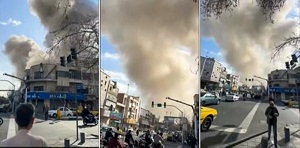 US and Israel launch strikes against Iran
-
 Jordan air force conducts sorties to 'protect kingdom's skies'- military
-
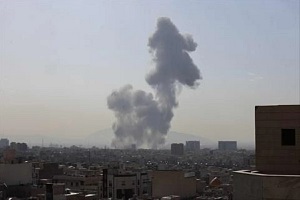 Israeli defence ministry announces 'preventive strike' on Iran