- Last Update07-Jun-2026


- Tweet
-
Jerusalem returns to centre stage as regional priorities shift
The Jordan Times
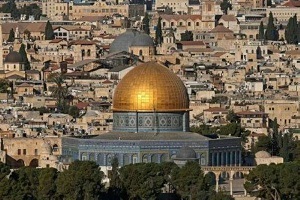
AMMAN — As Jordanians, Palestinians and the entire Arab nation commemorate the 59th anniversary of Yawm Al Naksa, the Palestinian question and Jerusalem at its heart has once again emerged as a focal point of regional tensions following the Iran war.
Marked annually on June 6, Yawm Al Naksa (Day of the Setback), which resulted in Israel’s occupation of East Jerusalem, the remainder of the Palestinian territories, the Syrian Golan Heights and Egypt’s Sinai Peninsula, is remembered amid warnings of Israeli schemes to alter realities on the ground in Jerusalem.
Nearly six decades later, Jerusalem remains at the centre of political and religious tensions, with concerns mounting over the future of its holy sites and the preservation of the historical and legal status quo.
The issue drew renewed attention after news reports alleged that the United States is working with Israel to end the Hashemite custodianship over Al Aqsa Mosque.
But US Secretary of State Marco Rubio has denied knowledge of such reports.
“I have never heard of that,” Rubio said during testimony before the Senate Foreign Relations Committee, stressing that Jordan remains a close US partner and adding that the Jordanian custodianship over Jerusalem’s holy sites had never been a matter under discussion.
His remarks came after media reports claimed that Washington and Tel Aviv were pursuing arrangements that could alter the management of the Al Aqsa compound.
The Middle East Eye reported that the US and Israel are allegedly collaborating on a plan to strip Jordan of its historic Hashemite custodianship over Jerusalem’s Al Aqsa Mosque.
The UK-based media website claimed that Washington and Tel Aviv are “actively working” to strip Jordan of its historic custodianship of Jerusalem’s Al Aqsa Mosque Compound/Al Haram Al Sharif.
Quoting multiple unnamed sources, the news website claimed that the US and Israel are pursuing a new arrangement that would see the management of Islam’s third holiest site closely align with Israeli interests.
Jordan’s Hashemite custodianship over Muslim and Christian holy sites in Jerusalem, which has long been recognised under bilateral agreements, remains a cornerstone of the Kingdom’s historic role in the city and a key element in safeguarding Al Aqsa Mosque Compound/Al Haram Al Sharif.
Greek Orthodox Archbishop and Head of the Council of Church Leaders Archbishop Christophoros Atallah reaffirmed that no one is more deserving than the Hashemites of custodianship over Jerusalem’s Muslim and Christian holy sites.
“Christians feel reassured about their holy sites under the Hashemite custodianship,” Atallah said, stressing that the Hashemites’ role is rooted in a longstanding commitment to protecting Jerusalem’s holy sites.
Officials in Jerusalem warned of increasingly serious efforts to expand Israeli control over Al Aqsa Mosque, Islam’s third holiest site.
Jerusalem Governorate adviser Marouf Al Rifai said that a recent campaign by Israeli occupation authorities to recruit volunteers into the so-called Temple Mount Unit represented a dangerous development and reflected a more advanced stage in efforts to Judaise Al Aqsa Mosque.
He said that the initiative involved integrating activists from extremist Temple groups and religious nationalist movements into structures used by Israeli authorities to impose control over the site.
Christian leaders have underlined the significance of the Hashemite Custodianship as major pillar in preserving the Old City’s identity, warning at the same time of repeated Israeli attempts to alter Jerusalem’s long-held status quo.
During a meeting with His Majesty in Amman in December, Patriarch Theophilos III, Patriarch of Jerusalem and All Palestine and Jordan, said the Hashemite Custodianship over Muslim and Christian holy sites in the Holy Land remains a force for good and a fundamental pillar for achieving balance in times of uncertainty and challenges.
He asserted that the existential threat to the Christian presence in the region is real and growing, citing ongoing violations and infringements on the right to free access to holy sites.
He also said that Christians in the Holy Land are watching with grave concern the erosion of the historic arrangements of the status quo and the disturbing violations committed by extremist groups against Al Aqsa Mosque.
Archbishop of the Anglican Episcopal Diocese of Jerusalem Hussam Naoum affirmed that the Hashemite Custodianship bolsters the resilience of the Church in Jerusalem, and is considered a safety valve for Palestinians who remain steadfast in their land and holy sites.
He warned that violations by Israeli extremists against Muslim and Christian holy sites cannot be tolerated and must be condemned, stressing the need to preserve freedom of worship and access to places of worship, including Al Haram Al Sharif and the Church of the Holy Sepulchre in Jerusalem.
The developments coincided with renewed warnings from the Arab Parliament.
Arab Parliament Speaker Mohammed Al Yamahi said that the 59th anniversary of the Naksa comes at one of the most dangerous moments in the region’s history, accusing Israel of pursuing settlement, displacement and expansionist policies aimed at imposing new realities on the ground.
He warned that continued escalation threatens regional stability and undermines prospects for a just and lasting peace.
Political analyst Amer Sabaileh said that Israel is moving to reorder its security priorities following the war with Iran.
“For Israel, the fronts that have opened in recent years are not ones it can simply live with. The priority is to address them according to the level of threat they pose,” he said.
“With the war in Iran paused, Lebanon is now taking centre stage. Syria has gradually moved down the list of priorities, while attention is shifting towards the West Bank, Gaza and Jerusalem,” Sabaileh added.
“Israel does not intend to coexist with fronts that can be reopened against it. From its perspective, reordering these arenas has become inevitable.”
Jordan has held the responsibility of overseeing Islamic endowments and holy sites in Jerusalem since 1924. The custodianship was further recognised under the 1994 Jordan-Israel peace treaty.
In 2013, His Majesty King Abdullah and Palestinian President Mahmoud Abbas signed an agreement reaffirming Jordan’s role in protecting Jerusalem and its holy sites and safeguarding the historical and legal status of Al Aqsa Mosque and Al Haram Al Sharif
Latest News
-
 US Military Strikes Iranian Coastal Surveillance Radar as Iran Attempts to Attack Kuwait, Bahrain
-
 Safadi, EU human rights envoy discuss cooperation
-
 Israel, Lebanon agree to conditional ceasefire
-
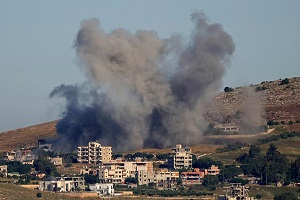 Netanyahu says he and Trump share goal to disarm Hizbollah, demilitarise Lebanon
-
 Queen Rania calls for building strength to meet global challenges at SXSW London conference