- Last Update01-Sep-2026


- Tweet
-
US, Iran exchange strikes as Hormuz tensions intensify
AFP
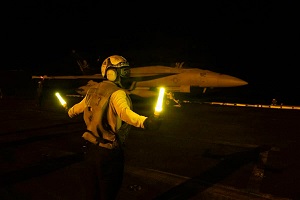
AMMAN — The United States and Iran exchanged fresh strikes on Monday, reviving direct confrontation after weeks of reduced fighting and placing the Strait of Hormuz at the centre of a new regional escalation.
US Central Command said that American forces carried out a “limited, precise” operation against Iranian Revolutionary Guard forces preparing to lay sea mines in the strategic waterway.
CENTCOM said that US forces targeted two Iranian launch platforms on Lark Island after detecting preparations to fire missiles carrying naval mines towards the strait.
The command said the operation was aimed at protecting civilian sailors and commercial shipping. It rejected Iran’s description of the strikes as an act of aggression.
US President Donald Trump threatened on Monday to hit Iran "hard" after the two foes traded fire for the first time in weeks, as his Treasury secretary vowed to keep up a pressure campaign aimed at hobbling Tehran's economy.
After six months of war, the foes remain at an impasse, with Iran keeping the strategic Strait of Hormuz closed and the US persisting with a naval counter-blockade of Iranian ports.
The exchange raised fears of a return to major hostilities, with the US president vowing to respond.
"We're going to hit them hard," Trump said, according to a Fox News reporter who spoke to him briefly. "There will be a response."
The United States said it attacked Iranian rocket launchers on the island of Larak to prevent Tehran planting mines in the key shipping lane.
President Masoud Pezeshkian later on Monday called for dialogue.
"We continue to strive for a path of agreement and understanding, and we believe that continuing the war is neither in our interest, nor in the interest of the region," he said at a summit in Kyrgyzstan, adding "the solution to the existing problems is dialogue and cooperation".
State media reported that three people were killed in the US attack on Larak, with several others wounded.
The exchange marked the first US strikes on Iranian territory in about a month. It came as Washington has increasingly relied on economic pressure against Tehran.
The escalation also renewed concerns over global energy supplies. Hormuz carried about one-fifth of the world’s oil supplies before the war began.
CENTCOM said last week that US forces had completed clearing sea mines from international shipping routes in the strait. The latest operation showed that Washington remains focused on preventing Iran from regaining the ability to disrupt navigation.
Trump said Iran would not be allowed to acquire nuclear weapons. He also said the United States would have near-total control of Hormuz once the war is won.
Political analyst Amer Sabaileh said the operation showed that Washington was seeking to remove Iran’s ability to threaten shipping through the strait.
“Clearly, the United States has completed clearing the Strait of Hormuz of mines and now wants to eliminate Iran’s ability to lay mines or disrupt the strait,” Sabaileh said.
“Lark Island is effectively the Revolutionary Guard’s logistical and operational hub for activities linked to Hormuz.”
He said that the strike also demonstrated growing US intelligence superiority.
“America is now imposing not only a military blockade, but also intelligence dominance, meaning Iranian movements have become exposed and pre-emptive US operations remain possible and ongoing,” Sabaileh said.
“The renewed exchange underscores the fragility of the conflict’s diplomatic track. With Hormuz again at the centre of military pressure, further strikes could deepen the regional crisis and increase pressure on global energy market.”
Latest News
-
 Iran says still open to diplomacy as war with US hits six months
-
 New Israeli strikes kill five in Gaza, authorities say
-
 Crown Prince receives members of Al Hussein Fellowship programme alumni network
-
 Syria President Appoints Kurdish Leader Mazloum Abdi as His Adviser
-
 Norway's King Harald Dead at 89