- Last Update19-Mar-2026


- Tweet
-
War reshapes Middle East balance as regional, global tensions rise
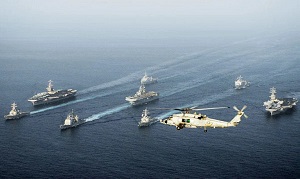
AFP
AMMAN — The ongoing war involving Iran, Israel and the United States is reshaping the political landscape of the Middle East, pushing the region into a more complex and unstable phase.
The escalation has moved beyond isolated confrontations. It is now unfolding across multiple fronts, with widening spillover risks and growing involvement of regional and international actors.
These developments are not only expanding the conflict, but are also reshaping political, economic and security dynamics across the Middle East.
Diplomatic activity across the region is intensifying.
Saudi Arabia said it will host a consultative meeting for Arab and Islamic foreign ministers in Riyadh, aimed at strengthening coordination and supporting regional security and stability.
The move reflects rising concern that the conflict is entering a more sensitive stage, with implications extending beyond the immediate battlefield.
Iranian Foreign Minister Abbas Araghchi said in a post on X on Wednesday that the consequences of the war would not be contained within the region.
He warned that the global impact had yet to fully unfold and would affect all countries regardless of economic or political standing.
"Wave of global repercussions has only begun and will hit all - regardless of wealth, faith, or race," Araghchi said.
"A rising number of voices – [including] European and US officials - exclaim that the war on Iran is unjust. More members of the international community should follow suit," the post added.
The escalation has also drawn mixed international reactions, ranging from calls to contain the crisis to warnings over its impact on regional stability and global energy markets, particularly amid rising military tensions around the Strait of Hormuz.
Military developments are also shaping the route of the conflict.
US Central Command said Tuesday it had hit Iranian missile sites near the strategic Strait of Hormuz using multiple 5,000-pound deep penetrator munitions, among the most powerful bombs in its arsenal.
The move signals growing concern over the security of key maritime routes.
It also underscores the role of major powers in the unfolding crisis, with Washington emerging as a decisive actor in shaping both its military and strategic direction.
At the same time, the economic impact is becoming more visible. Fuel prices in the United States have risen, with average gasoline costs exceeding $3.75 per gallon for the first time since October 2023, reflecting disruptions in global energy markets linked to the war.
These developments highlight how the conflict is intersecting with global economic stability, particularly through energy supply chains and strategic chokepoints.
Political analyst Amer Sabaileh said the current trajectory points to a deeper structural shift in the region.
“After October 7, the region will not return to what it was [before],” he said. “The previous model of fragmented control, militias and loose territorial authority is unlikely to persist.”
He added that the developments could push towards a broader reconfiguration of the regional order.
“This may lead to a period of instability,” he said. “But it also creates pressure on states to address the issue of non-state actors and restore more centralised control.”
Across the region, the trajectory points to shifts in political and security dynamics. The conflict is extending beyond direct confrontation and placing increased pressure on regional coordination and diplomatic efforts.
The current moment reflects a departure from earlier attempts at de-escalation, as governments navigate a more complex and uncertain environment.
As tensions rise, the key question is whether diplomatic efforts can keep pace with the speed of military developments.
The route suggests a shift in regional dynamics, but whether it can be contained remains uncertain
Latest News
-
 Missile debris kills one in Abu Dhabi as Iran presses Gulf attacks
-
 Drone, rocket attack targets US embassy in Baghdad
-
 Israel army says begun 'limited targeted ground operations' against Hizbollah in south Lebanon
-
 Iran defiant as strikes hit Gulf transport, energy hubs
-
 Western allies push back on Trump call for NATO help to reopen Hormuz