- Last Update02-Oct-2026


- Tweet
-
European boycott of israeli settlement goods gains momentum
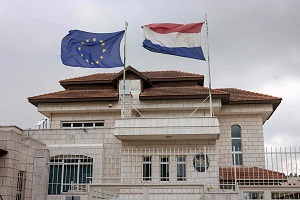
AFP
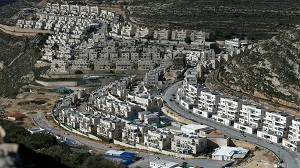
OCCUPIED JERUSALEM — The Netherlands has banned trade in goods produced in Israeli settlements, while 11 other countries, including Britain and France, have announced plans for similar measures. Cultural and sporting boycotts and protests are also increasing, reflecting mounting European opposition to Israeli policies toward Palestinians in Gaza and the occupied West Bank.
The measures have prompted strong reactions from Israel’s far-right government, which has taken retaliatory steps against some European countries.
Israeli media has reported that a kosher supermarket in Amsterdam had informed customers earlier in September that a long list of products originating in Israeli settlements would no longer be available on its shelves.
“We’re working hard to find suitable replacements, so we can maintain our full range of products as much as possible,” the supermarket said in a notice to customers. “If you notice empty shelves, understand what it stems from.”
The supermarket’s announcement followed the Netherlands’ decision to prohibit imports and trade in settlement goods, effective September 22.
Dutch officials said the measures were intended to bring the country’s trade policy into line with international law, under which Israeli settlements in the occupied West Bank are considered illegal.
The Dutch measures go beyond imports. They also prohibit the sale and purchase of settlement goods, the provision of services that facilitate trade in those products and attempts to circumvent the restrictions.
The Netherlands is the fourth European Union member state to adopt such measures, following Spain, Ireland and Belgium.
The Dutch decision came shortly before an announcement by 11 other countries, including Britain and France that they also planned to ban goods from Israeli settlements.
In a joint statement, the countries cited “unprecedented levels of settler violence and settlement expansion,” including Israel’s decision to publish tenders for the E1 settlement project, which would connect Jerusalem with the Ma’ale Adumim settlement. The project is widely viewed by its critics as a potential threat to the territorial contiguity of a future Palestinian state.
The statement said Israeli government actions were undermining the possibility of implementing a two-state solution. The signatories also said they opposed any measure that would amount to the de facto annexation of parts of the occupied West Bank.
Britain separately announced that it would expand sanctions against individuals and organizations involved in the expansion or financing of Israeli settlements.
The economic impact of the measures remains difficult to assess. The European Union is Israel’s largest trading partner, with bilateral trade exceeding 42 billion euros ($48 billion) in 2024. However, the value of goods directly linked to Israeli settlements is not publicly known.
The measures have also been accompanied by growing cultural and sporting opposition.
Ireland’s UEFA Nations League match against Israel on Sept. 27 was preceded by controversy and delays after goalkeeper Gavin Bazunu withdrew from the squad, citing moral concerns related to the war in Gaza.
During the match, which was played in a sparsely attended stadium, Irish players wore black armbands in recognition of lives lost in the conflict. They also observed a moment of silence during Israel’s national anthem and did not participate in the traditional pre-match handshakes and pennant exchanges.
Ireland’s public broadcaster announced on Sept. 17 that it would neither participate in nor broadcast the 2027 Eurovision Song Contest, citing the continuing loss of life in Gaza and Israel’s participation in the competition.
The developments are part of a broader wave of economic, cultural and sporting measures across Europe that reflect growing frustration over Israel’s conduct of the war in Gaza and its policies in the occupied West Bank.
Israel Responds
Israeli officials have sought to respond individually to countries imposing restrictions, in an effort to deter other governments from adopting similar measures.
Israeli foreign minister Gideon Sa’ar strongly criticized the Netherlands’ decision, describing it as antisemitic, and ordered Dutch representatives to be removed from the International Gaza Support Center in Kiryat Gat.
Sa’ar announced that Israel would revoke the diplomatic credentials granted to Dutch representatives based in Ramallah.
Israel also announced measures against Britain. In addition to removing British representatives from the International Gaza Support Center, Sa’ar ordered the closure of the British Consulate in East Jerusalem, ended Britain’s involvement in training Palestinian Authority forces and barred 12 British citizens from entering Israel.
“Our message is clear,” Sa’ar said. “Anyone who acts against Israel will have no foothold in the region.”
A diplomat from a country that had previously imposed sanctions on Israel said reversing such measures would be difficult.
“It wasn’t easy to decide to impose the current sanctions, but it also wouldn’t be easy to remove them,” the diplomat said. “It’s hard to say at the minute what might enable a return of settlement products to the shelves in the future.”
“The goal is to push Israeli public opinion and influence the government to change its policies,” the diplomat added.
British Foreign Secretary Ed Miliband used a speech at the Labour Party conference on Sept. 28 to outline what he described as a major shift in British foreign policy toward Israel and the Palestinians.
“I want to say to the millions of people in this country, and indeed elsewhere, who have been moved and outraged by the plight of the Palestinian people: We hear you. You were right,” Miliband said.
He added, “And when it comes to the attempt to destroy the two-state solution, this party, this movement, this government, says we will not let you succeed.”
Miliband, whose parents were Jewish refugees from Nazi Germany, has frequently referred to his family’s history in discussing his political views on the Middle East.
“We call out ethnic cleansing by the settler terrorists in the West Bank. We call out the evidence of war crimes in Gaza. We call out Israel’s illegal occupation of Palestine,” he said.
“And we match words with actions. We will ban the import of goods from illegal settlements. We will disrupt the supply lines of British finance, British construction and British services for illegal settlements.”
The expanding restrictions mark a significant change in the European response to Israeli settlement activity. Whether the measures will produce changes in Israeli policy, however, remains uncertain, particularly given the broader economic relationship between Israel and Europe.
Latest News
-
 King receives Patriarch of All Bulgaria and Metropolitan of Sofia
-
 Iran Says No New Talks Planned With US
-
 Crown Prince meets with US International Development Finance Corporation CEO
-
 Iran stands firm on Hormuz plan after US rejection
-
 Israeli minister calls for West Bank war, annexation of Lebanon, Gaza areas