- Last Update02-Mar-2026


- Tweet
-
Not our war, but our sky - By Hana Namrouqa, The jordan Times
Jordan’s skies were, once again, put to the test on Saturday, as the Jordan Armed Forces–Arab Army successfully intercepted ballistic missiles and drones aimed at the Kingdom. The attacks reflect a dangerous shift in the regional conflict: military escalation is no longer confined to the warring parties, but spilling beyond borders, forcing stable countries like Jordan to defend themselves decisively while avoiding entanglement in a war that is not theirs.
The Kingdom responded swiftly and decisively. The armed forces neutralised the missile threat, security agencies managed the aftermath efficiently, and government communications focused on public reassurance. This coordinated response reflects a state operating with discipline, foresight and calm under pressure.
At the highest level, His Majesty King Abdullah reinforced Jordan’s position through a series of diplomatic calls. The King condemned the attacks and emphasised that the Kingdom will continue to take all necessary measures to protect its citizens, security and sovereignty. In these discussions, the King reaffirmed Jordan’s absolute solidarity with Arab countries facing similar threats and stressed the urgent need to halt escalation and pursue dialogue as the path to stability.
While the missile interceptions were a military success, they also show how the region is changing. Fighting no longer stays between the countries directly involved—it spreads across borders, putting neighbours at risk. Closed airspace, disrupted flights, and falling debris show that even countries not involved in the conflict can face real consequences.
Jordan’s response to the crisis reflects the core of its longstanding strategic approach. For decades, the Kingdom has maintained three consistent principles: avoid alignment with rival regional axes, safeguard sovereignty and borders and actively work to de-escalate tensions. Saturday’s attacks tested that balance. The military response was immediate and decisive—a sovereign declaration that Jordanian territory and skies will not serve as extensions of other nations’ conflicts. Simultaneously, the political and diplomatic response remained carefully measured, emphasizing restraint, dialogue, and de-escalation rather than reactionary escalation.
Jordan also recognizes that the threat is not purely military. Regional instability directly affects the economy, tourism, investment, and social resilience. Protecting national security therefore goes hand in hand with preserving stability and public confidence. The Kingdom’s institutional response, from armed forces to civil defense and government communications, demonstrates a system capable of managing crises efficiently under pressure.
Most importantly, Jordan is sending a dual message: it will defend its territory and citizens decisively, but it will not allow itself to become a battlefield in wider regional escalation. The Kingdom’s position is firm yet measured, combining defensive readiness with diplomatic engagement to prevent further escalation.
The real challenge lies ahead. With regional powers exchanging missile threats, military movements, and escalating signals, the risk of miscalculation or spillover into Jordan increases. The Kingdom’s strategy, fortifying air defenses, coordinating closely with neighboring states and international partners, and maintaining independent decision-making, reflects a clear understanding of these threats and readiness to respond.
Jordan’s skies may feel the effects of regional conflict, but the Kingdom remains alert and strong. Defending the country, using diplomacy wisely, and managing the impact of a war it did not start, this is Jordan’s careful, resilient and strategic approach.
Latest News
-
 King, Saudi crown prince discuss regional developments
-
 Trump Announces Major Combat, Tells Iran Officials to Lay Down Arms or ‘Face Death’
-
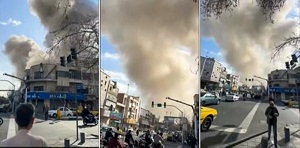 US and Israel launch strikes against Iran
-
 Jordan air force conducts sorties to 'protect kingdom's skies'- military
-
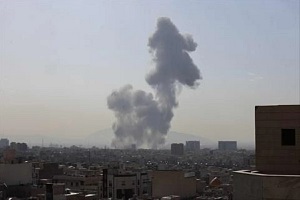 Israeli defence ministry announces 'preventive strike' on Iran