- Last Update18-Oct-2026


- Tweet
-
Can Iran turn regional escalation into strategic leverage? - By Amer Al Sabaileh, The Jordan Times
The issue today is no longer simply Iran’s actions through the Houthis in Yemen or its attempts to shift pressure towards Saudi Arabia. The more important question is what comes next, particularly as the United States increasingly signals its readiness to expand targeted operations and employ more sophisticated capabilities in its confrontation with Iran.
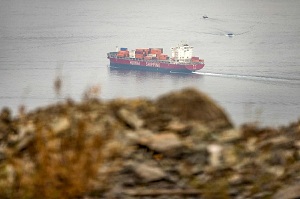
Washington is seeking to deepen the crisis facing Tehran through a naval and air blockade and mounting economic pressure, with the aim of narrowing Iran’s room to manoeuvre and forcing it to reconsider its calculations. In response, Iran is once again turning to regional escalation as one of the remaining tools available to break the blockade and impose a new equation on its adversaries. But how far can this strategy go, and what options does Tehran still have to change the course of the confrontation?
Iran’s room to manoeuvre appears to be shrinking. Following the escalation witnessed across the region, it is increasingly difficult to identify additional steps that could compel Washington to change its position. Iran’s calculations have not been exclusively military, they have also rested on the prospect of disruption in global energy markets and the possibility that domestic political considerations in the United States, particularly electoral calculations, might push President Trump to avoid further escalation or seek a settlement.
That assumption is now facing a different test. Washington appears determined to retain the initiative, while time itself could become a source of mounting pressure on Tehran. What Iran hopes will exhaust its adversaries may instead deepen its own difficulties if the blockade continues without a political breakthrough. The central dilemma is clear,how can Tehran expand regional pressure without incurring costs that exceed its capacity to absorb them?
More concerning for Iran is the possibility that the consequences of the confrontation will extend beyond its external front. Security developments in Balochistan and the Kurdish regions raise questions about the Iranian state's ability to contain simultaneous challenges, particularly if they coincide with continuing economic and social pressures. These developments do not necessarily signal the imminent collapse of the regime, but they could become more consequential if local crises accumulate while the state remains engaged in a prolonged external confrontation.
Under such circumstances, separate security challenges could develop into a broader strain on Tehran’s ability to manage the crisis and maintain domestic stability. Iran’s capacity to withstand external pressure will therefore depend, in part, on whether it can prevent internal tensions from accumulating and further restricting its political and security options.
Meanwhile, Israel is seeking to consolidate what the Netanyahu government considers achievements on multiple fronts, particularly in light of the political calculations surrounding the Israeli elections. Lebanon remains an important arena in this effort, with Israel seeking to constrain Hezbollah’s capabilities and reduce the threat it poses. Yet Israel’s calculations extend beyond Lebanon. Continued pressure on Iran and a narrowing of Tehran’s strategic options could give Tel Aviv an opportunity to strengthen its position, whether by targeting additional Iranian capabilities or exploiting current conditions to impose new strategic realities on Tehran.
The problem for Iran is that expanding the confrontation does not necessarily bring it closer to achieving its objectives. If Tehran cannot break the blockade or secure an agreement that eases the pressure, it may find itself facing mounting economic, security and political challenges even as its adversaries gain greater room to manoeuvre.
The question, therefore, is no longer simply what Iran will do next following the escalation in Yemen and the pressure on Saudi Arabia. It is whether Tehran still possesses the leverage necessary to change the course of the confrontation. Iran’s greatest strategic challenge may be that the very escalation it is counting on to break the blockade could become another factor narrowing its options, gradually shifting the centre of gravity of the confrontation from the region to Iran’s own domestic front.