- Last Update01-Feb-2026


- Tweet
-
Saudi Stock Market Opens Its Doors to Direct Foreign Investment
Asharq Al-Awsat
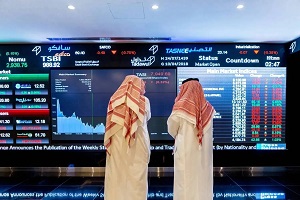
When trading opened on this Sunday, Saudi Arabia’s stock exchange marked more than the start of a routine session. The day signaled a pivotal shift in the Kingdom’s financial history, as the market formally opened to direct foreign investment, positioning it as a destination for global capital and one of the most consequential milestones in Saudi Arabia’s economic transformation.
With the removal of long-standing restrictions and pre-qualification requirements, the Saudi market is moving beyond its earlier status as an ambitious emerging exchange. It is now seeking to stand shoulder to shoulder with advanced global markets, backed by a robust regulatory framework and an increasingly confident investor base.
Analysts say the reforms could pave the way for deeper liquidity, broader participation, and an eventual climb toward the 17,000-point level for the benchmark index.
Market specialists view the move as reinforcing Saudi Arabia’s appeal as an international investment hub and as a vote of confidence in the market’s regulatory maturity and capacity to absorb large capital inflows.
Expectations are that the changes will help attract long-term, strategic foreign investors, raise trading activity, and enhance market depth. Optimistic forecasts point to gains over the next two years, driven by anticipated interest in sectors such as banking, petrochemicals, and technology.
Sweeping regulatory reform
The decision by the Capital Market Authority in January to abolish the Qualified Foreign Investor regime and dismantle the framework governing swap agreements marked a fundamental regulatory overhaul rather than a technical adjustment.
The new rules allow non-resident foreign investors to access the main market directly, removing historic barriers and simplifying the process of opening and operating investment accounts.
Regulators say the reforms are aimed at attracting long-term capital that supports not only liquidity, but also higher standards of governance and transparency in line with global best practices.
The changes are part of a broader strategy to make the Saudi market more accessible to international investors, including Gulf Cooperation Council (GCC) residents and individuals with prior ties to the region.
Market gains ahead of the shift
The market has already reacted positively. Hamad Al-Olayan, chief executive of Villa Capital, told Asharq Al-Awsat that the benchmark index gained nearly 1,000 points in January alone, following the announcement of the regulatory changes.
“This rally comes ahead of foreign participation,” Al-Olayan said, noting that many listed companies had seen their share prices decline over the past two years. “Current investors are unlikely to sell strong stocks at these low levels, and recent sessions have seen concentrated buying in companies with solid balance sheets and promising outlooks.”
Key sectors in focus
Al-Olayan described the Saudi market as the strongest in the region, citing a stream of positive assessments from global banks and advisory firms, as well as optimistic growth projections for the Saudi economy in 2026.
He said the market continues to be anchored by two core sectors: banking, which plays the leading role, and petrochemicals, which remain attractive despite near-term challenges. Recent asset sales by SABIC in Europe and the United States—transactions that drew foreign investors—underscore sustained international confidence in Saudi companies.
Momentum has also been building around the Saudi Arabian Mining Company (Maaden), supported by rising global prices for gold, silver, and other metals. Al-Olayan noted that international investors increasingly favor companies with strategic assets, including Saudi Aramco and Maaden.
Toward advanced-market status
Mohamed Hamdy Omar, chief executive of G World, described the move as “a historic step that strengthens the Saudi market’s position as an emerging exchange steadily progressing toward developed-market status.”
He said the decision reflects strong regulatory and economic confidence and builds on earlier reforms following the market’s inclusion in major global indices.
Omar expects foreign inflows to build gradually from the second half of 2026, with clearer effects on trading volumes and prices emerging in 2027.
While short-term volatility linked to portfolio rebalancing is possible, he stressed that the medium- and long-term outlook remains firmly positive.
Key figures
Despite market volatility in 2025 driven by geopolitical tensions, global economic uncertainty, and oil price swings, foreign ownership in Saudi equities climbed to SAR 590 billion ($157.3 billion) by the end of the third quarter of the year, up from SAR 498 billion ($132.8 billion) a year earlier.
Total trading value reached SAR 1.30 trillion ($346.7 billion) in 2025, underscoring the market’s resilience and growing international appeal.