- Last Update19-Apr-2026


- Tweet
-
What Lies Beyond Energy Shocks and Financial Markets - By Ahmad M. Awad, Jordan News
The war has stopped militarily, or at least the sounds of it have faded, but its economic and social impact has not. This is the clearest lesson from the U.S.-Israeli war on Iran. Shocks do not end when the missiles fall silent, because their real effects emerge later, gradually filtering into prices, investment, job opportunities, and the level of social protection.
I will not dwell here on the damage done to the image of American power in the region and the world, as that requires a different kind of analysis. What concerns me is that the economic and social impact will remain present for months, and perhaps for years, because it does not appear all at once, but rather accumulates slowly in people’s lives and in the economies of states.
War has consequences that go deeper than energy shocks and financial market turbulence. It has once again exposed the fragility of the global economy and revealed the scale of vulnerability facing countries of the Global South countries, amid rising debt, weak productive bases, limited public resources, and the absence of adequate social protection.
In advanced economies, the shock may appear in the form of slower growth or declining investment. In countries of the South, however, it takes on harsher form: rising prices, pressure on currencies, erosion of wages, shrinking job opportunities, and a renewed expansion of poverty. At that point, the issue is no longer merely about numbers; it becomes a social and political matter, because every external shock becomes capable of turning into an internal crisis when protection is weak.
The problem is that labour markets are still treated in many global discussions as a secondary issue, even though they in fact lie at the heart of economic and social stability. It is true that global unemployment rates appear superficially stable at 4.9%, according to the International Labour Organization, but this stability conceals a far more fragile reality. Hundreds of millions of workers are living in extreme poverty, and more than half of the global labour force works in the informal economy. This labour is concentrated primarily in countries of the South, especially in the least developed countries.
For this reason, it is not enough merely to call for protecting states’ public finances. What is required is the protection of society itself. Financial stability is undoubtedly important, but it is not sufficient to build resilience and stability in states. What creates real stability is the existence of stable labour markets, decent work, and comprehensive social protection. When these conditions are absent, state budgets may appear stable on paper, while society grows more fragile.
This meaning emerged clearly in the discussions that took place during the recent Spring Meetings of the International Monetary Fund and the World Bank in Washington. Alongside the traditional discussion of growth, debt, and inflation, there was a clear emphasis from civil society organizations, human rights groups, the International Labour Organization, and others that economic recovery cannot be achieved amid the expansion of informal employment, the deterioration of job quality, and the shrinking ability of governments to finance social protection.
This war, therefore, should be read as a new warning. It has proven that the global economy is not harmed only through markets, energy, and finance, but also from below: through the fragility of work, weak incomes, and declining social protection. At this point, the countries of the Global South pay the highest price.
The post-war period, then, is not merely a matter of global markets; it is a matter of an economic model. There can be no stability without decent work for all, and no recovery without coherent social protection. Unless these priorities are elevated to the same level of importance as public finances, future shocks will find the countries of the Global South even more exposed and more vulnerable.
Latest News
-
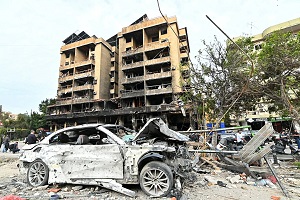 10-day Israel-Lebanon truce begins as Lebanese army warns of 'violations'
-
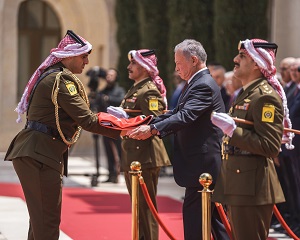 King attends Jordan Flag Day ceremony
-
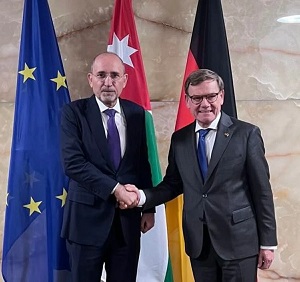 Safadi, German counterpart discuss regional de-escalation, bilateral relations
-
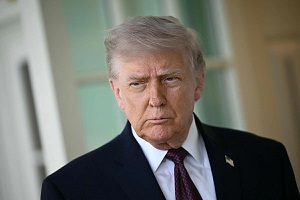 Trump says Iran talks may resume as Israel, Lebanon open direct track
-
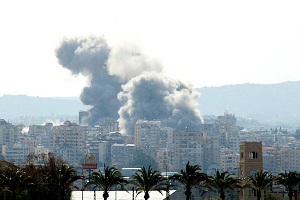 Israeli army strikes south of Beirut as Hizbollah launches rockets at Israel