- Last Update19-Apr-2026


- Tweet
-
Jordan proves its economic resilience - By Raad Mahmoud Al-Tal, The Jordan Times
The latest agreement between Jordan and the International Monetary Fund is far more significant than the roughly $197 million in financing it will provide. Its real importance lies in the message it sends. At a time of deep regional instability, the IMF is effectively confirming that the Jordanian economy remains stable, resilient, and capable of continuing its reform path.
The IMF’s statement is particularly important because it confirms that Jordan has met all of the program’s quantitative targets and continued to implement its structural reforms as planned. This is not a technical detail. It is evidence that Jordan has managed to preserve its main economic balances despite the pressures created by war in the region, higher energy prices, and weaker tourism revenues.
Perhaps the most encouraging point is that the IMF is not describing Jordan as an economy that is merely surviving the crisis. Instead, it is describing an economy that entered this difficult period with momentum. Jordan’s economy grew by 2.8 percent in 2025, and that momentum continued into the beginning of 2026. This suggests that growth is becoming increasingly linked to the economy’s ability to adapt and to generate activity across several sectors at the same time, rather than depending only on public spending or temporary support measures.
Jordan’s response to the regional shock has also been notable for its balance. The government did not rely on severe austerity measures that could have weakened economic activity further. Instead, it maintained fiscal and monetary stability while providing targeted support to the sectors and groups most affected. It also acted quickly to secure energy supplies, maintain supply chains, and preserve liquidity in the market. This balanced approach is important because it reduces the risk that problems in tourism and energy could spread to the wider economy.
Although the IMF lowered its forecast for Jordan’s growth in 2026 from 3 per cent to 2.7 per cent, this downward revision remains relatively modest when viewed against the scale of the current regional tensions. In other words, the Jordanian economy still appears to have room to absorb external shocks, and the economic impact of the crisis has so far remained manageable.
The IMF expects inflation to rise to 2.3 per cent, mainly because of higher food and fuel prices. It also expects the current account deficit to widen to 6.9 per cent of GDP as a result of lower tourism revenues and higher shipping, insurance, and energy import costs. Yet even these figures carry a positive signal. Inflation remains relatively low by regional standards, which reflects the Central Bank of Jordan’s success in maintaining price stability and protecting the value of the dinar despite difficult external conditions.
From an investment perspective, the agreement is equally important. Continued cooperation with the IMF sends a strong signal to international investors and financial institutions that Jordan remains one of the more stable and lower-risk economies in the region. This improves the country’s ability to attract investment and external financing, while also reassuring investors that the reform process remains on track. In uncertain times, confidence itself becomes an economic asset.
The Resilience and Sustainability Facility adds another important dimension to the agreement. Jordan’s reform agenda is no longer focused only on public finances. It is increasingly moving toward longer-term issues such as water security, electricity, renewable energy, health preparedness, and climate-related financial disclosure. This reflects a broader shift from simply managing crises to building an economy that is better prepared for future challenges.
This agreement offers more than financial support. It offers a stronger image of the Jordanian economy at a critical moment. Regional risks remain real, but the broader message is clear. Jordan is no longer dealing with crises through temporary reactions alone. It is responding through a more coherent, stable, and forward-looking reform framework. In today’s uncertain regional environment, that may be worth far more than the financing itself.
Latest News
-
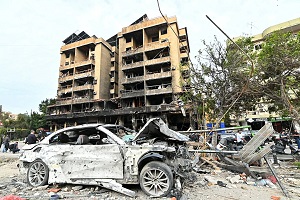 10-day Israel-Lebanon truce begins as Lebanese army warns of 'violations'
-
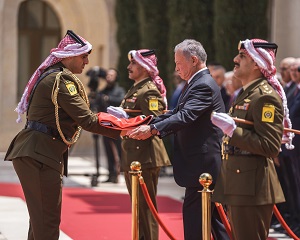 King attends Jordan Flag Day ceremony
-
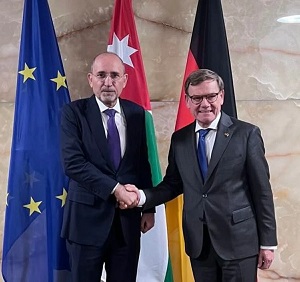 Safadi, German counterpart discuss regional de-escalation, bilateral relations
-
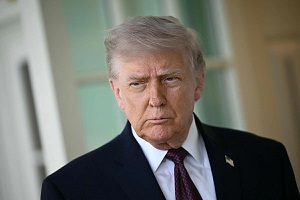 Trump says Iran talks may resume as Israel, Lebanon open direct track
-
 Israeli army strikes south of Beirut as Hizbollah launches rockets at Israel