- Last Update07-Aug-2026


- Tweet
-
John L. Esposito (1940–2026)
In Memory of a Founder, a Giant, and a Friend
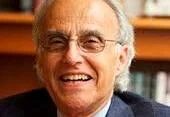
By Dr. Radwan A. Masmoudi,
John L. Esposito (1940–2026)
In Memory of a Founder, a Giant, and a Friend
A tribute from the Center for the Study of Islam and Democracy (CSID)
By Dr. Radwan A. Masmoudi
Three months ago, on a stage at Georgetown University, CSID and MPAC placed our Lifetime Achievement Award in John L. Esposito's hands. He had helped build the very room we were standing in. He stood before us and did what he always did: he turned the moment away from himself and back toward the work, reminding all of us that democracy, human rights, and pluralism remain unfinished business, and that progress is never inevitable. It depends, he said, on people willing to stay engaged.
None of us knew it would be the last time we would hear his voice in that hall.
On July 15, 2026, John passed away in Philadelphia from complications following heart surgery. He was 86.
It is one of the hardest sentences I have ever had to write on behalf of this organization. John was not simply a friend of CSID. He was one of its architects. When this organization was little more than an idea and a handful of believers, John Esposito was already there, as a Founding Director and Vice Chair of our Board for its first six years, lending us his name, his credibility, and his conviction at a moment when we had earned none of our own yet. Everything CSID has become in the more than two decades since, we owe in some part to the fact that John believed in us first.
I have known and loved John for forty years. Writing about him now, I find myself reaching less for his titles than for the memory of his voice on the phone, warm and kind, always more curious about what you were working on than eager to talk about himself
From Would-Be Priest to the World's Foremost Interpreter of Islam
John's path to becoming the most consequential Western scholar of Islam of his generation began, improbably, with the priesthood. Raised in an Italian Catholic family in Brooklyn, he set out to become a Franciscan friar. It was a doctoral program in Catholic theology at Temple University, and a required year studying world religions, that put him in the classroom of the Palestinian-American scholar Ismail al-Faruqi. John would later say he knew nothing about Islam or Muslims when he arrived. Al-Faruqi took him on as his very first doctoral student. Surrounded by classmates from Egypt, Malaysia, and across the Muslim world, John found himself, in his own words, living an immersion, and he fell in love with the subject that would define his life.
He liked to joke, self-deprecatingly, that his career was a gift from history's worst moments: the Iranian Revolution of 1979 gave him what he called his first Lexus, and September 11 gave him the Mercedes that followed. Beneath the humor was something he took entirely seriously, a warning he issued for decades: that great powers, deprived of an old enemy, too easily manufacture a new one, and that Islam had been drafted into that role. His 1992 book The Islamic Threat: Myth or Reality? named that danger before most of the world was willing to see it. After 9/11, Unholy War: Terror in the Name of Islam refused to let terrorists claim a faith on behalf of a billion people, and refused, just as firmly, to let a faith be indicted for the crimes of a few.
Georgetown did not wait for John to apply. It recruited him in 1993, and using a landmark gift from Prince Alwaleed bin Talal, he founded the Center for Muslim-Christian Understanding, later renamed in the Prince's honor, and grew it into one of the world's great institutions for interfaith dialogue. He went on to found the Bridge Initiative to document and confront Islamophobia worldwide. Over more than five decades he wrote, edited, or contributed to more than fifty-five books translated into dozens of languages, served as editor-in-chief of the Oxford Dictionary of Islam and the Oxford Encyclopedia of the Islamic World, and, with Dalia Mogahed, authored Who Speaks for Islam? What a Billion Muslims Really Think, grounding the conversation about Muslim life in the actual voices of a billion people rather than the loudest ones shouting about them. He was elected president of both the Middle East Studies Association and the American Academy of Religion, advised the U.S. State Department and governments across three continents, and received seven honorary doctorates.
A Scholar Who Studied Muslims in Order to Understand Them
What set John apart was never simply the volume of what he produced. It was the method beneath it. At a time when many Western scholars treated Islamic movements as pathologies to be diagnosed or threats to be contained, John engaged thinkers like Rached Ghannouchi, Hasan al-Turabi, and Khurshid Ahmad directly, as people to be read and questioned rather than case files to be closed. He did not agree with everyone he studied. But he understood, decades before it became fashionable to say so, that you cannot explain a people you have refused to actually meet. He traveled to Pakistan, Malaysia, Turkey, Egypt, Tunisia, and across the Muslim world not as an outside expert arriving with conclusions already drafted, but as what colleagues have called a genuine interlocutor, and he was received in turn not as a curiosity but, remarkably for an American Catholic academic, as something closer to family.
That same instinct made him a friend to people whom power had chosen to isolate. He joined the international campaign for the humane treatment of former Pakistani Prime Minister Imran Khan, and when told, gently, by Pakistani officials that perhaps he had misunderstood the situation, he told them he understood it perfectly well, and let his name stand. In his final years, as war unfolded in Gaza, he spoke with the same clarity about Palestinian rights and the failures of Western policy that he had once brought to the study of Islamophobia at home, never trading the discomfort of honesty for the comfort of silence.
What He Meant to Us
I first came to know John's mind before I came to know the man, through the pages of The Islamic Threat, which reshaped how I understood the connection between scholarship, integrity, and the fight against stereotype. Years later, when I met him at MIT in 1986, I learned that this same scholar, whose work had already shaped mine, invited me to his home and then visited me, that same year, in my home country of Tunisia. For a young academic, discovering that one of your intellectual heroes already knew who you were, and believed in you, is a particular kind of gift. It is a gift John gave to more people than any of us could count. He mentored generations of scholars and activists, many of them young, many of them Muslim, sat on more dissertation committees than anyone will ever tally, and treated the success of others as though it were his own project.
He carried that same generosity into the life of CSID. He helped set CSID's direction when we were unproven. He lent his name when our name meant little on its own. And two months ago, when we had the chance to finally repay some fraction of that debt in front of a room full of people who loved him, and awarded him our first LIFETIME ACHIEVEMENT AWARD he used the moment not to reflect on his own career, but to remind us that the work is not finished, and that it never becomes someone else's responsibility to finish it for us.
John is survived by Jean Esposito, his wife of sixty-one years and, by his own account, his partner and greatest support in everything he built. Our hearts go out to her, to his family, to his colleagues at Georgetown, and to the countless students, scholars, and friends across the world whose understanding of Islam, and of one another, he changed forever.
There are scholars who explain the world, and there are scholars who make it a little less cruel. John Esposito spent sixty years doing the second, and did it while treating everyone he met, from heads of state to first-year graduate students, with the same rigor, warmth, and refusal to look away from injustice. We have lost a founder, a mentor, and a great friend. What he built in us does not end with him.
It is now ours to carry.
Rest in peace, dear John. You crossed bridges that lesser minds mistook for walls, and you leave the rest of us with no excuse but to keep crossing them.
Inna lillahi wa inna ilayhi raji'un — Indeed, to God we belong, and to Him we shall return.
Dr. Radwan A. Masmoudi
Founder and Executive Director
Center for the Study of Islam and Democracy (CSID)
Latest News
-
 US ambassador to Israel denounces settler siege on Palestinians as 'terror'
-
 Zelensky Requests 5% of US Patriot Missile Stockpile to Survive Winter
-
 King visits Maan, meets leading figures from governorate
-
 Israeli minister vows troops to stay in Lebanon, Syria, Gaza
-
 Safadi, ICRC president discuss preparations for ‘Humanity in War’ conference