- Last Update08-Dec-2025


- Tweet
-
Post-Assad Syria: Delicate transition seeking structure, stability
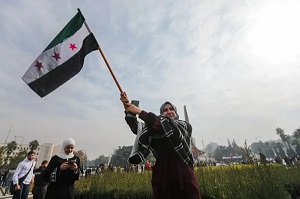
AFP
AMMAN — One year after the ouster of longtime leader Bashar Al Assad, Syria is still struggling to define its new state. The system has changed, but the structure remains fragile. Institutions work unevenly, and the transition continues in slow, cautious steps.
The transitional administration is trying to reorganise decision-making and restore basic state functions. Progress is visible in some areas but remains uneven, as weakened ministries and local systems formed during the conflict continue to shape daily governance.
Assad’s rule ended after years of institutional erosion and fragmented territorial control. Major cities have regained clearer administration, while many rural and remote areas still rely on mixed arrangements created under instability.
Communities throughout Syria are also adapting. Groups once tied to the old system are searching for new roles. Others want stronger guarantees inside the transition. These shifts reflect a society still negotiating its political space after decades of limited representation.
Extremist groups remain present in parts of the country’s northwest. Their influence is mostly local. In many areas, they operate within transitional arrangements rather than directing them. Weak services and economic pressure continue to limit attempts to test new administrative models.
The economy is the heaviest burden. Prices keep rising. Electricity and fuel remain unstable, while families struggle to meet basic needs. Purchasing power remains low. Markets reopened, but real recovery is still far away. Economic pressure slows rebuilding and shapes daily life more than political decisions.
A shift in state messaging appeared on Sunday, during a political address delivered by President Ahmed Al Sharaa at the opening of the Doha Forum 2025, held under the theme “Advancing Justice, From Promises to Tangible Reality.”
Al Sharaa outlined what he called “a new Syria approach”, saying Syria aims to be “a stable state, not an exporter conflict”.
He noted that Damascus had rebuilt regional and international ties and moved “beyond easing tensions” into a more active phase. “The country is now on the right path,” he said, adding that Syria had “shifted from exporting crises to becoming a place where hope is being created.”
Security analyst Nidal Abu Zeid viewed the transition in Syria as a move towards controlled rebuilding, saying, “There is now a regional and international agreement to keep Syria unified within its Arab sphere. This gives the state space to rebuild and reconnect with society.”
“The new administration is moving with a steady plan, without outside security pressure. The steps are slow but steady, and the aim is to repair a relationship badly damaged under the Assad era.”
“One clear sign of progress is the rebuilding of the security apparatus. The next step is restoring the army, which will help stabilise ties with neighbouring states that suffered from past instability,” Abu Zeid said.
For political analyst Amer Sabaileh, it is too early to define a new model during Al Sharra’s first year in office.”There is still no clear structure in place, because Syria is a complex case shaped by many years of deep crisis.”
“Keeping the basic framework of the Syrian state is the main achievement so far, but serious problems have appeared during the year. We saw incidents in the coastal region, tensions in Sweida [in the south] and issues with the Kurds,” he added.
“The scene remains difficult, and it is too early to say the transition has succeeded.”
Latest News
-
 Trump strategy shifts from global role and vows 'resistance' in Europe
-
 Jordan beat Kuwait to reach Arab Cup knockout stage
-
 Disarming Hamas not first priority in Gaza: Turkey’s FM
-
 Jordan drawn with Argentina, Algeria and Austria in 2026 World Cup Group J
-
 Jordanian-European summit slated for January 2026 in Amman