- Last Update09-Sep-2026


- Tweet
-
Job Opportunities in Jordan: What Do We Read Behind the Numbers? - By Salameh Al-Draawi, Jordan News
The most important figure in the report on newly created job opportunities is not simply that the net opportunities obtained by Jordanians reached 87,617 during 2025, the highest level on record, but what the details reveal about labor market movement, the role of the private sector, and the groups benefiting most from the new jobs.
These are positive indicators, but placing them in context helps in understanding them more accurately. The total net job opportunities for Jordanians and non-Jordanians combined reached 95,122, down 1.3% from 2024. By contrast, net opportunities for Jordanians rose by 0.8%, while opportunities for non-Jordanians fell by 21.1%.
The first reading is that Jordanians' share of newly created job opportunities improved, since the data shows they captured nearly 91% of these opportunities. However, this alone is not enough to speak of a systematic replacement of foreign labor with national labor; a proper judgment requires more detailed data on the occupations and activities across which these opportunities were distributed.
The second reading concerns the role of the private sector, which has become the largest driver of job creation. In the second half of the year, it accounted for 73.1% of net newly created opportunities, a trend that gains importance given the public sector's limited capacity to absorb the numbers flowing into the labor market, and one that makes investment and economic activity growth more closely tied to the employment file going forward.
But the question isn't only how many opportunities the economy provided. In the second half, 84,876 individuals obtained jobs, while 38,157 individuals left their jobs, leaving a net of 46,719 opportunities. Working conditions and their nature, including distance to the workplace and long working hours, accounted for 46.8% of the reasons for leaving a job. This means the challenge isn't limited to finding a job but extends to the labor market's ability to retain workers.
The numbers also reveal another disparity: the 20 to 29 age group accounted for 78.8% of the net opportunities in the second half, while the 40 and older age group recorded a net loss of 3,676 opportunities. Additionally, 39.6% of opportunities were concentrated in the capital, which raises a question about the distribution of economic activity, investments, and opportunities among the governorates.
This is where the questions for the coming phase begin. Sustaining this improvement requires the economy's ability to create jobs at a pace that absorbs new entrants into the market and is ultimately reflected in unemployment rates. The growing role of the private sector also makes accelerating investment and expanding productive activity a key factor in sustaining job creation, alongside improving the alignment of education and training with market needs.
In this context, it is not enough to measure success solely by the number of newly created jobs; what also matters is where these jobs are created, who gets them, how long they last, and what drives workers to leave them. The geographic concentration of opportunities also directly links the employment file to the map of investment and development across the governorates.
The 2025 figures offer a positive signal, particularly regarding the employment of Jordanians and the role of the private sector, but they simultaneously set a clearer benchmark for the coming phase: turning the capacity to generate jobs into a sustainable path that expands opportunities across governorates and age groups, and raises the labor market's ability to absorb and retain new entrants, so that this is more clearly reflected in unemployment and income levels.
Latest News
-
 Prime minister, Omani Shura Council chairman discuss cooperation
-
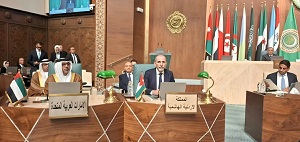 Foreign minister warns of consequences of Israeli aggression, stresses need to protect Jerusalem, holy sites
-
 Iran Says to Announce New Restricted Zone in the Gulf in the Coming Days
-
 King accepts credentials of new ambassadors
-
 Jordan, Arab, Islamic nations condemn Israeli plans to remove Palestinians from Gaza