- Last Update13-Jul-2026


- Tweet
-
US widens strikes as Iran closes Hormuz
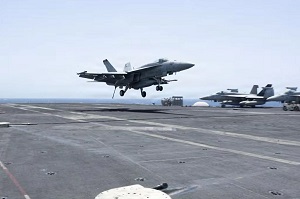
AFP
AMMAN — The United States sharply escalated its military campaign against Iran on Sunday, reportedly striking nearly 140 military targets after Tehran attacked a commercial vessel in the Strait of Hormuz and declared the closure of the strategic waterway, a move that threatened the memorandum of understanding the two sides had signed to end the conflict.
The latest exchange marked one of the most serious confrontations between Washington and Tehran in recent months, shifting the crisis from limited retaliation to a broader military campaign while placing one of the world’s busiest shipping lanes at the centre of the conflict.
US Central Command (CENTCOM) said that American forces targeted missile and drone sites, naval capabilities, ammunition depots, communications networks and coastal surveillance facilities across Iran.
"The United States is imposing a heavy cost by continuing to degrade Iran's ability to attack civilian mariners and commercial ships freely transiting the strait," CENTCOM said, adding that the strikes were being carried out at the direction of President Donald Trump.
The US military said that the operation was launched after Iran’s Islamic Revolutionary Guard Corps (IRGC) attacked a Cyprus-flagged container vessel transiting the Strait of Hormuz, accusing it of using an unauthorised shipping route.
CENTCOM said that the strikes were carried out under the direction of President Donald Trump and were intended to degrade Iran’s ability to threaten civilian shipping and commercial navigation through the strategic waterway.
"We hit them very hard last night," US President Donald Trump told CNN by telephone after US strikes in response to Iran's latest attacks on shipping in the Strait of Hormuz.
He said the United States and Iran had been close to "a deal" on Saturday. "They were giving up everything, and then all of a sudden two hours after that they hit a ship with a drone. These people, there is something wrong with them," he said.
US Defence Secretary Pete Hegseth said Iran had “made a poor choice” and was now “paying the price.”
Iran responded by announcing the closure of the Strait of Hormuz “until further notice” and confirmed that it had struck a second commercial vessel, saying both ships had violated navigation regulations.
Iranian state media also reported explosions in Bandar Abbas, Sirik, Jask, Qeshm Island and Khuzestan province after the latest US strikes, while state television said an American strike targeted a military barracks in the southern province of Bushehr.
According to American news website, Axios, the container vessel targeted by Iran had been sailing through the southern shipping corridor that Oman had proposed as an alternative route for commercial traffic.
The latest escalation threatens to further undermine already fragile diplomatic efforts between Washington and Tehran, with the future of the Strait of Hormuz remaining one of the principal obstacles to any comprehensive agreement.
Tehran insists on controlling maritime traffic through the waterway, while Washington continues to demand unrestricted freedom of navigation.
Political analyst Amer Sabaileh said that Washington appears to have returned to a strategy of “negotiations under fire”, using military pressure to reshape the diplomatic process rather than replace it.
In remarks to The Jordan Times, Sabaileh said that the United States is likely to increase both the scale and scope of its strikes on Iranian military assets to alter Tehran’s negotiating position, while Iran is expected to respond by escalating pressure across the region through allied actors and strategic flashpoints.
“We are entering a phase in which military force is being used not only for deterrence but also to redefine the conditions of negotiation with the Iranian regime,” Sabaileh said.
Despite the rapid military escalation, diplomatic contacts continued.
Pakistan’s Foreign Minister Ishaq Dar urged “de-escalation” and restraint during a phone call with his Iranian counterpart Abbas Araghchi, stressing that dialogue remains the only viable path to resolving the crisis and achieving lasting regional peace and stability, according to a foreign ministry statement.
He also reiterated Pakistan's readiness to continue playing a constructive role in promoting and maintaining regional peace and stability, the ministry said.
UN Secretary-General Antonio Guterres urged the United States and Iran Sunday to halt their new outbreak of fighting in the Mideast war and resume talks to end it.
Guterres specifically mentioned US attacks on Iran and the latter's strikes on ships in the Strait of Hormuz and US allies in the Gulf region. "These attacks must stop," Guterres spokesman Stephane Dujarric said in a statement, cited by AFP.
Latest News
-
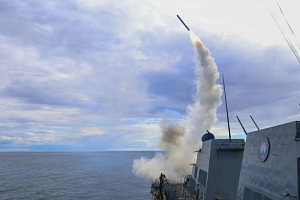 Trump says US agrees to more Iran talks but ceasefire 'over'
-
 Safadi, Qatari counterpart discuss regional de-escalation efforts
-
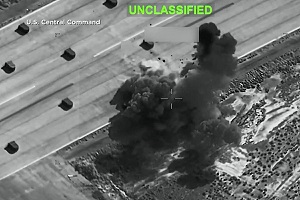 Trump orders new strikes on Iran over attacks on shipping in Hormuz
-
 King participates in Sun Valley economic forum
-
 Syrian Authorities Say Captured ISIS-linked Cell Behind Blasts