- Last Update23-Nov-2026


- Tweet
-
Beyond pledges: Jordan-EU Conference sets course for productive investment - By Hossam Basim Haddad, The Jordan Times
The Jordan-EU Investment Conference, held at the King Hussein Bin Talal Convention Centre in the Dead Sea on November 19, 2026, under Royal patronage and with high-level European participation, marked a pivotal economic milestone that moved beyond diplomatic formalities toward tangible investment execution. Designed to translate strategic understandings between the Kingdom and the European Union into concrete action, the gathering connected major international financial institutions and European investment funds directly with vital projects across Jordan's productive and service sectors. This broad turnout underscores growing European confidence in Jordan as a cornerstone of regional stability and a trusted partner. Capitalizing on its strategic geographic location, extensive network of free trade agreements, skilled workforce, and modern infrastructure, the Kingdom continues to position itself as a secure commercial bridge linking European markets with the Middle East and Africa.
The conference aligns directly with the executive track of the Jordan-EU Strategic and Comprehensive Partnership, launched in early 2025 with a €3 billion financial and investment package running through 2027. It also intersects closely with Jordan's Economic Modernization Vision, which aims to stimulate inclusive growth, expand private-sector leadership, upgrade infrastructure, and generate sustainable jobs for Jordanian youth. Moving beyond macroeconomic reviews, the forum presented a curated portfolio of more than 40 investment-ready opportunities valued at over $15 billion. These projects span high-priority sectors, led by water and infrastructure—most notably the National Water Carrier Project and public-private partnership (PPP) schemes—alongside renewable energy, green hydrogen, high-value-added manufacturing, logistics, information technology, and banking.
Attendance and engagement figures reflected strong momentum from both local and international business communities, drawing approximately 1,478 participants, including nearly 800 foreign delegates representing more than 1,054 institutions, funds, and global firms. This high-level presence translated into practical deal-making through 371 direct bilateral meetings between public and private sector representatives, with additional technical and financing follow-up sessions scheduled in the coming weeks. Panel discussions and roundtables also culminated in the signing of several agreements, memoranda of understanding, and letters of intent across water, energy, transport, technology, and finance. Implementation of key projects is slated to begin early next year and accelerate throughout 2027, bolstering foreign direct investment inflows and national competitiveness.
In assessing the conference's outcomes, Jordanian economists, analysts, and private sector leaders express a mix of strategic optimism and pragmatic caution. Experts broadly agree that the event marks a structural shift in Jordan-EU economic ties, moving away from traditional aid and grants toward mutually beneficial, productive investment. They also note that the forum demonstrated the Kingdom's economic resilience and ability to maintain monetary stability and supply chain continuity despite regional headwinds. According to specialists, the partnership's true value extends beyond capital inflows and concessional financing to include the transfer of advanced technology, technical know-how, and managerial expertise—key drivers for elevating local industrial standards, boosting export competitiveness, and reinforcing Jordan's role as a regional logistics hub and gateway for future reconstruction efforts.
At the same time, economists and representatives of industry and trade chambers emphasize that the conference's ultimate success hinges on institutional follow-through to turn letters of intent into operational projects. Analysts stress the need for a dedicated monitoring mechanism to track implementation milestones and address investor bottlenecks. Foremost among these priorities are streamlining administrative procedures, curbing bureaucracy, and unifying investment decision-making authorities. Experts also underscore that maintaining legislative and tax stability remains essential to giving foreign investors long-term predictability, alongside channeling investments into governorates outside Amman—particularly in eco-tourism, manufacturing, and agri-tech—to ensure balanced regional development.
Ultimately, the Jordan-EU Investment Conference provides a strong launchpad for a new phase of economic cooperation, firmly placing the Kingdom on the European investment radar. Yet its lasting impact will depend on disciplined execution and coordinated efforts between the government, the private sector, and financing institutions. Translating these capital commitments and mega-projects into tangible improvements in living standards and quality job creation for Jordanian youth remains the decisive benchmark for realizing the goals of the Economic Modernization Vision in the years ahead.
Latest News
-
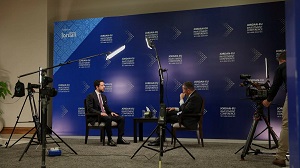 Crown Prince to CNN: Investment conference a major milestone in Jordan-EU relations
-
 Trump, Xi and Putin's Pledge to Boost Refined Oil Product Supplies Faces Implementation Hurdles
-
 Gulf nations on alert after US strikes Iranian island
-
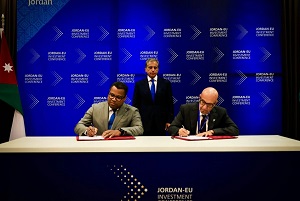 Prime minister attends signing of $6.6 billion Water Carrier Project agreement
-
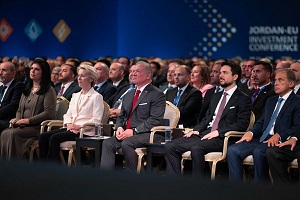 King at Jordan-EU Investment Conference: Jordan is ready for investors