- Last Update02-Dec-2025


- Tweet
-
Jordan's exports to EU increased by 39.3%, to Syria by 383.3%
The Jordan Times
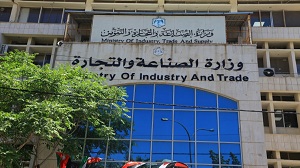
AMMAN — Jordan’s national exports rose by 9.1 per cent in the first nine months of 2025, reaching JD6.997 billion, driven by stronger demand in key regional and international markets, Industry, Trade and Supply Minister Yarub Qudah said on Monday.
In a press statement, he said this growth mirrors the positive impact of government measures taken to stimulate economic activity and raise growth rates in line with the Economic Modernisation Vision (EMV) and the priorities outlined in its first executive programme, with further actions to follow in the second programme, to be announced soon.
Total national exports reached JD7.690 billion, while re-exports increased by 6.5 per cent to JD693 million, the Jordan News Agency, Petra, reported.
Qudah highlighted several key achievements in foreign trade this year, including a 39.3 per cent surge in exports to the European Union, reaching JD436 million compared with JD313 million for the same period in 2024.
Exports to Syria also rose significantly, by 383.3 per cent, reaching JD174 million, up from JD36 million during the first nine months of 2024.
He noted that Jordanian products had long faced challenges in European markets but are now beginning to overcome them, with export volumes showing clear signs of improvement across several destinations.
The minister said the ministry began implementing specific measures to follow up on outcomes of His Majesty King Abdullah’s recent tour of Asia, which included Japan, Pakistan, Vietnam, Singapore and Indonesia, with the aim of increasing exports and strengthening economic partnerships.
He added that Jordan expects to sign two preferential trade agreements with Uzbekistan and Rwanda during the first third of 2026, with negotiations currently under way to finalise and ratify the agreements, opening new export windows in Asia and Africa.
Efforts are also continuing to maximise the benefits of existing trade agreements and address obstacles facing Jordanian products in certain markets.
Qudah said several direct support programmes were implemented to boost industrial production and exports, including the Industrial Support Fund, which provided assistance to 631 factories to date, in addition to programmes offered by the Jordan Enterprise Development Corporation (JEDCO) and the Export House company.
He noted the approval of the new Industrial Policy (2024–2028), which aims to enhance the competitiveness of the industrial sector domestically and internationally.
The policy targets five high-value industries identified in the EMV, food, pharmaceuticals, garments, chemicals and engineering, through three core pillars: competitiveness and productivity, manufacturing value-addition, and product diversification.
The policy includes a 34-priority executive plan, while the second phase of the National Export Strategy (2026–2029) will be launched soon, he said.
He said several incentives were also introduced to reduce industrial production costs and increase the sector’s share of the local market, including the recent revision of customs tariffs on imports, particularly those with local equivalents.
Qudah added that the Greater Arab Free Trade Area (GAFTA) continues to account for a significant share of national exports, standing at JD2.887 billion, a 9.4 per cent increase.
Among the highest-growth Arab destinations were Saudi Arabia, with exports rising 12.2 per cent to JD955 million, and Iraq, up 2.9 per cent to JD679 million, he said.
Statistical data showed that exports to the United States reached JD1.660 billion during the period, reflecting the benefits of the Jordan–US Free Trade Agreement.
Exports to non-Arab Asian countries also grew by 21.9 per cent to JD1.513 billion, with India seeing a 27.3 per cent rise.
Exports to Italy increased sharply by 261.5 per cent, reaching JD141 million compared with JD39 million for the same period in 2024.
Key export commodities included apparel and accessories at JD1.235 billion; chemical fertilisers at JD808 million, up 16.3 per cent; jewellery at JD589 million, up 8.3 per cent; pharmaceutical preparations at JD470 million, up 5.4 per cent; raw phosphate at JD427 million, up 10.6 per cent; and raw potash at JD412 million, rising 13.2 per cent.
Latest News
-
 Netanyahu open to deal with Syria but insists on strict security conditions
-
 Race to get aid to Asia flood survivors as toll tops 1,200
-
 Pope Leo to honor Beirut blast victims with silent prayer at port
-
 Trump optimistic after Ukraine talks as Rubio says 'more work' needed
-
 Turkey's Erdogan calls Black Sea drone strikes a 'worrying escalation'