- Last Update05-Apr-2026


- Tweet
-
The new logic of American power - By Mohammad Abu Rumman, The Jordan Times
The ongoing US–Israeli war against Iran will not only reshape the Middle East, as Israeli Prime Minister Benjamin Netanyahu has promised, but may also reconfigure the very structure of international relations. The central paradox that has gradually emerged since Donald Trump’s return to power, reaching its peak with the current war, is that America’s traditional allies appear more alarmed, vulnerable, and adversely affected by his policies than its strategic adversaries, such as China and Russia.
This shift is no longer confined to economic measures, as was initially the case when Trump imposed tariffs on allies. It now extends to defense and security policies, the cohesion of NATO, and even provocative rhetoric about annexing territories belonging to allied states, such as Canada or Greenland. More striking is the increasingly derisive and confrontational tone Trump employs when addressing or referring to allied leaders, seen repeatedly in his remarks about French President Emmanuel Macron, British Prime Minister Keir Starmer, and even Japan’s Prime Minister Sanae Takaichi during her visit to Washington, when he invoked memories of World War II.
Such practices may yield short-term gains for Trump, economically and strategically. As noted by the Chinese scholar Jiang Xueqin, a prominent specialist in game theory and what is sometimes referred to as “predictive history,” the United States stands to benefit from the current global energy crisis, while major Asian economies—particularly China and Japan—bear the brunt of its costs. Yet, while this perspective may hold in the short term, leading scholars of international relations increasingly warn that Trump’s presidency may produce deeply damaging long-term consequences for the United States itself.
In this regard, two important recent articles (published in Foreign Affairs) offer conceptual tools for understanding this emerging pattern of U.S. foreign policy. The first, by Harvard Kennedy School scholar Stephen Walt, and the second by Alexander Cooley (Columbia University) and Daniel Nexon (Georgetown University), attempt to move beyond conventional theoretical frameworks in international relations. They argue that Trump’s approach represents a qualitatively distinct phenomenon—one that cannot be adequately captured by traditional categories such as realism, nationalism, or isolationism.
While certain aspects of Trump’s behaviour may be partially explained through established theories—such as Thomas Schelling’s concept of strategic interaction and brinkmanship, or the “operational code” framework for analyzing leaders’ belief systems—the broader dynamics governing international relations under Trump point to something far more unprecedented.
Walt introduces the concept of “predatory hegemony” to describe this shift. According to this framework, U.S. foreign policy under Trump departs not only from the liberal hegemony of the post–World War II era, but also from the more assertive, post–Cold War unipolar dominance. Instead, it reflects a form of hegemony driven by the extraction of maximum immediate gains, the treatment of international relations as a zero-sum game, and a focus on short-term economic and strategic benefits, with little regard for long-term systemic stability—even if that stability underpins American power itself.
One of the most consequential implications of this approach is the erosion of the distinction between allies and adversaries. Allies are no longer treated as strategic partners, but as actors to be leveraged, pressured, or even exploited within transactional relationships. The result is a steady erosion of trust, a decline in U.S. international legitimacy, and a growing inclination among allies to seek alternative arrangements to hedge against uncertainty.
The second article, by Cooley and Nexon, advances a complementary but distinct concept: “The Age of Kleptocracy.” Here, Trump’s foreign policy is not understood as an extension of liberal internationalism or even classical realism, but as part of a broader transformation in the logic of power itself. Rather than managing the international system, power is increasingly deployed as a means of extracting direct, personalized gains.
Kleptocracy, in this sense, goes beyond corruption as a byproduct of governance; it becomes a governing principle. The state is repurposed to serve the private interests of ruling elites. Cooley and Nexon argue—drawing on numerous empirical examples—that U.S. foreign policy has increasingly been used to enhance Trump’s personal wealth, consolidate his political standing, and benefit a narrow network of allies, family members, and loyalists. Central to this model is the blurring of boundaries between public and private interests, the weakening of institutional constraints, and the merging of security, economic, and diplomatic domains into large, opaque deals—a process they term “transactional bundling.”
The authors further distinguish kleptocracy from traditional patrimonial systems. In the latter, corruption functions as a tool for maintaining elite loyalty. In the former—closer to Trump’s model—corruption becomes an end in itself. The state is thus transformed from an instrument of public good into a mechanism for generating private wealth, and foreign policy becomes a direct expression of the interests of those who control it.
In conclusion, Trump’s era represents more than a shift in US domestic or foreign policy. It marks a broader turning point that challenges the theoretical foundations through which international relations have long been understood. What we are witnessing is not merely a change in strategy, but a transformation in the nature of power, legitimacy, and the state itself—one that is increasingly reflected in a growing body of critical scholarship, much of which views this trajectory as deeply destabilizing and potentially catastrophic.
Latest News
-
 No Sign of War Winding Down in Mideast as Friday Dawns with Attacks across Region
-
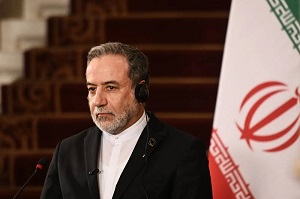 Iran Warns UN Security Council against 'Provocative Action' on Hormuz
-
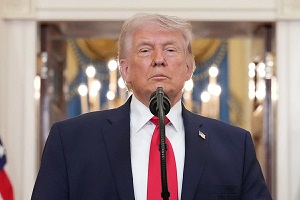 Trump tells Americans that Iran war ending as popularity dips
-
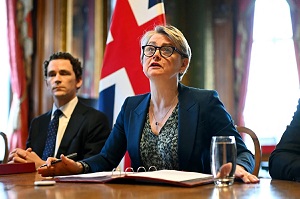 UK foreign minister stresses 'urgent need' to reopen Hormuz strait
-
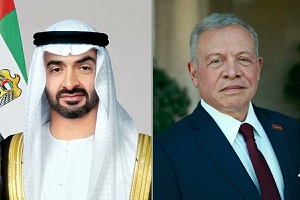 King, UAE president discuss regional de-escalation