- Last Update25-Sep-2026


- Tweet
-
Justice for Amman trees? - By Ayoub Abu Dayyeh, The Jordan Times
Most of us know that tree leaves trap dust and airborne particles resulting from the combustion of fuel by our vehicles. They also absorb carbon dioxide from the atmosphere during photosynthesis, using the carbon to build organic matter, while releasing oxygen on which most living organisms depend for respiration.
Leaves also release water vapor into the atmosphere through transpiration, contributing to increased humidity and moderation of the local climate. The water released by plants also becomes part of the natural water cycle and may, under suitable atmospheric conditions, contribute to cloud formation and rainfall, and thus reduce the severity of draughts.
Trees also provide us with shade. The tree canopy blocks part of the direct sunlight and lowers the temperature of the ground and other surfaces beneath and around it. Trees therefore become an essential element in improving thermal comfort in cities and hot regions.
Differences in temperature between sunny and shaded areas can also generate local air movement, increasing the sense of thermal comfort. Shade, fallen leaves, and roots help protect the soil surface from heat, reduce water evaporation, and improve its ability to retain moisture.
A tree is therefore not merely an aesthetic element; it can be part of the environmental infrastructure of both city and countryside. Tree stems and trunks play an important role in addressing climate change. They store large quantities of carbon absorbed by the tree from atmospheric carbon dioxide during photosynthesis. Part of this carbon remains stored in the wood, bark, and branches throughout the tree's life.
Trunks, branches, and leaves collectively slow the movement of wind and reduce its force. When wind encounters a tree belt along sidewalks, its energy is dispersed and its speed decreases in the area behind it. Trees therefore help reduce damage caused by strong winds that damage solar panels in Amman frequently, reduce dust along roads and in residential areas, as well as protect soil and crops from erosion and causing blowing dust.
Tree belts can also help limit the advance of sand in some dry environments and provide more favorable conditions for humans, animals, and plants. Trunks and branches have another equally important function: they provide habitats for many living organisms. Birds build their nests among the branches, insects find food and shelter there, and some small animals use tree cavities and dense vegetation for protection and reproduction.
A single tree thus becomes a miniature habitat in which the lives of dozens of organisms intersect. For this reason, trees have become national and cultural symbols that have remained present in people's collective memory for hundreds of generations, such as the Lebanese cedar and the Canadian maple. A tree can therefore be, at the same time, a living organism, a source of food, a refuge for other creatures, a carbon store, a source of shade, a cultural symbol, and part of a place's memory.
We live today with a sad paradox: the human being who has benefited from trees more than any other creature has also become one of their greatest sources of threat. A tree needs many years to mature, perhaps decades, to become large and strong and capable of providing its environmental services. Cutting it down, however, takes only minutes.
When we look at a tree, we should not see only a trunk, branches, and leaves. We should see the years it has lived, the creatures that have sheltered in it, the water it has helped retain, the carbon it has stored, the air it has helped cleanse, the shade it has provided, the people who have passed beside it, and the memories associated with it.
The tree that the Amman Municipality takes lightly will, once removed, contribute to an increase in flooding in Amman during winter. The area around the exposed trunk absorbs rainwater during the rainy season, while paving over the opening will lead to more urban flooding in low-lying areas. At the very least, if the tree opening were paved with permeable paving and open joints, some rainwater could still be absorbed. This is why we asked the Municipality to seek expert advice.
The Municipality acted hastily. It would have been preferable for it to seek the opinions of experts, particularly those in the Ministries of Agriculture and Environment, which have remained silent, as well as the Jordanian Agricultural Engineers Association. The Greater Amman Municipality should therefore expect flooding in the streets to intensify this winter and drainage inlets to become more frequently blocked, because the dust that trees previously trapped and retained will accumulate and block the drains. Next summer, walking on the sidewalks will become almost impossible because of the severe heat and rising temperatures.
As for those who applaud the Municipality, they have not provided us with statistics on the number of pedestrians who use the sidewalks, including older people, pregnant women, parents with strollers, and people with disabilities. Nor have they provided data on the number of vehicles parked on sidewalks, the number of utility poles blocking them, or quality of tiles and height of steps, or the number of guard rooms and construction caravans that have occupied the full width of sidewalks for many years.
The majority of Jordanians say to the Municipality: continue pruning if you wish, this we approve, but do not cut down trees. Solve the issue of other obstructions on pavements before you resort to executing trees, consult experts and residents over alternatives and set a standard for future pavement design, as this is how democracy works.
Latest News
-
 King meets with UN secretary-general, calls for stepping up efforts to restore regional calm
-
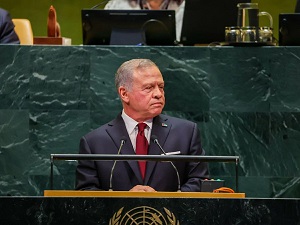 King delivers Jordan’s address at 81st UNGA
-
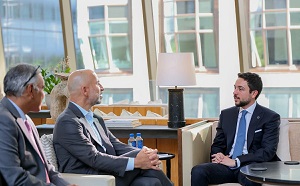 Crown Prince meets in New York with CEOs of two global US companies
-
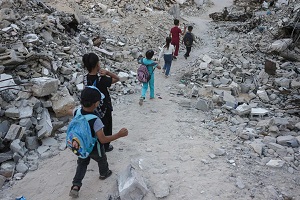 Israel minister vows to force out all of Gaza City if any Israeli abducted
-
 King meets with Kuwait crown prince, Lebanon PM in New York