- Last Update06-Sep-2026


- Tweet
-
Cabinet approves supplying Lebanon with natural gas via Aqaba
The Jordan Times
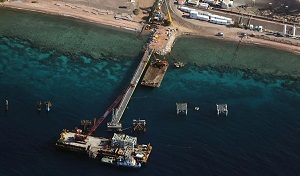
AMMAN — The Cabinet on Sunday approved supplying Lebanon with natural gas through the floating unit at Aqaba Port, in cooperation with Syria, as part of efforts to support Lebanon’s electricity generation and strengthen regional energy cooperation.
The decision was taken during a Cabinet session chaired by Prime Minister Jafar Hassan.
Under the arrangement, Jordan will import liquefied natural gas, regasify it using existing infrastructure at Aqaba, and transport it through Syria to Lebanon for use in power generation, according to a Prime Ministry statement.
The move also reinforces Jordan’s role as a regional energy hub. Jordan has been supplying Syria with natural gas since the beginning of the year through the same mechanism.
The Cabinet also approved measures to implement an energy-efficiency project in government buildings based on energy audits. The project is expected to reduce government energy bills by around 20 per cent.
Implementation is scheduled to begin at a number of ministries next year before being expanded to other government institutions.
Jordan, Syria and Lebanon signed an agreement in May to cooperate on natural gas supplies following a trilateral meeting in Amman involving the three countries’ energy ministers.
Minister of Energy and Mineral Resources Saleh Kharabsheh said at the time that technical preparations had been completed, contracts signed and studies conducted to rehabilitate gas transmission networks.
Under the agreement, Jordan is to use its infrastructure to import liquefied natural gas, regasify it and pump it to Syria through the Arab Gas Pipeline.
Syrian Energy Minister Mohammad Bashir said the gas supplied through Jordan had helped stabilise Syria’s electricity grid.
He also expressed hope for the restoration of regional electricity interconnection between Jordan, Syria and Lebanon, saying four power lines linking Syria and Lebanon were ready on both sides.
Bashir said Syria expects its natural gas production to reach 15 million cubic metres per day by the end of 2026, up from around 7 million cubic metres currently.
Lebanese Energy and Water Minister Joseph Saddi said cooperation among the three countries was key to rebuilding Lebanon’s energy sector on more sustainable and efficient foundations.
He described the electricity interconnection project as “highly important” and said Lebanon was working to complete it as quickly as possible.
In January 2026, Jordan and Syria signed an agreement in Damascus for the sale and purchase of natural gas to supply Syria through Jordanian territory, supporting electricity generation and helping ease energy shortages.
Syria has since begun receiving gas under the agreement, with supplies reaching around 4 million cubic metres per day.
The agreement forms part of a contract valued at around $800 million annually, aimed at securing stable energy supplies and improving services.
Jordan has previously said it is ready to supply energy to Syria and Lebanon once the necessary technical arrangements are completed, particularly the rehabilitation of Syrian networks damaged during the war.
Regional electricity interconnection efforts date back to 2001 but were suspended in 2012. Efforts to revive them resumed in 2022 through agreements aimed at supplying electricity and gas to Lebanon via Syria, although financing challenges delayed implementation.
Latest News
-
 Safadi, Austrian foreign minister discuss bilateral relations, regional developments
-
 Ukraine, India discuss Black Sea, food security on FM's 'historic' Kyiv visit
-
 Trump Floats Renaming Strait of Hormuz as 'Trump Strait'
-
 Palestinian prime minister visits Jordan Field Hospital in Nablus
-
 King visits National Press, inaugurates new expansion project