- Last Update04-May-2026


- Tweet
-
“Siege of the siege”: The strategy of internal pressure - By Amer Al Sabaileh, The Jordan Times
The “siege of the siege” strategy articulated by President Donald Trump represents the most decisive shift in Washington’s approach toward Iran. It marks a transition from managing conflict through conventional tools to systematically dismantling the foundations of Iranian power from within.
This shift did not emerge in isolation. It was preceded by what can be described as the “forty-day war,” which targeted Iran’s military infrastructure, both offensive and defensive, with particular emphasis on its naval capabilities. As a result, Tehran has gradually lost one of its most critical strategic levers: the threat of closing the Strait of Hormuz. Once a tool of deterrence, the strait has effectively been transformed into a pressure point against Iran itself.
At its core, the American strategy goes beyond traditional economic sanctions. It seeks to engineer a multi-layered crisis, economic, social, political, and security. The deliberate drying up of financial resources in a post-conflict environment, combined with mounting internal pressures, is not merely an economic downturn; it is the construction of a broader societal crisis. Under such conditions, the regime may find itself increasingly incapable of meeting basic demands, from salaries and services to energy provision and internet access.
This dynamic sets the stage for a critical shift: the transition from politically driven protests to widespread socio-economic unrest. Unlike political dissent, demand-driven protests are more diffuse, more persistent, and significantly harder to contain.
Within this framework, Washington has effectively stripped Tehran of one of its key advantages, time. Instead of serving as a tool for strategic maneuvering, time becomes a source of internal erosion. This explains Iran’s recent behaviour, its attempts to diversify mediation channels, from Oman to Russia, and its repeated presentation of partial concessions. The consistently cold American response reflects growing confidence in the effectiveness of sustained pressure and its internal repercussions.
The role of the U.S. Treasury has become central in this phase, signalling a shift from sanctions to what can be described as comprehensive financial warfare, what officials have termed “epic economics.” This is evident in the targeting of banks involved in Iranian oil transactions, including Chinese institutions, as well as the tracking of shadow economic networks, particularly those linked to cryptocurrencies. The objective is clear, to achieve near-total financial paralysis at a moment when the regime urgently needs liquidity to reassert domestic control.
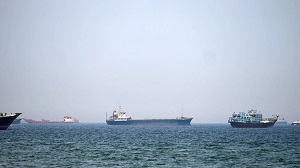
On the international level, the crisis extends to the security of maritime corridors, particularly the Strait of Hormuz. With the declining effectiveness of global regulatory mechanisms, the threat to navigation risks becoming a replicable model, not only for states but potentially for non-state actors, including piracy networks. Yet pressure on global economies is likely to accelerate the search for new arrangements governing these vital waterways, from Hormuz to Bab al-Mandeb, within a broader redefinition of maritime security.
Inside Iran, multiple crises are converging. Politically, the absence of a clear and decisive center of authority capable of making strategic decisions or concluding agreements has become increasingly apparent. The diminishing visibility of figures once seen as key political actors reflects a deeper structural dysfunction within the system.
Economically and socially, deteriorating conditions are creating fertile ground for rising security tensions, whether through internal cells or activity along peripheral regions. In this context, U.S. rhetoric regarding potential support for the Iranian opposition, even if ambiguous, adds another layer of pressure.
Meanwhile, the military option remains firmly on the table. The scale and sophistication of US preparedness reflect a doctrine centered on leveraging overwhelming force to impose settlement terms. From aircraft carriers to advanced missile systems and special operations units, all indicators point to a readiness to escalate if necessary.
President Trump, having concluded the sixty-day period with a ceasefire, retains the legal and political space to reactivate military operations if required, particularly given ongoing concerns over Iran’s nuclear program, enriched uranium stockpiles, and efforts to rebuild its missile capabilities.
The equation is increasingly clear, war is no longer the primary instrument, but it has not been removed from the table. The “siege of the siege” has emerged as the most effective tool, designed to shift the center of the crisis inward, pushing Iran toward a breaking point where internal pressures may ultimately determine the outcome.