- Last Update26-Aug-2026


- Tweet
-
Can Jordan make political representation more effective - By Laith Qusus, The Jordan Times
Jordan's political debate often focuses on who gets elected. Perhaps we should also ask a different question: what kind of representation does the country actually need to address increasingly complex national challenges?
Parliament is expected to legislate, oversee government performance and represent citizens. Yet the issues facing Jordan today, unemployment, economic growth, education, healthcare, digital transformation, social protection and public-sector reform, are highly specialised. They require political legitimacy, but they also require knowledge and practical experience.
This raises an important question: should Jordan explore a stronger connection between electoral representation and sectorial expertise?
This does not mean replacing democracy with technocracy. Nor does it mean that only professionals should become MPs. It means considering whether Jordan's political system can combine its existing geographic representation with mechanisms that give greater space to people with meaningful experience in the sectors that shape the country's future.
Imagine, for example, a Parliament in which representation is not considered only through geographic constituencies, but also through the contribution and experience of different sectors of society. Education, healthcare, technology, entrepreneurship, agriculture, industry, finance and social development all have different challenges and require different forms of expertise.
A stronger sectorial dimension to political representation could help bring this experience closer to the legislative process.
The principle is relatively simple: citizens should remain at the centre of political decision-making, while expertise should become one of the tools through which their representatives make decisions.
Such an approach could also strengthen parliamentary committees. A committee dealing with economic affairs, for example, should be able to engage systematically with economists, entrepreneurs, investors, workers and business representatives. A committee addressing social development should benefit from the knowledge of social workers, civil society organisations, researchers and communities themselves.
The objective would not be to turn Parliament into a technical institution detached from ordinary citizens. Quite the opposite. Sectorial expertise should help Parliament understand the realities experienced by citizens and translate them into better policy.
This is particularly important because political representation does not end on election day. The real test begins afterwards: Can elected representatives understand legislation? Can they scrutinise government programmes? Can they assess whether public spending is achieving its intended results? Can they distinguish between a popular promise and a workable policy?
A more technocratic approach can help answer these questions, but only if it remains firmly grounded in democratic accountability.
Jordan already possesses considerable human capital. Professionals in universities, businesses, civil society, government institutions and the technology sector have accumulated knowledge that could contribute significantly to national policy. The challenge is creating stronger institutional channels through which this knowledge can influence political decision-making.
This does not require abandoning political experience. Politics matters because societies have competing interests, priorities and values. Expertise alone cannot determine what a country should choose. But once a political choice has been made, expertise can help determine how that choice can realistically be implemented.
The same principle applies to elections. Representation should not become a competition between politicians and experts. It should become a mechanism through which political legitimacy and professional knowledge reinforce one another.
Jordan's political modernisation therefore deserves to be discussed beyond the question of electoral participation alone. We should also examine the quality, diversity and relevance of representation produced by the electoral system.
A Parliament that combines geographic representation, sectorial perspectives and professional expertise could potentially be better equipped to deal with the country's economic and social challenges.
This is not a call for fewer elections or less democracy. It is a call for better representation within democracy.
The question Jordan should consider is not simply who should represent citizens, but whether the way we structure representation gives Parliament the knowledge, diversity and institutional capacity necessary to turn citizens' expectations into effective public policy.
If Jordan wants politics to deliver better outcomes, perhaps the next step is not to make politics more complicated.
Perhaps it is to make representation smarter.
Latest News
-
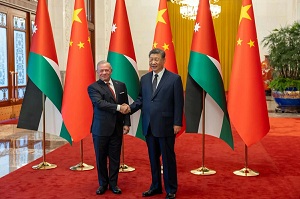 King holds talks with China president
-
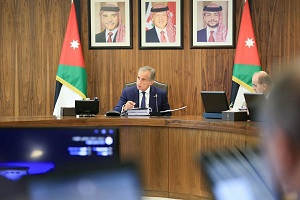 Gov’t approves 5 new technical schools as 86 already open nationwide
-
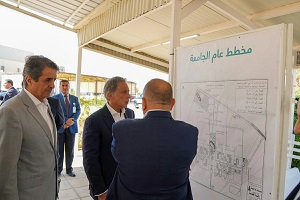 Hassan opens new Mafraq Park, directs upgrade of public facilities in eastern city
-
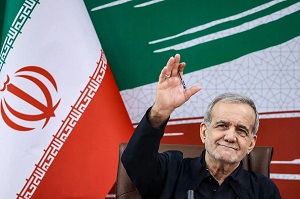 Iran President: US Memorandum is Best Path Out of Stalled War
-
 King meets with China NPC standing committee chairman Zhao Leji in Beijing