- Last Update09-Nov-2026


- Tweet
-
Cabinet approves 2027 general budget bill, allocates jd1.7 billion in capital spending
The Jordan Times
AMMAN — The Cabinet on Sunday approved the 2027 state budget law, which projects nominal economic growth of 5.6 per cent and allocates approximately JD1.7 billion for capital expenditure, as the government seeks to accelerate development projects, strengthen economic growth and maintain fiscal stability.
The draft budget, approved during a Cabinet session chaired by Prime Minister Jafar Hassan, will now be referred to the Lower House for consideration and approval in accordance with constitutional procedures, according to the Jordan News Agency, Petra.
Capital expenditure is projected to increase by approximately 18 per cent compared with the revised estimates for 2026, exceeding the growth rate of current expenditure. The government said that the increase aims to compensate for a decline in capital spending during 2026, attributed to regional instability, and accelerate the implementation of priority development projects.
The allocations are expected to support infrastructure improvements, enhance public services, stimulate economic activity and create employment opportunities, Petra said, citing a government statement.
The budget also allocates approximately JD260 million to fund a monthly JD30 increase for public-sector employees in the civilian and military sectors, as well as civilian and military retirees receiving monthly pensions of less than JD600.
The statement said that the increase is intended to improve living standards and help eligible employees and retirees cope with rising living costs.
The draft budget also provides for increased allocations to the Jordan Armed Forces – Arab Army and security agencies, in recognition of their role in safeguarding the Kingdom's security and stability.
Social protection and subsidies
The government is expected to maintain its social protection programmes, including continued coverage of cancer treatment costs and subsidies for essential commodities.
The budget also maintains subsidised bread prices without change, continues support for household gas cylinders and provides for strengthening the Kingdom's strategic reserves of wheat and barley.
These measures aim to protect citizens' purchasing power and mitigate the impact of rising living costs, according to the government.
Current expenditure is projected to reach approximately JD12 billion in 2027, an increase of 6.4 per cent compared with the revised estimates for 2026.
The increase would cover essential financial obligations and the operational requirements of ministries and government departments, while supporting priority sectors, including social protection and national security, according to Petra.
Domestic revenues are projected to rise by approximately 11 per cent to JD 10.9 billion, reflecting improved economic activity and more efficient revenue collection.
To strengthen domestic revenues, the government plans to continue measures aimed at improving tax and customs compliance, combating tax evasion and avoidance, expanding the National Electronic Invoicing System and using artificial intelligence in tax auditing and analysis.
The measures are intended to improve collection efficiency while promoting fairness, transparency and equal treatment among taxpayers, according to the statement.
Mega development projects
The budget maintains funding for major strategic projects, particularly the National Water Carrier Project and the development of the Risha Gas Field.
The government considers both projects essential to strengthening water and energy security and reducing the Kingdom's reliance on external sources.
Additional capital allocations will also be directed towards education, healthcare, public works and water projects, alongside municipal development initiatives and improvements to infrastructure and basic services across the Kingdom's governorates.
The government said that spending priorities would take into account the development and service needs of the governorates, including priorities identified during Royal visits and Cabinet meetings held across the country.
The budget will also support projects and initiatives under the second executive programme of the Economic Modernisation Vision, which seeks to expand the contribution of various economic sectors to growth and job creation.
The government aims to reduce the overall budget deficit, excluding grants, to approximately JD2 billion in 2027, down from an estimated JD2.1 billion in 2026.
The primary budget deficit is projected to decline to approximately JD450 million, compared with JD650 million in 2026.
The government said that the targets reflect its commitment to gradual fiscal consolidation, improved public resource management and maintaining a balance between development spending, social needs and public debt sustainability.
The draft budget also aims to maintain macroeconomic stability, keep inflation at moderate levels and reduce the current account deficit in the balance of payments.
It also seeks to improve the Kingdom's investment climate, enhance economic competitiveness, encourage domestic investment and attract more foreign capital.
The government also plans to expand public-private partnerships, drawing on private-sector expertise and resources to accelerate the implementation of major development and investment projects, Petra said.
The budget forms part of the government's broader efforts to implement the National Financial and Economic Reform Programme, the second executive programme of the Economic Modernisation Vision and the Public Sector Modernisation Programme, with a focus on improving government efficiency and the quality of public services.
Latest News
-
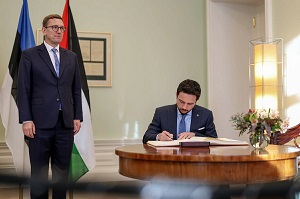 Crown Prince meets with Estonia PM
-
 Public Security mourns Corporal Jawad Al-Slayta, killed in terrorist knife attack
Al-Ghad
-
 Trump says ‘largely true’ Iran war caused midterms loss, after Vance comments
-
 Crown Prince meets with Estonia president in Tallinn
-
 'We did it!': Democrat El Sayed hails US Senate win amid blue 'tsunami'