- Last Update28-Sep-2026


- Tweet
-
Iran stands firm on Hormuz plan after US rejection
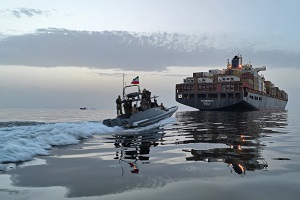
AFP
TEHRAN, WASHINGTON — Iran stood firm Sunday on its conditions for reopening the Strait of Hormuz, despite US President Donald Trump's rejection of the proposal, leaving the Middle East war locked in a stalemate.
The waterway is key to the world's energy supply and is now central to the conflict between Washington and Tehran, which was triggered nearly seven months ago with deadly strikes on Iran.
Iran's plan called for a cessation of all hostilities in the Middle East, including in Lebanon, according to Foreign Minister Abbas Araghchi, and a return to the conditions in the ceasefire deal that fell apart a few months ago.
That agreement, which dissolved during fighting over Hormuz, called for the release of frozen Iranian assets, the lifting of sanctions on Iranian oil and an end to the US naval blockade.
"Our conditions are clear, and any move toward reopening the Strait of Hormuz is contingent upon these conditions being fulfilled. We will not back down from them," Araghchi said on Sunday, state broadcaster IRIB reported.
"We have never closed the door to diplomacy or negotiations, but at the same time, we have never backed down from our rights."
But Trump said on Saturday that he rejected the truce deal.
"They want to make a deal where they open the Strait immediately because they're losing so badly," he told reporters. "They want to make a deal and I think that's fine. I like making a deal too."
His ambassador to the UN, Mike Waltz, accused Tehran of demanding too much in exchange for a return to the negotiating table.
"This was, I think, a pretty cynical attempt to put something on the table that they knew was unacceptable. To ask for the release of the blockade, the sanctions, international sanctions and access to billions in assets, just to talk," he told NBC News in an interview broadcast Sunday.
"I think it's kind of common sense that the president doesn't have a lot of confidence this time after we just tried a few months ago."
Araghchi, however, said the Iranians "saw the first reaction from the US president, but so far, nothing has been conveyed to us by the mediators".
"We are waiting for the mediators to convey the definitive positions to us, and we will make a decision based on them," the foreign minister added.
Iran's Revolutionary Guards meanwhile said that they seized an American submarine drone on Sunday in the strategic Strait of Hormuz.
It said the underwater vehicle was being used "for espionage purposes", adding that it was "now in the hands of the force's specialists for data recovery".
'Tool for pressure'
US Treasury Secretary Scott Bessent said on Saturday that he had sent envoys around the world to pressure countries to economically isolate Iran, hailing new restrictions targeting the country's airlines and banks.
"At my direction, teams were dispatched across the globe to engage with countries and demand action against the Iranian regime," he said on X. "These efforts are delivering results."
Bessent noted that Turkey and Oman have halted incoming flights from private carrier Mahan Air, while the United Arab Emirates has stopped all flights by Iranian airlines.
Dubai, the UAE's commercial hub, is a major destination for Iran's carriers, with multiple daily flights, a large Iranian community and close business links.
Iran's ISNA news agency, citing officials, reported that five countries had revoked the Islamic republic's flight permits: Azerbaijan, Georgia, Iraq, Oman and the UAE.
But it said flights were still operating to China -- which is refusing to yield to US pressure -- and Russia via the two main airlines, national carrier Iran Air and Mahan.
Mahan had announced that it would no longer serve Turkey at the request of the Turkish authorities, but flights continue several times a day in both directions, via Iran Air or smaller Iranian carriers, according to the Tehran and Istanbul airport websites.
ISNA said Afghanistan, Armenia, Belarus, Malaysia, Pakistan and Tajikistan were still also being served.
Bessent had said on Monday that all Iranian airlines "will be shut down around the world".
He also highlighted new banking restrictions.
On Wednesday, the UAE Central Bank blocked transactions to and from Iran by branches of Iran's Bank Melli, accusing it of violating laws on money laundering, terrorism and arms proliferation.
Last week, Turkey revoked the license of Iran's Bank Mellat, a semi-private financial entity that has been subject to Western sanctions for years.
A Wall Street Journal article shared by Bessent said Jonathan Burke, the Treasury's assistant secretary for terrorist financing, traveled across the Middle East and Europe over two weeks to push the plan to impose what Bessent called "economic D-Day" on Tehran.
The US Treasury has held discussions with more than 50 countries, the Journal reported.
Washington and Tehran signed a memorandum of understanding in June that aimed to end the war, to reopen the strait and to launch talks on Iran's nuclear programme.
But the deal broke down shortly afterwards when Iran fired on commercial ships in Hormuz that it accused of deviating from its approved route through the waterway.
Iran requires ships to obtain authorisation before passage, citing security and sovereignty reasons.
Ships that refuse to comply are regularly targeted, while the United States sporadically bombs Iranian coastal areas in retaliation.
At the UN, Saudi Arabia's Foreign Minister Faisal bin Farhan complained that the "international community has been absent" and is failing to live up to the responsibility to keep the Strait of Hormuz and the Bab Al Mandab open.
"The kingdom rejects any party's use of these vital passages as a tool for pressure, threat, or harm to the interests of states," he said, stressing the waterways' importance to global energy security.
In New York, Iranian President Masoud Pezeshkian met with UN Secretary-General Antonio Guterres, according to his office, and said: "Iran has not walked away from the negotiating table but, given past experiences, it no longer trusts the United States."
Araghchi said at the UN: "Iran has conveyed to the United States, through Qatar, a concrete seven-day plan. If the necessary conditions are met, the strait can be reopened, and normal maritime passage restored within seven days."
"The choice now rests with the United States."
Latest News
-
 Jordan condemns Houthi missile attacks on Saudi Arabia
-
 Safadi denounces Iranian attacks on Jordan, Arab states
-
 Jordan will stand against any attempt to resolve Palestinian issue at Its expense — Safadi
-
 King’s UN address puts Israel, international community on notice over Gaza, West Bank
-
 Golan will remain Syrian, vows President Al Sharaa at UN