- Last Update11-Jan-2026


- Tweet
-
The Jordan–EU partnership: Turning geopolitics into economic opportunity - By Raad Mahmoud Al-Tal, The Jordan Times
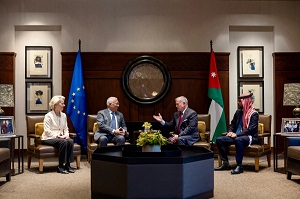
The first Jordan–European Union summit, held in Amman, represents a qualitative shift in bilateral relations. Its significance extends beyond politics to the core of economic and investment cooperation. This was not a ceremonial meeting. It took place at a highly sensitive regional and international moment, giving it strategic weight that goes beyond traditional diplomatic statements.
From an economic perspective, the summit builds on the Strategic and Comprehensive Partnership Agreement signed last year. This agreement provides the governing framework for future relations and reflects European recognition of Jordan as a pillar of stability and a reliable partner in a region facing heightened geopolitical risks and a slowing global economy.
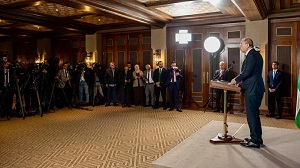
His Majesty the King’s emphasis on translating the partnership into tangible outcomes sends a clear economic message. Jordan is not seeking political support alone. It is seeking investment, trade expansion, job creation, and knowledge transfer. The focus on sustainable growth, innovation, and economic resilience reflects an understanding that economic challenges will define the next phase.
European interest in increasing investment in Jordan, with a target of reaching €1.4 billion, signals a shift in the EU’s approach. The emphasis is moving away from short-term assistance toward long-term investment. This shift aligns closely with Jordan’s Economic Modernization Vision, particularly in employment, energy, infrastructure, education, and technology.
The upcoming Jordan–EU Investment Conference scheduled for April will be a real test of this partnership. Success should not be measured by the number of agreements signed, but by the quality of projects and their ability to create jobs, strengthen exports, and integrate Jordan into European value chains. This highlights the importance of improving the business environment, accelerating reforms, and ensuring regulatory and legislative stability.
From the European perspective, deepening the partnership with Jordan fits within a broader search for stable and reliable partners along the EU’s southern borders. This is especially relevant given the war in Gaza, disruptions in global supply chains, and ongoing migration pressures. Supporting Jordan’s economy is therefore an investment in regional stability, not merely an act of political solidarity.
European leaders’ repeated emphasis on strengthening Jordan’s economic resilience reflects a clear understanding of the Kingdom’s structural challenges, including public debt, unemployment, and limited fiscal space. A deeper economic partnership can help ease these pressures through concessional financing, increased investment flows, and expanded access to European markets.
The true value of the Jordan–EU summit does not lie in the scale of financial commitments or the number of pledges announced. It lies in redefining Jordan’s position within the European economic landscape. The real transformation will occur when Jordan is viewed not as a recipient of support, but as a platform for production, investment, and regional economic integration. This requires a shift from isolated projects to integrated value chains, and from short-term funding to long-term investment linked to production and exports.
Jordan has a rare opportunity to turn its geopolitical position into a sustainable economic advantage. Realizing this opportunity depends on accelerating structural reforms, controlling production costs, and providing a stable and predictable investment environment. If Jordan succeeds, the partnership with the European Union can evolve from a support framework into a genuine engine of growth, contributing to lower unemployment, stronger economic resilience, and a more competitive positioning of the Jordanian economy in an increasingly volatile region.