- Last Update28-Jun-2026


- Tweet
-
Lebanon, Israel open new phase with US-backed deal
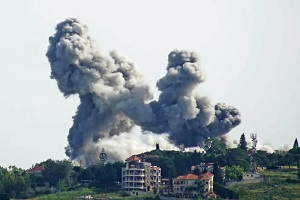
AFP
AMMAN — Lebanon and Israel signed a US-sponsored framework agreement on Friday aimed at ending months of hostilities and launching a process to restore stability along the border, although officials and analysts cautioned that its implementation will depend on security commitments, the role of the Lebanese army and the future of Hizbollah’s weapons.
The agreement was signed after a fifth round of negotiations in Washington under US mediation. It establishes a framework for security arrangements, creates a mechanism to oversee implementation and outlines steps intended to facilitate Israel’s eventual withdrawal from southern Lebanon once agreed conditions are met.
US Secretary of State Marco Rubio has said that the framework establishes “a clear mechanism” to restore Lebanon’s sovereignty, dismantle Hizbollah’s military infrastructure and enable Israel to return to its internationally recognised border once security threats are removed.
He added that the agreement creates a US-facilitated trilateral military coordination mechanism to oversee implementation, strengthen security coordination and reduce the risk of renewed hostilities along the border.
Israeli officials indicated that any withdrawal would remain linked to security arrangements and progress on the issue of Hizbollah’s weapons, maintaining that implementation would proceed gradually rather than through immediate changes on the ground.
Lebanese President Joseph Aoun described the accord as “a first step” towards restoring full Lebanese sovereignty.
“The Lebanese negotiating team has achieved what we consider a first step on the path toward restoring the state’s sovereignty over all its territory,” Aoun said.
The group's leader Naim Qassem on Saturday called the framework agreement a "grave blunder" that is "legitimising" Israeli occupation, urging the government to withdraw from it.
Hezbollah lawmaker Hassan Fadlallah said that the government will not be able to implement it "unless they go, with American support, to civil war" inside Lebanon.
The agreement marks an unprecedented stage in Lebanese-Israeli contacts, with Beirut agreeing to direct negotiations despite the absence of diplomatic relations between the two countries. The talks followed months of conflict after Iran-backed Hizbollah opened the Lebanese front during the regional war.
Officials said the framework is intended to establish a structured process for addressing security concerns and preventing renewed escalation while creating conditions for future Israeli withdrawal and a stronger security role for the Lebanese state.
Political analyst Amer Sabaileh said that the agreement should be viewed as a negotiating framework rather than a final settlement.
“For Israel, this is a framework that opens successive stages of negotiations rather than imposing immediate results on the ground,” he said.
In remarks to The Jordan Times Sabaileh said that Israel is likely to maintain its military presence while gradually assessing Lebanon’s ability to fulfil future commitments, particularly expanding the role of the Lebanese army and addressing the issue of Hizbollah’s weapons.
“The Israeli approach will be gradual,” he said. “It will test the Lebanese state’s ability to implement each commitment before moving to the next stage of negotiations.”
He added that Washington’s objective is to establish separate security arrangements for Lebanon that ultimately reinforce state institutions while increasing pressure to address the Hizbollah file through negotiation rather than immediate confrontation.
Imad Salamey, head of the Political and International Studies Department at the Lebanese American University, told AFP that one of the agreement's shortcomings was that it made "no guarantee that Israel will fully withdraw from occupied areas or significantly restrict its military operations in southern Lebanon".
"Without firm Israeli commitments, many residents of the south may continue to face insecurity, delayed reconstruction."
The framework agreement, according to observers, represents the most significant diplomatic breakthrough between Lebanon and Israel in years. However, they agreed that its success will ultimately depend on implementation, making the coming weeks a critical test of whether the framework can evolve into a lasting security arrangement or remain another temporary understanding.
Latest News
-
 US Strikes Iran in Response to Attack on Cargo Ship in Strait of Hormuz
-
 Venezuela earthquakes kill 920, tens of thousands missing
-
 Attack on ship in Hormuz leads UN to halt evacuation plan for trapped sailors
-
 After Trump’s Outburst, Senate Republicans Reverse Course on Iran
-
 Iran Accuses NATO of ‘Complicity’ in War