- Last Update31-Jan-2026


- Tweet
-
Jordan and Europe in a geopolitical transition - By Mohammad Abu Rumman, The Jordan Times
The European tour of the Jordanian ministerial delegation to promote investment reflects a growing awareness of the centrality of the economy in shaping foreign policy. This visit comes in the wake of the signing of the Comprehensive Strategic Partnership Agreement between Jordan and the European Union, which includes a package of European assistance and investments worth approximately €3 billion for the years 2025–2027, encompassing grants, investments, and substantial financial support for the Kingdom, alongside a €500 million macro-financial assistance program as a first phase of this partnership.
This visit, led by the Ministers of Industry and Trade, Planning, and Investment, does not represent routine diplomatic talks. Rather, it signals the beginning of a new phase in Jordan–Europe relations, one that places investment and economic cooperation at the core of the partnership, and sends a clear message to major European states that Jordan is a serious and credible partner in long-term, sustainable development projects.
This step—however economic it may appear on the surface—reflects a deeper strategic transformation in Amman’s understanding of the current transitional moment in the international system. With fluctuating US policies oscillating between traditional balances and new multilateral approaches, Jordan—like many other states—is seeking alternative strategic pathways that enhance its autonomy and reposition it within the evolving network of global alliances. In this context, the European Union emerges as a strategic partner with significant economic and political instruments capable of supporting Jordan’s stability amid regional volatility. Over decades, major European states such as the United Kingdom, Germany, France, and Spain, along with others like Norway, have built solid partnerships with Jordan across multiple fields, from development to security and investment.
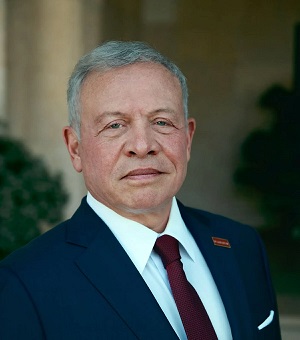
Yet these partnerships are not limited to Europe, nor to the economic dimension alone. His Majesty the King also undertook an important tour of Asia in November of last year, accompanied by an economic delegation, in search of investment opportunities and multidimensional cooperation. These movements reflect a broader Jordanian awareness of the necessity for strategic reviews in response to international and regional transformations. This is also evident in the King’s messages to the Jordanian military leadership regarding the enhancement of capabilities in artificial intelligence and advanced military technologies, linking security, economy, and innovation within an integrated vision of foreign policy.
Despite the importance of these steps, there is a growing need to move beyond promotion toward true institutionalization within the structure of Jordanian diplomacy. The presence of a respected and influential minister in Europe is a strength, but what is required is a structural transformation of the role of Jordanian embassies—moving beyond traditional consular functions toward economic and commercial diplomacy, capable of opening markets and facilitating sustainable investment and business partnerships. At a minimum, this requires economic representatives in major capitals such as Brussels, Berlin, and London, as well as Beijing and India’s investment institutions.
In this context, the project proposed by Saeed Adnan Abu Odeh cannot be overlooked. His initiative sought to connect Jordanian expatriates in the Gulf with their investment potential inside Jordan, positioning the Jordanian diaspora as a genuine economic engine for national development. Unfortunately, despite sustained efforts to convince successive officials of its strategic importance, the project has remained dormant, despite widespread acknowledgment of its value.
It is true that strengthening the economic dimension of foreign policy may entail short-term financial costs, particularly within the budget of the Ministry of Foreign Affairs. However, these costs should be understood as a strategic investment in Jordan’s regional and international positioning, especially in a world increasingly shaped by geo-economic conflicts and multidimensional partnership politics.
What is required today—not later—is a genuine intellectual and strategic transformation in the integration of economic interests into diplomatic action. The complex challenges facing Jordan, from economic stability to regional pressures, cannot be addressed through traditional frameworks alone. This demands parallel institutional and conceptual transformations that place the economy at the heart of international relations and build balanced, resilient networks of cooperation with major global powers.