- Last Update16-Aug-2026


- Tweet
-
King’s China visit expected to boost economic, investment cooperation — investment minister
The Jordan Times
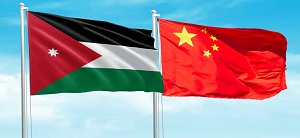
AMMAN — Jordan views China as a strategic partner in supporting industrial and economic transformation and strengthening investment cooperation, Investment Minister Tareq Abu Ghazaleh said on Saturday.
In an interview with China’s Xinhua News Agency, Abu Ghazaleh said that His Majesty King Abdullah's state visit to China on Monday is expected to strengthen cooperation, particularly in the economic, investment and development fields.
Abu Ghazaleh said that China’s position as a leading industrial, technological and commercial power makes it an important partner in advancing the objectives of Jordan’s Economic Modernisation Vision and strengthening cooperation in investment, industry and trade.
Abu Ghazaleh said the priorities of China’s 15th Five-Year Plan, including advanced manufacturing, technological innovation, digital transformation and green development, largely align with Jordan’s Economic Modernisation Vision, which places innovation, industrial development and investment in high-value-added sectors at the centre of sustainable growth.
He said Jordan’s second phase of the Economic Modernisation Vision (2026-2029) focuses on attracting investment, strengthening public-private partnerships and implementing projects with significant economic impact, creating broader opportunities for cooperation with international partners, particularly China.
Jordan has also implemented reforms to create a more competitive investment environment, contributing to an approximately 25 per cent increase in foreign direct investment inflows in 2025 to more than $2 billion, he said.
Abu Ghazaleh said Jordanian-Chinese cooperation is moving towards a more advanced stage based on investment, industry and technology transfer.
He highlighted the partnership between Chinese investors and the Arab Potash Company as a successful model that has contributed to increasing production capacity and exports and strengthening Jordan’s position as a global supplier of fertilisers and agricultural production inputs.
Chinese investments in Jordan have also expanded in renewable energy, industry and logistics, contributing to job creation, supporting local suppliers and introducing modern production technologies, he said.
He cited the Jinteng Group industrial complex in Al Qatraneh, Karak Governorate, as a model of high-quality industrial investment that has supported industrial activity, supply chains and skills development.
Abu Ghazaleh said Jordan’s strategic location linking Asia, Europe and Africa, free trade agreements providing access to more than 50 markets, skilled workforce and advanced infrastructure make it a regional platform for Chinese companies seeking to expand into regional and global markets.
Head of the Jordanian-Chinese Friendship Association Jamal Dmour said bilateral relations are approaching their 50th anniversary, with cooperation expanding into education, culture and technology. He said bilateral trade reached about $5 billion last year.
Dmour also highlighted growing educational exchanges, including increasing numbers of Jordanian students studying in China and Chinese students attending Jordanian universities. He said Jordan could further benefit from Chinese expertise in artificial intelligence, science and innovation and adapt relevant experiences to its own needs.
He also highlighted Jordan’s potential to benefit from China’s Belt and Road Initiative, given its strategic location and historic role as a crossroads linking Asia, the Middle East and Europe.
His Majesty King Abdullah is scheduled to begin a state visit to China on Monday, during which he is expected to meet Chinese President Xi Jinping, Premier Li Qiang, and Chairman of the Standing Committee of the National People’s Congress Zhao Leji to discuss bilateral relations and ways to further strengthen cooperation, particularly in economic, investment and development fields.
Latest News
-
 Japan protests Putin's first visit to disputed islands
-
 US ambassador to Israel denounces settler siege on Palestinians as 'terror'
-
 Zelensky Requests 5% of US Patriot Missile Stockpile to Survive Winter
-
 King visits Maan, meets leading figures from governorate
-
 Israeli minister vows troops to stay in Lebanon, Syria, Gaza