- Last Update17-Aug-2026


- Tweet
-
ICT sector generates $3.6b in revenue, 46,000 Jobs
The Jordan Times
AMMAN — The information and communications technology sector has grown into a $3.6 billion industry employing more than 46,000 people, underscoring its expanding role in investment, exports and the Kingdom’s broader economic modernisation drive.
The figures were presented as the Information and Communications Technology Association of Jordan (int@j) marked its 25th anniversary under the theme "25 Years... One Network," highlighting the industry’s evolution from a specialised technology segment into a core component of the national economy.
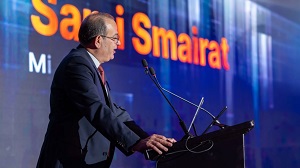
Minister of Digital Economy and Entrepreneurship Sami Smeirat said int@j has become a platform for ICT expertise and a key link between the private sector and government, contributing to several stages of the industry’s development.
He said Jordan’s technology sector has benefited from an early Royal vision that identified ICT as a strategic pillar for development, economic growth, innovation and investment, as well as a source of opportunities for Jordanian talent, the Jordan News Agency, Petra, reported.
The sector is now central to Jordan’s modernisation agenda, Smeirat said, serving as an enabler for investment and export growth and the creation of high-skilled jobs. Digital technologies are also a key component of public-sector modernisation efforts aimed at improving government efficiency and the quality and accessibility of services.
He said the establishment of the National Council for Future Technology reinforces that direction by bringing together government, businesses, universities and Jordanian expertise to translate technological change into projects, programmes and economic opportunities.
An overview presented during the anniversary event showed that int@j’s membership has grown to 316 companies, while Jordanian startups have attracted an estimated $250 million through more than 14 investment funds.
Over its 25-year history, the association has contributed to efforts to develop the regulatory environment, preserve industry incentives and promote Jordanian technology exports, while organising trade missions and launching platforms and initiatives supporting start-ups, women’s participation and cyber security.
The association’s activities have also included organising the MENA ICT Forum and helping Jordanian technology companies access regional and international markets.
Int@j Chairman Fadi Qutaishat said the past quarter-century has seen technology shift from a specialised industry into a fundamental part of Jordan’s economy and the future of business.
He traced the industry’s institutional development to 1999, when information technology was placed among the Kingdom’s priorities. Private-sector leaders subsequently developed the REACH plan to build Jordan’s IT industry, followed by the establishment of int@j in 2000 to support its implementation.
Qutaishat announced the launch of "The REACH Forum" under a new identity as an extension of the MENA ICT Forum. Aqaba will host the event in April 2027 at the Aqaba International Exhibition and Convention Centre.
Aqaba Special Economic Zone Authority (ASEZA) Chief Commissioner Shadi Majali and Aqaba Development Corporation (ADC) CEO Hussein Safadi said Aqaba is ready to host technology companies, investors and entrepreneurs attending the forum.
They pointed to ongoing expansion in the city’s investment and urban infrastructure, including upgrades to King Hussein International Airport and the development of new projects and events.
Telecommunications Regulatory Commission (TRC) Chairperson Lara Khatib, meanwhile, stressed the importance of continued public-private coordination in developing services and creating a market capable of attracting investment and skilled professionals.
int@j CEO Nidal Bitar said the association has sought to bring technology companies together, represent their interests, address industry challenges and strengthen cooperation with government.
Its work has also focused on connecting universities and talent with employment opportunities and helping technology companies expand their contribution to national exports.
Bitar said the association is entering a new phase as artificial intelligence and the digital economy increasingly reshape economies and business models.
He announced the launch of an interactive digital yearbook documenting int@j’s 25-year history and the development of Jordan’s technology industry.
A new digital platform has also been introduced to provide expanded information on ICT companies and allow users to search and classify businesses according to their activities, geographic presence and other criteria.
Int@j will also hold a specialised artificial intelligence event in November, focusing on the transition from AI adoption to measurable impact, alongside digital sovereignty, skills and inclusive digital growth. The event will be organised with support from the German Agency for International Cooperation (GIZ), Petra reported.
Latest News
-
 Iran fires back at Trump's threat to declare Hormuz a US territory
-
 Powerful quake off Indonesia kills 20, sparks mass evacuations
-
 Trump Says Will 'Soon' Declare Hormuz Strait US Territory
-
 Jordan condemns Iranian attack on UAE tankers in Strait of Hormuz
-
 Iran says it manages Strait of Hormuz after Trump claims US control