- Last Update01-Nov-2026


- Tweet
-
Cabinet approves Social Security reforms, judicial amendments, $68 million water project
The Jordan Times
AMMAN — The Cabinet on Sunday approved amendments to the Social Security Corporation's insurance coverage bylaw, introducing new provisions aimed at expanding coverage, protecting workers' retirement entitlements and extending social security protection to workers operating through digital platforms.
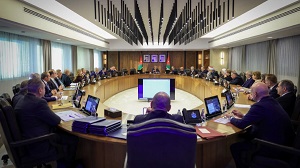
The amendments, approved during a Cabinet session chaired by Prime Minister Jafar Hassan, introduce a new coverage mechanism allowing voluntary subscribers who move into employment covered by the Social Security Law at a lower salary to continue paying voluntary contributions on the difference between their previous insured salary and their new salary, according to a Prime Ministry statement.
The measure is designed to help subscribers maintain their insured salary levels and protect their future retirement benefits when moving to lower-paid jobs. It is also intended to encourage workers to take up new employment opportunities without compromising their social security entitlements, Petra said.
The amended bylaw also introduces two new contribution categories, set at 10 per cent and 25 per cent, for partial coverage under old-age Insurance for self-employed individuals working in freelance professions.
The new categories are intended to accommodate the financial circumstances of self-employed workers while providing them with basic insurance protection, particularly against occupational injuries, given their exposure to workplace risks.
The amendments also establish a mandatory framework for extending social security coverage to workers operating through digital platforms and smart applications.
Under the new mechanism, the Social Security Corporation will be able to register these workers through a flexible system that takes into account the volume of work they perform and the contributions paid on their behalf, ensuring access to the insurance protections provided under the law.
The blaw further introduces new criteria for determining the maximum annual increase in salaries subject to voluntary social security contributions. The ceiling will be based on objective standards linked to the annual growth rate of average wages among Social Security subscribers during the preceding year.
The Cabinet approved the 2026 amendments to the Administrative Judiciary Law of 2026, paving the way for its referral to the Legislative and Opinion Bureau before proceeding with the constitutional enactment process.
The proposed amendments seek to modernise administrative justice by making the automation of judicial procedures a fundamental legislative principle rather than merely an alternative option, the statement said.
The draft law addresses legislative restrictions that have limited the use of digital technologies in court proceedings, aiming to facilitate access to justice, improve judicial procedures and reduce litigation periods.
Under the proposed amendments, administrative court hearings may be conducted remotely through audio-visual communication systems, a facility that was previously unavailable in the administrative judiciary. The changes also pave the way for a unified electronic judicial file, in line with Jordan's national digital transformation objectives.
The reforms are intended to strengthen the administrative judiciary's role in overseeing administrative decisions, protecting individual rights and addressing abuses of authority or violations of the law, according to the statement.
The Cabinet also approved the validating reasons for the 2026 amendments to the Associations Law.
The proposed amendments align with the objectives of the Economic Modernisation Vision and National Social Protection Strategy, seeking to strengthen governance and transparency in the civil society sector and introduce a more institutionalised system for evaluating and classifying associations based on their development impact, the statement said.
The draft law provides a legislative framework for comprehensive digital transformation and prohibits individuals from serving on the boards of more than one association affiliated with the same ministry.
It also seeks to reduce the financial and administrative burdens on associations by raising the threshold for exemption from appointing a certified auditor.
Under the proposed changes, associations with annual budgets of JOD 5,000 or more would be required to appoint a certified auditor, compared with the current threshold of JOD 2,000. Associations with budgets below JOD 5,000 would instead be audited by the Ministry of Social Development.
The draft law provides for the temporary registration of voluntary initiatives established to carry out specific community activities, while regulating their bank accounts and fundraising activities.
It also introduces a separate regulatory framework for registering branches of foreign associations, strengthening oversight of their operations and determining the legal disposition of their funds.
The Cabinet approved the 2026 Public Safety Regulation for the Aqaba Special Economic Zone, aimed at strengthening safety standards across economic establishments and public facilities.
The regulation covers economic facilities, public spaces, complexes, buildings, parks and schools throughout the zone, bringing safety requirements in line with technological developments and modern standards.
It is also intended to reinforce Aqaba's position as a safe and attractive destination for investment and business.
The new framework complements the regulations governing the relevant authorities, Civil Defence and the Public Security Directorate, while strengthening coordination, institutional cooperation and information exchange.
It establishes unified public safety requirements across different sectors and activities, with the aim of protecting people, property and the environment, improving emergency preparedness and ensuring the continuity of economic, tourism and service activities.
The regulation places particular emphasis on prevention, requiring establishments to identify and assess occupational risks regularly, introduce appropriate mitigation measures, and document and monitor their implementation.
The decision comes as Aqaba continues to experience growing economic and tourism activity, increasing the need for stronger safety standards across investment, commercial, tourism and social facilities, according to the statement.
The Cabinet also approved an agreement worth $68 million for the expansion and rehabilitation of the Wadi Al Shallala Wastewater Treatment Plant, which is scheduled to be signed during the Jordanian-European Investment Conference.
The project will more than double the plant's daily treatment capacity, increasing it from approximately 13,700 cubic metres to 30,500 cubic metres.
The expansion is expected to increase the volume of treated wastewater and improve treatment efficiency, supporting the Ministry of Water and Irrigation's efforts to strengthen the wastewater sector and expand the use of non-conventional water resources.
Latest News
-
 Jordan Foils Armed Infiltration Attempt From Syria
-
 Trump says Iran war will end ‘soon’ amid reports of possible new US strikes
-
 Oman rescues 25 from burning ship, Iran halts tankers
-
 Houthis Expand Taiz Offensive Southward into Lahj
-
 Syria-Jordan tensions averted amid attempts to fuel discord — Al Shibani