- Last Update16-Dec-2025


- Tweet
-
How Queen Rania’s early-childhood vision put Jordan on the global education map - By Hadeel Shqair , The Jordan Times
When the Queen Rania Foundation for Education and Development (QRF) walked onto the stage at the World Innovation Summit for Education (WISE) in Doha this November, the moment was about far more than a single prize. It was a recognition of nearly two decades of work led by Her Majesty Queen Rania to place every child in Jordan — and across the Arab world — on a stronger educational footing.
In November 2025, QRF was named second-place winner in the prestigious WISE Education Awards for its “Iqrali – Read to Me” project, a digital solution that helps parents build a daily Arabic reading habit with their young children. The accolade, announced during the WISE 12 summit in Doha under the theme “Humanity.io: Human Values at the Heart of Education,” placed the Jordanian initiative among the world’s most innovative education projects.
“Iqrali” — literally “Read to me” — is part of QRF’s broader strategy to improve early literacy by turning the home into a rich learning environment. The free app offers parents age-appropriate Arabic e-books for children under six, alongside interactive activities and guidance grounded in educational research, positioning parents as the child’s first and most important teacher.
By earning second place in the WISE Education Awards — an annual competition that highlights six innovative projects addressing global education challenges — Iqrali joins a short list of initiatives seen as models for how technology can advance equity and early learning at scale.
QRF’s work on Iqrali is rooted in a clear goal: that every child in Jordan should arrive at school ready to learn and able, in time, to read proficiently in Arabic. To reach that goal, the foundation’s strategy has increasingly focused on parents and caregivers — the people who spend the most time with children before they ever enter a classroom.
On its official platform, QRF outlines a vision of “literacy-rich homes” where reading aloud, storytelling and book-sharing become everyday habits. The Iqrali app is designed as a bridge between this vision and families’ daily lives, providing curated content and practical guidance in a format that can reach households across the country.
The WISE recognition, therefore, is not just a prize for a single app; it underscores a philosophy that early childhood education does not begin in a classroom but on a parent’s lap — especially in contexts where public preschool access is uneven and education systems are under pressure.
For observers of Jordan’s education landscape, the Doha announcement is the latest chapter in a story Queen Rania has been writing since the early 2000s, when she began to make education reform the cornerstone of her public work.
Over the years, Her Majesty has launched or championed a network of institutions and initiatives that now define Jordan’s education ecosystem:
Madrasati Initiative (2007) – Launched to improve the physical and educational environment of public schools, Madrasati (“My School”) has mobilised public–private partnerships to renovate school buildings, enhance learning spaces and foster community engagement around education.
Queen Rania Teacher Academy (QRTA) – Established in 2009, QRTA is a non-profit institution dedicated to empowering teachers with professional development programmes informed by international best practice. It has provided training to tens of thousands of educators across Jordan and the region, reinforcing the idea that no reform can succeed without investing in teachers.
Queen Rania Foundation for Education and Development (QRF) – Founded in 2013, QRF serves as the umbrella organisation driving research, innovation and policy in education. Its mission is to close learning gaps by generating evidence, designing programmes such as Iqrali, and advocating for data-informed reforms in Jordan and the wider Arab world.
Edraak – A flagship QRF initiative, Edraak is the first major Arabic massive open online course (MOOC) platform, built in partnership with the Harvard–MIT edX consortium. It provides free, high-quality online courses to learners across the Arab region, ensuring that Arabic-speaking students are not left on the margins of global digital learning trends.
Queen Rania Award for Excellence in Education – Through the Association of the Queen Rania Award for Excellence in Education, Her Majesty has promoted a culture of recognition and professional pride among teachers and school leaders, positioning excellent teaching as a national priority.
In addition, Queen Rania has supported educational experiences beyond formal schooling, including The Children’s Museum Jordan, the Jordan River Foundation’s child-focused programmes, and the Royal Health Awareness Society’s school-based health education initiatives, all of which link learning to children’s wellbeing and everyday lives.
Seen in this context, Iqrali is less an isolated app and more a natural extension of a sustained effort to make learning more inclusive, relevant and future-oriented.
The WISE summit where Iqrali was honoured brought together thousands of policymakers, educators and innovators under a theme that asked how human values can remain at the heart of education in an age of artificial intelligence and rapid technological change.
Within these global debates, QRF’s approach — using technology not as an end in itself, but as a means to strengthen families, reduce inequalities and support Arabic literacy — resonated strongly. Coverage of the WISE 12 discussions highlighted that winning and finalist projects, including Iqrali, were recognised for their ability to combine scalable digital tools with community-centred, equity-driven impact.
For Jordan, the recognition serves as a reminder that local solutions, designed around the realities of Arabic-speaking families and Jordan’s public education system, can compete at the highest international level — and, in turn, shape global conversations about how children learn to read.
The challenge now, QRF’s own communications suggest, is to translate this global recognition into deeper and broader impact at home and across the region. The foundation already positions Iqrali as a key pillar of its “learning at home” agenda, and the WISE platform offers new opportunities for partnerships, funding and knowledge exchange.
For educators and policymakers in Jordan, the award may also serve as an external validation of reforms that place literacy, early childhood development and parental engagement at the centre of national education strategies.
From Queen Rania’s first school visits and teacher forums to the sophisticated digital programmes her institutions now lead, the trajectory is clear: Jordan has sought not only to “fix” schools, but to reimagine where, how and with whom learning happens. The Iqrali app — and the WISE Education Award that now bears its name — is one more sign that this long-term investment is gaining international traction.
As Jordan looks ahead to the next phase of education reform, the message from Doha is unmistakable: a child curled up with a parent and a story, in Arabic, on a simple app, can be as powerful a symbol of educational innovation as any high-tech classroom.
Latest News
-
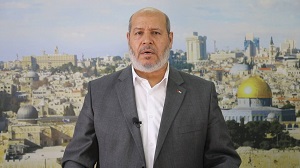 Hamas marks 38th anniversary, rejects all forms of guardianship over Palestinians
-
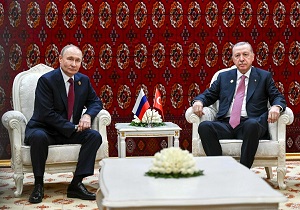 Erdogan warns Black Sea should not be 'area of confrontation' after strikes
-
 Indonesia flood death toll passes 1,000 as authorities ramp up aid
-
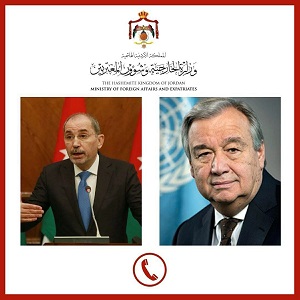 Safadi, UN Chief highlight vital role of UNRWA, call for continued humanitarian aid to Gaza
-
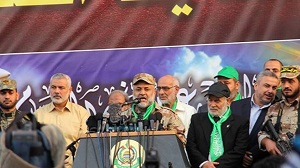 'Israel' targets Hamas commander in Gaza strike