- Last Update28-Jun-2026


- Tweet
-
Everyone is a partner in controlling spending - By
Salameh Al-Draawi, Jordan News
The basic idea here is clear, that if the citizen is required to bear increasing financial burdens such as taxes, fees, and the high cost of living, the logic of partnership imposes a parallel commitment from the government and the legislative authority, no less rigorous and clear.
The measures announced in the Prime Minister's communiqué on March 30, 2026 were a step in the right direction, in terms of controlling the use of government vehicles, stopping unnecessary official travel, reducing operational expenses, and subjecting the implementation to the audit of the State Audit Bureau, but the problem does not lie in the reports, but in continuity and commitment, as the end of some of these measures, according to the belief of some, has re-raised the basic question, was the goal a temporary treatment or a permanent approach?
The general scene does not give completely reassuring signals, especially with the continuation of the manifestations of uncontrolled spending, especially in the file of foreign travel of official and parliamentary delegations, which creates a clear gap between rhetoric and practice, especially when the citizen sees that there are delegations in more than one capital at a time when he is asked to control spending.
It is not a matter of whether or not these participations are useful, as some of them may be justified and necessary, but the problem is the lack of discipline and clear and transparent standards, as controlling expenditure does not mean stopping work, but rearranging priorities, and linking each expenditure to a measurable direct or indirect return.
On the other hand, the Prime Minister's circular on the preparation of the draft budget for the year 2027 reflects a clearer trend towards consolidating fiscal discipline, after obliging ministries, departments and government units to reduce their operational expenses by 15 percent, while adhering to the specified financial ceilings and not requesting any additional allocations except with clear justifications required by the public interest. budgets with performance indicators and results, in a way that enhances the efficiency of public fund management.
On the other hand, the success of these trends will not be measured by the figures included in the draft budget, but by the extent to which all state institutions adhere to the spirit of these instructions, as it is not possible to demand a reduction in operational expenses by 15 percent, while practices that are not in line with the philosophy of rationalization continue, whether in official travel or expenditures that can be dispensed with or reprioritized, as the budget is a direct reflection of the state's policies and messages to citizens, and the more decisions are consistent with practice, the more confidence that controlling expenditure has become a permanent approach A temporary measure imposed by circumstances.
What is required today is not only circulars and reports, but building an institutional culture based on rationalizing spending, and this culture starts from the government itself, because any imbalance in the commitment of the leaders will be directly reflected on the rest of the government apparatus, and the role of the legislative authority must be primarily supervisory, not turn itself into part of the problem through practices that are not in line with the requirements of the stage.
Controlling spending is an economic necessity in light of the high indebtedness and financing pressures, and most importantly, it is a matter of trust, and when the citizen feels that everyone is committed, he will be more willing to bear what is asked of him, but in the absence of justice in the implementation, any financial measures will gradually lose their legitimacy.
In conclusion, everyone is a partner in controlling spending, but partnership is not measured by slogans, but by actual behavior, and what is asked of the citizen must first be applied within the state institutions, and with a higher degree of discipline, because leading by example here is not an option, but it is a condition for the success of any fiscal policy.
Latest News
-
 US Strikes Iran in Response to Attack on Cargo Ship in Strait of Hormuz
-
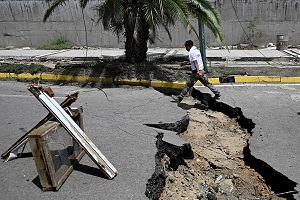 Venezuela earthquakes kill 920, tens of thousands missing
-
 Attack on ship in Hormuz leads UN to halt evacuation plan for trapped sailors
-
 After Trump’s Outburst, Senate Republicans Reverse Course on Iran
-
 Iran Accuses NATO of ‘Complicity’ in War