- Last Update30-Jul-2026


- Tweet
-
Yemen govt says Houthis planning to impose fees for Red Sea transit
AFP
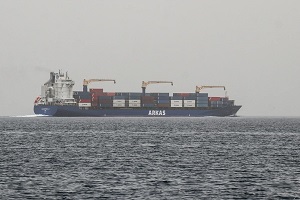
RIYADH, WASHINGTON — A minister in Yemen's internationally recognised government on Wednesday accused Houthi rebels of working under Iranian guidance to establish a system to impose fees for ships transiting the Red Sea and the Bab Al Mandab Strait.
The narrow maritime artery has been a critical waterway for delivering vast quantities of Saudi crude to the international market, after energy exports were largely choked off by fighting in the Strait of Hormuz.
Information minister Moammar Al Eryani described "the move as a dangerous escalation aimed at transforming one of the world's most strategic maritime corridors into a permanent source of funding for the militia's military and terrorist activities".
Eryani said the assessment was provided by recently obtained "confirmed intelligence" indicating that Iran's Revolutionary Guards were helping manage the effort.
"The intelligence indicates that IRGC experts and advisers are directly involved in designing the technical and administrative framework of the project," the minister added in comments exclusive to AFP.
He added that this would include "the establishment of a dedicated entity responsible for collecting payments from shipping companies and commercial vessels".
Anxieties are growing across the Gulf that the Houthis are hoping to copy Iran's playbook in the Strait of Hormuz by monetising access to the Bab Al Mandab Strait -- a move likely to send world energy markets into further disarray.
The United States on Wednesday announced new sanctions targeting entities linked to Iran's Revolutionary Guards that it accused of extorting ships transiting the Strait of Hormuz.
The announcement came as President Donald Trump warned the United States would strike Iran "hard" after a missile attack against US bases in Jordan, reigniting the Middle East conflict after a days-long pause.
An "extortion scheme" backed by Iran's Revolutionary Guard "forces commercial vessels to purchase mandatory maritime 'insurance' to transit the Strait," the US Treasury Department said in a statement.
"These entities manufacture risk -- including the threat of vessel seizures -- and then charge commercial vessels for coverage against dangers created by the regime itself," a parallel State Department statement said.
The sanctions target the Persian Gulf Marine Insurance Company and the HormuzSafe Marine Services Authority, which, according to Washington, are linked to Iran's Islamic Revolutionary Guard Corps.
Washington also sanctioned eight companies operating ships that it accused of transporting Iranian crude oil and petrochemicals to China and the United Arab Emirates, in violation of other US sanctions.
These ships are "part of Iran's 'shadow fleet,' which the regime relies on to evade sanctions," the State Department said.
"With its economy in freefall and inflation in the triple digits, the regime is desperate for cash," Treasury Secretary Scott Bessent was quoted as saying.
After hostilities with Washington resumed on July 7, Iran once again blocked the Strait of Hormuz -- a crucial shipping lane for the global energy trade - claiming the right to impose transit fees on ships and allowing passage only along the route hugging its coastline.
The United States, for its part, has imposed a blockade on Iranian ports.
Approximately 20 per cent of the world's oil and liquefied natural gas passed through the Strait of Hormuz before the war.
Latest News
-
 Houthis want to 'copy' Iranian moves in Hormuz - Yemeni official
-
 Trump Says He Is Ready for Military Action if Iran Talks Fail
-
 Netanyahu in Washington to Meet Trump for First Time Since Start of War with Iran
-
 Foreign minister, UN chief discuss efforts to restore regional security, stability
-
 Air Force downs two drones, no injuries or damage — JAF