- Last Update13-Nov-2026


- Tweet
-
Jordan launches first EU-funded twinning project to develop mining sector
The Jordan Times
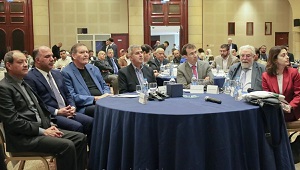
AMMAN — Jordan on Thursday launched its first EU-funded twinning project in the mining sector, aimed at strengthening technical and institutional capacities, attracting investment and aligning the sector with European standards and best practices.
Minister of Energy and Mineral Resources Saleh Kharabsheh, who patronised the launch ceremony, said the two-year project represents an important step towards developing Jordan's mining sector through European expertise, international standards and knowledge transfer.
The project brings together experts and specialists from Jordan, Spain and Greece to support cooperation, technical capacity-building and institutional development.
Kharabsheh said the initiative seeks to advance the mining sector through modern technologies, artificial intelligence and the latest scientific developments, noting that Jordan has several promising mining sites that require further research, studies and exploration.
He said Jordan's mining strategy focuses primarily on attracting investment and building technical capacities, adding that the twinning project supports the strategy's objectives, which include achieving annual growth of 10 per cent in the sector's contribution to GDP by 2033.
The ministry is working to strengthen technical expertise by expanding partnerships and cooperation with international institutions and specialists, Kharabsheh said, thanking Spanish and Greek experts for sharing their knowledge with Jordanian professionals.
Boosting exports, value addition
European Union Ambassador to Jordan Pierre-Christophe Chatzisavas, said the project reflects the EU's longstanding partnership and support for Jordan, which has contributed to the country's economic development across various sectors.
In an interview with The Jordan Times, Chatzisavas said mining is among the fastest-growing sectors in terms of Jordanian exports to the EU, making a significant contribution to export growth, particularly over the past two years.
"This is not a coincidence; it is a clear trajectory and an established pattern," he said, adding that this growth would continue as long as Jordan adds value to its raw materials and develops its processing industries.
He cited the Arab Potash Company (APC) as a successful example of local value addition, noting that the company processes raw materials locally and exports fertilisers that meet consumer requirements and standards.
"The same can be done in the future with derivatives from phosphate and other raw materials, including silica and magnesium," he said.
Chatzisavas said the twinning project, the first of its kind in Jordan's mining sector, would bring specialised European expertise to support the development of policies and strategies over the next two years.
The project will involve experts working alongside their Jordanian counterparts to transfer knowledge, exchange experiences and compare approaches to policymaking, he said.
He added that harmonising standards would help connect the Jordanian and European mining sectors, facilitate potential joint ventures and increase trade between producers and consumers.
"The European market is a large market, with 500 million consumers," Chatzisavas said, highlighting the EU's need for fertilisers to support food production and raw materials to supply its industries, including the medical and pharmaceutical sectors.
"We need to unlock the potential of the mining sector in Jordan," he said, noting that the Kingdom's raw materials and their downstream products are of considerable interest to the EU.
Chatzisavas also said mining would feature prominently at the EU-Jordan Investment Conference scheduled to take place at the Dead Sea next week, where Kharabsheh will participate as a panellist.
Representatives of the Jordanian and European mining sectors are also expected to meet during the conference to strengthen business relations and explore opportunities for cooperation and investment.
Greek Ambassador to Jordan Irene Riga, welcomed Greece's participation in the project, saying it would contribute expertise and best practices to support the development of Jordan's mining sector.
Spanish Ambassador to the Kingdom Luis Pardo Cuerdo, said the sector has promising prospects, noting that the availability of the necessary tools and skills could help ensure that Jordanian mining products meet European standards.
He described mining as a key pillar of Jordan's economy and an important contributor to economic growth.
Building technical capacities
During the main sessions, Director of the Geology and Mining Directorate Hisham Zayoud, presented an overview of the twinning programme, saying cooperation between the three countries would provide an integrated framework based on European standards to enhance the competitiveness of Jordan's mining sector.
He outlined the project's implementation phases, which cover licensing and oversight, data collection and analysis, capacity assessment, staff training, investment promotion and access to markets.
The programme will also focus on strengthening governance across the exploitation of mineral resources in line with European standards, he said.
Zayoud added that the project seeks to lay the foundations for establishing a centre of excellence to develop technical expertise and build capacities in the mining sector, in cooperation with public- and private-sector stakeholders.
The initiative will also assess existing gaps and develop structured plans to address them, he said.
Jordan has promising mining potential, which represents a strategic opportunity to enhance the Kingdom's competitiveness and attract quality investments that generate added value for the national economy.
Zayoud said the mining sector strategy focuses on maximising the added value of natural resources, developing mineral-based industries and increasing the sector's contribution to GDP, in line with the objectives of the Economic Modernisation Vision.
Latest News
-
 King promotes, bestows Order of Valour on Captain Ananzeh
-
 New Israeli parliament to take aim at Netanyahu as Eisenkot seeks government
-
 Trump sees 'positive momentum' on Iran after Qatar PM talks
-
 Iran calls on US to meet its demands to end war
-
 US calls for new Europe security at Russia-Ukraine talks